Modi’s Uzbekistan Visit Delivers Uranium Breakthrough: India and Tashkent Forge Long-Term Nuclear Supply Arrangement
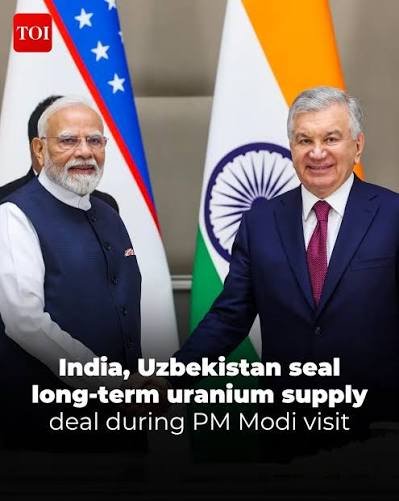
TASHKENT, UZBEKISTAN: Prime Minister Narendra Modi’s two-day state visit to Uzbekistan has produced a significant nuclear-energy breakthrough, with India and Uzbekistan establishing a long-term arrangement for uranium supplies as the two countries upgraded their relationship to a Comprehensive Strategic Partnership.
During the PM Modi Uzbekistan visit, Modi held delegation-level talks with Uzbek President Shavkat Mirziyoyev at the Kuksaroy Presidential Palace on August 30. According to the Prime Minister’s Office, the discussions covered energy, critical minerals, defence, trade, digital connectivity, healthcare and education.
Uranium arrangement takes centre stage
The most consequential energy announcement was the establishment of a long-term uranium supply arrangement between the two countries. Modi said India and Uzbekistan would establish the arrangement, while the Indian government later described progress on it as an important outcome of the visit.
The India Uzbekistan Uranium deal is strategically significant because uranium is a critical input for nuclear power generation. India has been seeking reliable international supplies of nuclear fuel as it expands its nuclear-energy programme and works toward increasing the role of nuclear power in its future energy mix.
India Today reported that uranium supply formed part of broader cooperation covering energy, mining and critical minerals.
Strategic partnership upgraded
The PM Modi Uzbekistan visit also resulted in India and Uzbekistan elevating bilateral relations to a Comprehensive Strategic Partnership, signalling a broader expansion beyond energy.
The official joint statement said both leaders identified priority areas for deeper practical cooperation. They also set a target of taking bilateral trade to $5 billion by 2030.
For India’s foreign policy, the move strengthens New Delhi’s engagement with Central Asia at a time when connectivity, energy security, critical minerals and regional strategic competition are becoming increasingly important.
Trade, minerals and defence on the agenda
The uranium arrangement was only one part of the package. The leaders discussed cooperation in critical minerals, mining, investment, infrastructure, defence and security, pharmaceuticals, agriculture, space and digital public infrastructure.
Uzbekistan also signed or advanced a series of bilateral cooperation documents covering geology and mineral resources, higher education, environmental protection, tourism and economic and financial dialogue, according to the Uzbek presidency.
The wider agenda places the India Uzbekistan Uranium deal within a broader effort to build resource and economic ties rather than treating nuclear fuel as an isolated transaction.
Why the development matters for India
The uranium arrangement could support India’s efforts to secure diversified nuclear-fuel supplies while expanding cooperation with a resource-rich Central Asian partner. It also fits into a broader push to deepen strategic relationships across the region.
The move comes days after India concluded a separate major defence agreement with the United States over Javelin anti-tank systems, another example of expanding international security partnerships. The Javelin agreement underlines how India’s external partnerships are increasingly spanning defence, energy and technology.
Domestic political developments continue alongside this wider diplomatic activity, including Aga Syed Ruhullah Mehdi’s announced resignation from the Lok Sabha.
The India foreign policy significance of the Tashkent outcome therefore extends well beyond uranium. With PM Modi’s Uzbekistan visit now completed, the next test will be how quickly the India Uzbekistan Uranium deal arrangement translates into concrete supply and wider strategic cooperation under the new partnership.