Nigar Sultana Handshake Row: Bangladesh Says It Wants Friendly Ties
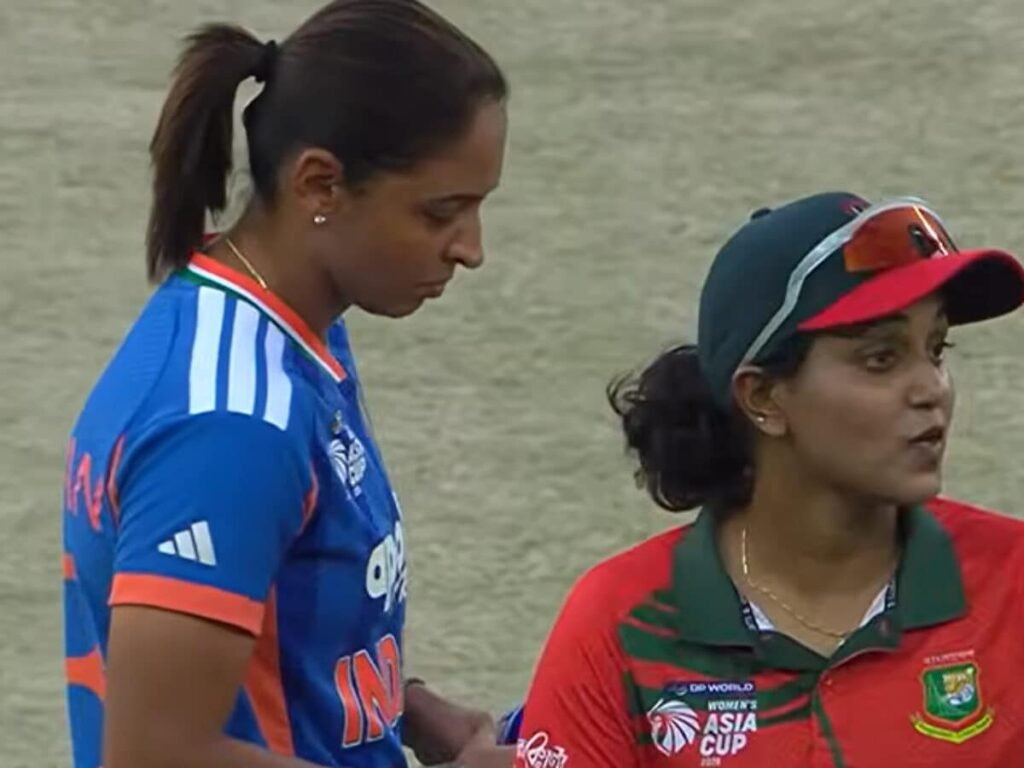
The Bangladesh Cricket Board has distanced itself from captain Nigar Sultana’s decision not to shake hands with India captain Harmanpreet Kaur during the Women’s Asia Cup 2026 semi-final, saying the gesture was entirely the Bangladesh skipper’s personal choice.
Rafiqul Islam Babu, chairman of the BCB’s Women’s Wing Committee, said the board had not instructed Nigar to avoid the customary exchange before the match in Dubai. He also stressed that Bangladesh wants friendly relations with all countries, including India.
“Of course, it was her own decision,” Babu was quoted as saying. “We believe sports bring the world together. We want friendly relations with all countries, not just India, and so whatever she did was entirely her personal decision.”
The incident took place on September 10, when India and Bangladesh met in the semi-final of the tournament. Nigar and Harmanpreet did not exchange the customary handshake around the toss, drawing attention because of the recent political tension that has also affected sporting interactions between India and Pakistan.
Bangladesh board says gesture was not its policy
The BCB’s response is significant because it separates the captain’s action from the position of the national cricket administration.
Babu made clear that the board does not view the incident as an institutional decision. Instead, he framed the episode as an individual choice by Nigar while reiterating the BCB’s broader view that sport should help maintain relationships between countries.
Nigar has not publicly provided a detailed explanation for why she declined the handshake, according to reports following the incident. The BCB’s clarification therefore remains the principal explanation available from the Bangladesh side.
The episode came after India’s Harmanpreet Kaur and Pakistan captain Fatima Sana had also avoided the customary handshake during their Women’s Asia Cup meeting earlier in the tournament. That earlier incident was widely viewed in the context of strained India-Pakistan relations.
There is no indication from the BCB that it intends to adopt a similar policy toward India.
India beat Bangladesh by 40 runs
The handshake controversy unfolded around a match that India controlled on the field.
India scored 149 for six in the semi-final, with Bangladesh restricted to 109 in reply. India therefore won by 40 runs and advanced to the final, ending Bangladesh’s campaign.
The result also meant that the focus shifted quickly from the match itself to the pre-match interaction between the two captains.
For Bangladesh, however, the board’s comments have placed the incident alongside a broader review of the women’s team and Nigar’s leadership.
Nigar’s captaincy to be assessed after Asian Games
Babu said Nigar’s future as Bangladesh captain will be considered after the Asian Games.
The review is not being presented solely as a consequence of the handshake incident. Babu said complaints concerning misconduct, along with the team’s performances and shortcomings, would be considered by the board.
“We have discussed the thing (performance and complaint) in total with the board president and since they are in Asian Games we will assess the situation after the conclusion of the games,” Babu said, according to Cricbuzz.
He added that the board would first assess Bangladesh’s performance at the Asian Games before deciding what action, if any, should be taken.
The comments indicate that no immediate decision on Nigar’s captaincy has been announced.
A sporting gesture amid wider tensions
The handshake row comes at a time when cricket has increasingly intersected with diplomatic tensions in South Asia.
India and Pakistan have had repeated instances of captains avoiding handshakes in recent international tournaments. The issue has become particularly visible since tensions between the two countries intensified, making routine pre-match gestures a subject of wider political discussion.
The Bangladesh episode is different in one important respect: the BCB has explicitly said the decision was not its policy.
That distinction allows the board to distance itself from the gesture while maintaining its stated preference for sporting and friendly relations with other countries.
For now, Nigar’s own explanation for the decision remains unclear. Her position as captain is also not immediately changing, with the BCB indicating that a broader assessment will take place after the Asian Games.
The immediate controversy may therefore fade, but the captaincy question is likely to remain relevant for Bangladesh women’s cricket in the weeks ahead.