Trump Russia Sanctions Law: Why India and China Face 100% Tariff Risk
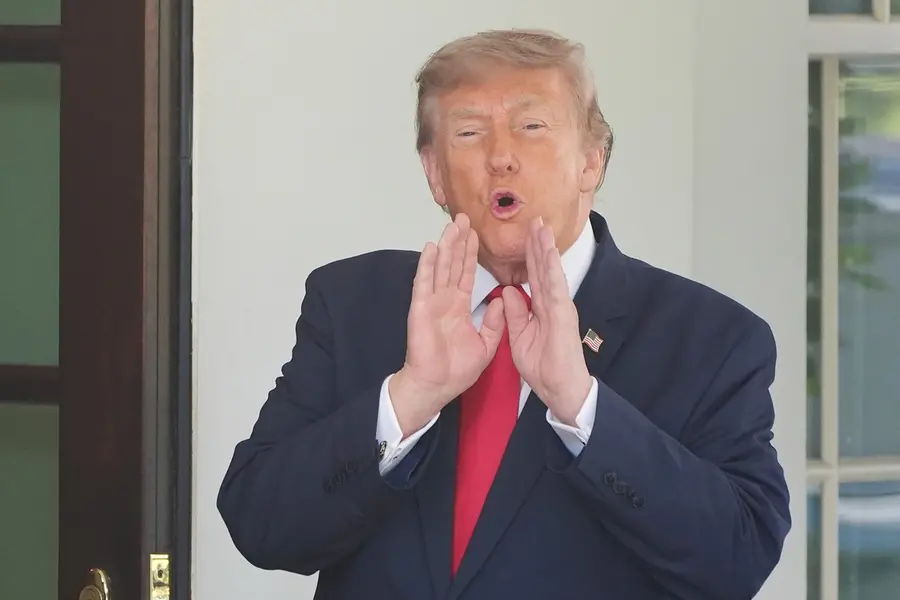
WASHINGTON — President Donald Trump has signed into law a sweeping sanctions package targeting Russia and Iran, giving the U.S. administration new authority to impose tariffs of up to 100% on goods from countries that continue to make qualifying purchases of Russian crude oil or natural gas.
The White House said Trump signed H.R. 5334, the Lindsey O. Graham Sanctioning Russia and Iran Act of 2026, on Friday, September 18. The law expands U.S. sanctions on Russia and extends existing sanctions authorities against Iran.
India and China are not specifically named as countries subject to the tariffs in the enacted law. Their exposure comes from provisions targeting countries that rank among the largest importers of Russian oil or natural gas.
How the 100% tariff provision works
Under Section 113 of the law, the U.S. is required, within 30 days of enactment, to raise duties to a rate of up to 100% on goods imported from countries that meet specified criteria.
One category covers countries that knowingly make new purchases of Russian crude oil or natural gas beginning 30 days after enactment and were among the five largest importers of Russian oil or gas during the preceding 12-month period. A second category covers countries identified among the top five facilitators of Russian oil sanctions evasion.
The legislation therefore does not impose a blanket 100% tariff on India or China immediately. Instead, it establishes a mechanism under which qualifying countries can face duties of up to 100%.
The law also requires periodic reassessment of the relevant countries. Every 180 days, the U.S. Trade Representative, working with the State and Energy departments, is required to determine the countries that rank among the five largest importers of Russian crude oil and natural gas based on the most recent 12-month period.
Why India is exposed
India has become one of the world’s major buyers of Russian crude since the war in Ukraine disrupted established energy trading patterns.
That makes the new U.S. law particularly relevant to New Delhi. The legislation does not identify India by name, but its criteria are designed to capture major purchasers of Russian energy.
Reuters reported that the new law gives Trump broad authority over the use of the tariff provisions and could affect major Russian oil buyers including India and China.
For India, the issue comes on top of an already complicated U.S. trade relationship. New Delhi and Washington have been working on a broader trade framework while dealing with disagreements over tariffs and India’s purchases of Russian energy.
India’s government has repeatedly emphasized energy security and diversification of supplies. In recent months, Indian and Russian officials have also continued discussions aimed at expanding bilateral economic and energy cooperation.
China also faces potential exposure
China is another major purchaser of Russian energy and could therefore fall within the legislation’s criteria.
The law, however, does not automatically assign a 100% tariff to China. The eventual application depends on the statutory tests, including the volume of Russian oil and gas imports and whether the country makes qualifying new purchases after the law’s specified period.
The legislation also contains provisions concerning countries that facilitate Russian sanctions evasion, creating another potential route through which tariffs could be applied.
Trump gains broader sanctions powers
The tariff provision is only one part of the new law.
The legislation expands sanctions targeting Russian officials, financial institutions and entities connected to Russia’s energy and defense sectors. It also addresses vessels and other participants associated with Russia’s so-called shadow fleet, which has been used to move Russian energy outside conventional Western sanctions channels.
The law separately extends the Iran Sanctions Act for five years. The Trump administration had previously supported the legislation, describing the additional authorities as tools to increase pressure on Russia and encourage movement toward a negotiated end to the war in Ukraine.
The White House confirmed the signing but did not announce a specific 100% tariff against India or China in its September 18 statement.
Congress gave the measure strong bipartisan support
The legislation passed the Senate by an 86-11 vote before clearing the House by 262-159 earlier this week. The House vote sent the measure to Trump for his signature.
The bill was named for the late Republican Senator Lindsey Graham, who had been a prominent supporter of tougher measures against Russia.
The administration had argued that the tariff authority would give the president another instrument for pressuring Russia and countries continuing significant energy trade with Moscow.
What happens next
The immediate question is not whether a 100% tariff has already been imposed on India or China. It has not.
The next stage is implementation of the law’s tariff provisions and the identification of countries that meet the statutory criteria.
The legislation gives the U.S. administration room to adjust tariff rates between greater than zero and 100% depending on a country’s actions regarding Russian oil and natural gas. It also provides mechanisms for certain exemptions and waivers.
For India, the issue could add another layer of uncertainty to an already sensitive trade relationship with Washington. Indian exporters could face substantially higher costs in the U.S. market if the administration ultimately applies the secondary tariffs to India.
At the same time, India’s dependence on Russian crude means any rapid change in its sourcing strategy could have consequences for its energy procurement and refining sector.
For now, the key distinction is that Trump has signed the law creating the tariff mechanism, but the United States has not announced that India or China will actually receive a 100% tariff. The administration’s implementation decisions over the coming weeks will determine how the new authority is used.