Murli Manohar Joshi Questions Modi Government’s Education Priorities
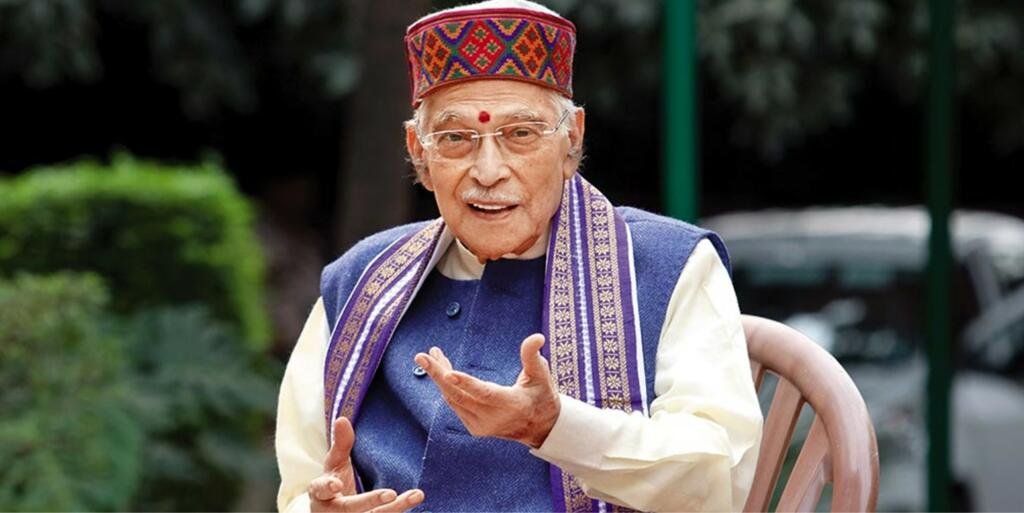
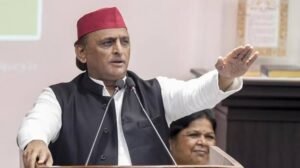
Former BJP president and veteran party leader Murli Manohar Joshi has questioned the Centre’s priorities on education and employment, asking why more colleges are being opened without a clear strategy for creating jobs for the young people who graduate from them.
In an interview with Amar Ujala conducted by consulting editor Vinod Agnihotri, Joshi also criticised the handling of paper leaks, the condition of government schools, the growing role of private education and what he described as inadequate attention to the link between education and employment. The interview was reported on August 29 by Madhyamam and separately carried in translated form by The Wire.
Joshi, a former Union human resource development minister in the Atal Bihari Vajpayee government, said education should have a direct economic purpose. He pointed to cases of highly qualified people working in relatively low-paid or contractual positions and questioned whether the expansion of higher education was being matched by employment opportunities.
“You claim that you are establishing colleges…but where are the jobs?” Joshi said in the interview, according to The Wire‘s translation. He also argued that education should be “economically productive” and questioned its value when qualifications do not translate into better employment prospects.
Joshi links education to employment
Joshi described a situation in which postgraduate and doctoral degree holders may end up working in municipal offices, while citing the example of a B.Ed.-qualified sanitation worker who, he said, was employed on a contract for around ₹25,000 to ₹30,000 a month.
He argued that young people naturally gravitate towards secure employment when suitable alternatives are unavailable. Government jobs, in his view, remain particularly attractive because of their perceived long-term security.
His criticism comes as the Union government has itself placed education, skills and employment among the priorities of the 2026-27 Budget. The Ministry of Education said its allocation for 2026-27 rose to ₹1,39,289.48 crore, an 8.27% increase over the 2025-26 budget estimate. The Budget also proposed a high-powered “Education to Employment and Enterprise” standing committee focused on the services sector, jobs and changing skill requirements, including those arising from artificial intelligence.
That makes Joshi’s criticism less a claim that education spending has simply disappeared and more a challenge to how government priorities are being defined and translated into outcomes.
Paper leaks and corruption
Joshi also connected recurring examination paper leaks with broader problems of corruption and governance.
He argued that paper leaks should not be viewed solely as failures within examination systems. In his assessment, students observe the behaviour of institutions and society around them, and a system perceived as tolerating corruption can weaken incentives for students to act honestly.
He contrasted the current situation with the Vajpayee years, asking why repeated paper leaks were not seen in the same way during that period.
Joshi’s comments follow months of student agitation over examination irregularities. In July, he publicly backed students protesting over the NEET examination controversy, saying their concerns about the examination system were genuine and criticising the handling of demonstrations.
The government has announced measures in response to examination concerns, including plans for fast-track courts for paper-leak cases. The protests have nevertheless kept questions over examination integrity and accountability in public debate.
Questions over education spending
Joshi also challenged what he sees as the government’s spending priorities. He argued that allocations for education, primary education and healthcare have been falling while spending on roads and road transport has increased.
Official figures provide an important qualification to that argument. The Ministry of Education says the combined allocation for school and higher education increased from ₹1,28,650.05 crore in the 2025-26 budget estimate to ₹1,39,289.48 crore in 2026-27. School education received ₹83,562.26 crore and higher education ₹55,727.22 crore for 2026-27.
Joshi’s broader argument is about the allocation of national resources rather than only the absolute size of the education budget. He said infrastructure projects such as roads require a parallel investment in engineers, technical institutions and skilled workers.
“If you have built a road, where will the engineer come from?” he asked, arguing that infrastructure development cannot be separated from investment in education and human resources.
Criticism of private education and school closures
Joshi also opposed what he sees as the increasing commercialisation of education.
He advocated a more uniform school system in which children from different economic backgrounds would study in neighbourhood schools, arguing that education should not become a profit-making activity primarily. He said any money generated by educational institutions should, subject to appropriate safeguards, be reinvested in education.
He also questioned the closure of government schools because of falling enrolment. Rather than treating lower student numbers as sufficient justification for shutting schools, Joshi argued that authorities should examine why enrolment has fallen and address problems such as inadequate infrastructure and teacher shortages.
His comments also touched on the cost of higher education. Joshi argued that increasingly expensive education can deepen social and economic inequality by placing quality institutions beyond the reach of poorer families.
A broader challenge to the idea of Viksit Bharat
Joshi further questioned how the government defines its “Viksit Bharat” goal, arguing that development should not be measured only through physical infrastructure or economic indicators.
For him, education, employment, social equality and human values are part of the same development question.
Joshi is among the BJP’s most senior leaders but has been largely removed from frontline electoral politics since Narendra Modi became prime minister in 2014. He was subsequently associated with the party’s Margdarshak Mandal.
The latest interview therefore represents a notable intervention from a veteran BJP figure who previously held the education portfolio at the Centre. His remarks are his assessment of current policy and should not be treated as an official BJP position.
For the government, the challenge is not simply increasing the number of educational institutions or raising allocations. The more difficult question raised by Joshi is whether education is producing the skills, opportunities and employment pathways that young Indians expect from it.