Tharoor Counters Chidambaram on What BRICS Gives India
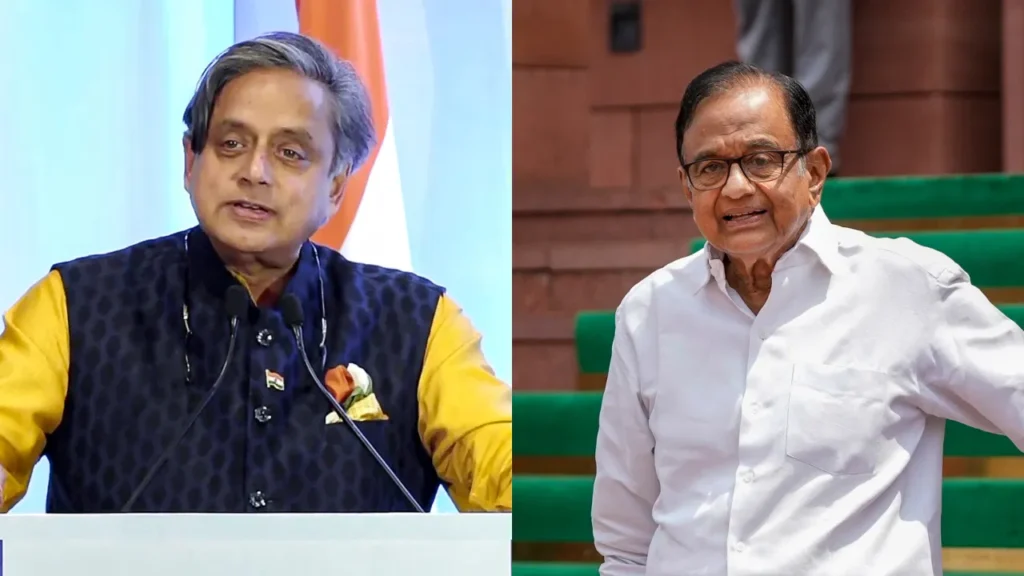
Congress MP Shashi Tharoor has defended India’s participation in BRICS, a day after party colleague P Chidambaram questioned whether recent summits had delivered tangible benefits for the country.
Speaking ahead of the BRICS summit in New Delhi, Tharoor argued that the grouping provides India with diplomatic influence and a platform for engagement among major countries of the Global South. He also acknowledged that BRICS faces serious internal disagreements.
The exchange comes as India prepares to host the 18th BRICS summit on September 12 and 13.
Tharoor points to diplomatic value
Tharoor said BRICS should not be judged only by immediate economic gains.
He described the grouping as an important platform for the Global South and said its 11 members collectively account for a majority of the world’s population and about 41% of global GDP.
“It’s not a small matter. It’s something that has to be taken very seriously by the rest of the world,” Tharoor said, according to NDTV.
He also highlighted India’s role as host of this year’s summit.
Having leaders from BRICS countries and other participating nations gather in New Delhi represents a “matter of great prestige” for India, Tharoor said, arguing that it demonstrates the country’s ability to bring major powers together.
He described that ability as India’s “diplomatic convening power”.
The argument offers a broader definition of benefit than the one raised by Chidambaram, who focused on concrete outcomes from recent BRICS meetings.
Chidambaram had questioned tangible gains
On Wednesday, Chidambaram, a former Union finance minister and senior Congress leader, questioned what India had gained from its participation in BRICS and other international groupings.
He said he had not seen significant tangible results from the last two or three BRICS summits.
“I don’t think the last two or three BRICS summits have resulted in tangible benefits or tangible results,” Chidambaram told ANI, according to NDTV.
He also pointed to India’s membership of the Shanghai Cooperation Organisation, G20 and QUAD while asking what concrete benefits the country was receiving from these forums.
His comments prompted criticism from the BJP, which accused Congress of questioning India’s diplomatic engagement at a time when New Delhi is hosting a major international summit.
Tharoor also acknowledged BRICS’ limitations
Tharoor’s response was not an unqualified defence of BRICS.
He acknowledged that the grouping has struggled to find common positions on major international issues because its members have different strategic interests.
He pointed specifically to the BRICS foreign ministers’ meeting in New Delhi in May, when the ministers failed to produce a joint declaration on issues including the Iran conflict and the Russia-Ukraine war. India instead issued a chair’s declaration.
Tharoor said another failure to reach consensus at the leaders’ summit could be viewed as a setback and raise questions about the coherence of the expanded grouping.
That tension is central to the debate over what BRICS can realistically deliver. The organisation brings together countries with different political systems, foreign-policy priorities and relationships with the United States, China and Russia.
India’s trade position remains a concern
Tharoor also identified a more direct economic concern: India’s trade balance with BRICS countries.
“Trade among the BRICS countries has been growing, but in many ways to our disadvantage,” he said, according to NDTV.
He noted that India’s exports to BRICS countries have declined while imports from them have increased.
That concern gives some weight to Chidambaram’s broader question about tangible economic returns. Greater trade within a grouping does not automatically mean that every member benefits equally.
At the same time, BRICS has created institutions that provide more concrete forms of economic cooperation.
One of the most significant is the New Development Bank, established by the original BRICS members in 2015 to finance infrastructure and sustainable-development projects in emerging and developing economies.
BRICS-linked financing has produced projects in India
The New Development Bank’s own figures show that India has been a substantial recipient of its financing.
In remarks published in August, NDB Vice-President and Chief Operating Officer Roman Serov said India was the bank’s second-largest recipient, with 35 approved infrastructure projects worth a combined $10.5 billion. Around $6 billion had been disbursed in India by June 30, he said.
NDB’s project portfolio also includes Indian projects approved in 2026, including the Lucknow Metro Rail Phase 1B project, Piramal Finance’s affordable housing project and an REC energy infrastructure project.
Those figures do not by themselves establish that BRICS membership has produced a net economic benefit for India. They do, however, demonstrate that one institution created through BRICS cooperation has financed projects in the country.
The distinction is important because the political argument is ultimately about what should count as a meaningful return from India’s membership.
The question now moves to the Delhi summit
India assumed the BRICS chair for 2026 and is preparing to host leaders from the expanded grouping in New Delhi.
The summit allows the government to push issues that matter to India while managing differences among members.
For Tharoor, the diplomatic value of bringing major countries together is itself a benefit. For Chidambaram, the test is more concrete: whether recent BRICS meetings have produced measurable gains for India.
Both positions can coexist with the practical challenges Tharoor himself acknowledged, particularly India’s trade imbalance with BRICS countries and the difficulty of reaching consensus on major geopolitical questions.
The September 12-13 summit will provide the next test of whether the enlarged grouping can turn its considerable economic and diplomatic weight into agreements that produce results for its members.