Trump’s $103,265 H-1B Shock: New Proposal Could Put a Six-Figure Price on Hiring Foreign Tech Talent
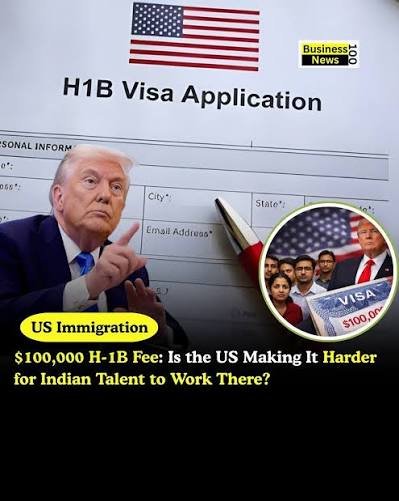
WASHINGTON: The Trump administration has proposed an additional $103,265 fee for certain new H-1B visa petitions, a six-figure charge that could dramatically increase the cost of hiring highly skilled foreign workers in the United States and has sparked fresh concern across the technology industry and among Indian professionals.
The proposal represents a US H-1B visa fee hike of extraordinary scale, but it is not yet final. The Department of Homeland Security proposed the rule on August 25, opening a public-comment process before any new regulation can take effect.
What the $103,265 proposal would actually cover
Under the proposed rule, employers would pay an additional $103,265 when filing H-1B petitions subject to the annual numerical cap. The charge would come on top of other applicable fees and payments, according to the Federal Register.
Crucially, the proposal also covers petitions eligible for the H1B advanced-degree exemption, often called the master’s cap. The H-1B system has an annual allocation of 65,000 regular cap visas, with a further 20,000 available for qualifying workers who earned a master’s degree or higher from an eligible US institution.
The proposed US H-1B visa fee hike would not apply to all H-1B petitions. Cap-exempt filings, including certain petitions involving institutions of higher education and qualifying research organisations, would remain outside the proposed additional charge.
Why this is a new fight over H-1B policy
The latest Donald Trump H-1B proposal follows a previous attempt to impose a similar $100,000 payment through a 2025 presidential proclamation. A federal judge in Massachusetts later vacated the government guidance implementing that payment, and the administration appealed.
The new rule uses a different legal route. DHS says the proposed $103,265 fee is intended to recover federal costs associated with administering the lawful immigration system, including immigration adjudication, vetting, technology and other government functions. The agency estimates annual revenue of about $8.8 billion based on a projected volume of 85,000 cap-subject petitions.
Reuters reported that the proposal could face further legal challenges from business groups and states.
Why Indian IT professionals are watching closely
India is one of the biggest sources of H-1B workers, particularly in technology, making the H1B advanced-degree exemption and broader cap-subject system especially important to Indian graduates and employers.
The proposal could significantly alter the economics of overseas hiring. Employers may become more selective about sponsoring workers, while multinational companies could accelerate strategies already seen in recent years, including hiring locally in the United States or shifting more work elsewhere.
Nasscom has urged the US government to consider the H-1B programme’s role in addressing skill shortages, while noting that Indian IT companies have increasingly hired workers locally in America. Reuters reported that the industry body’s intervention followed the proposed fee.
The changing calculation is particularly significant for highly educated professionals weighing international opportunities, from IIT-IIM graduates to experienced technology workers.
Proposal is not yet law
The Donald Trump H-1B proposal remains a proposed regulation, meaning the $103,265 charge is not currently a final universal fee for every H-1B application. Public comments are due before the rule can move forward, and litigation could again shape its future.
For employers, the potential impact is stark: an additional six-figure filing cost could fundamentally change how companies assess foreign hiring, investment and expansion, even as businesses continue making major financial decisions such as the ₹650 crore Tempsens Instruments IPO.
For now, the central point in the latest US visa news is simple: the administration has proposed, but not yet implemented, the $103,265 fee. That distinction is critical as the US visa news story continues to develop and employers await the outcome.