Supreme Court’s Big Relief for NEET-UG Protesters 2026: All FIRs Quashed Under Article 142
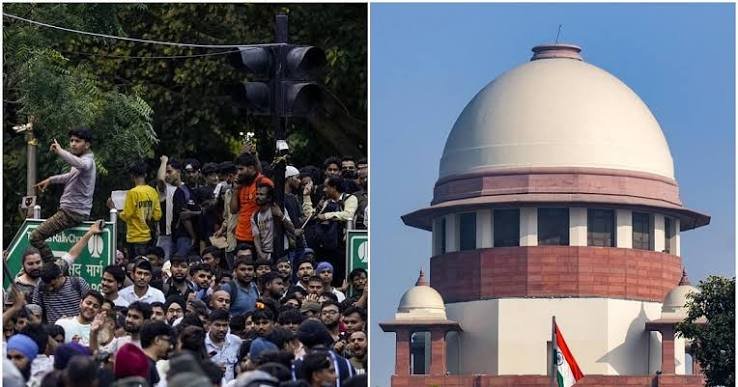
NEW DELHI: The Supreme Court has quashed all FIRs registered across India against students who took part in protests over the NEET-UG paper leak, invoking its extraordinary powers under Article 142 of the Constitution.
The decision gives major relief to NEET-UG Protesters 2026, who had faced criminal cases following demonstrations held between July 20 and July 25. The court said it was exercising its special powers to protect the future of young protesters who had participated in good faith, The Indian Express reported.
Supreme Court uses Article 142 to quash cases
A three-judge bench led by Chief Justice of India Surya Kant exercised Supreme Court Article 142 powers after Delhi Police and the governments of Maharashtra, Assam, Bihar and West Bengal moved applications seeking the withdrawal or quashing of cases.
The bench, which also included Justices Joymalya Bagchi and V. Mohana, ordered that all FIRs formally placed before it be quashed. It also directed that other FIRs connected to the same protests should not be pursued or investigated.
The ruling marks the strongest judicial relief yet for NEET-UG Protesters 2026, ending the uncertainty surrounding protest-related cases filed in several states.
What the Supreme Court actually ordered
The court made it clear that no state or Union Territory should register a fresh FIR connected with the protests held during the July 20–25 period.
However, the relief was not absolute for every person associated with the demonstrations. The Centre was allowed to proceed against 2,873 people with criminal records who were identified among the protesters in Delhi.
That distinction is crucial to the Supreme Court Article 142 ruling. The court protected students and young protesters who participated in the demonstrations but did not extend the same blanket protection to people facing allegations of serious prior criminal conduct.
Students’ planned Delhi march is called off
The Cockroach Janta Party, or CJP, which led major protests over the NEET-UG paper leak, withdrew its planned September 5 march to Delhi after the court’s decision.
The group’s co-convenor, Saurav Das, said the protest march was being withdrawn in view of the government’s assurances and the judicial relief granted by the Supreme Court.
For NEET-UG Protesters 2026, the ruling removed one of the movement’s biggest demands from the agenda: the withdrawal of criminal cases against students who participated in the nationwide demonstrations.
Why Article 142 became central to the case
Supreme Court Article 142 allows the apex court to pass orders necessary to do “complete justice” in matters before it.
The provision has been used in exceptional circumstances where ordinary legal processes may not provide an adequate or comprehensive remedy. In this case, the court used those powers to address FIRs registered in multiple jurisdictions over the same wave of protests.
The decision followed earlier court proceedings in which states had been permitted to close or withdraw cases against students in accordance with law. The latest order went further by directly quashing the protest-related FIRs.
Relief comes with wider directions
The Supreme Court also asked the Centre to formulate a pan-India policy for compensating families of NEET aspirants who died by suicide following the examination controversy.
According to the court’s direction, the policy should ensure that compensation is paid within three months.
The decision represents a major legal victory for NEET-UG Protesters 2026, but its wider significance extends beyond the immediate cases. It demonstrates how Supreme Court Article 142 can be used to provide a nationwide remedy where multiple criminal proceedings arise from the same mass movement.
For the students who faced FIRs after protesting against the alleged NEET-UG paper leak, the order has brought the clearest relief yet.