Trump Rejects Iran Talks, Claims ‘Almost Total Control’ of Strait of Hormuz as Fresh Strikes Rock Region
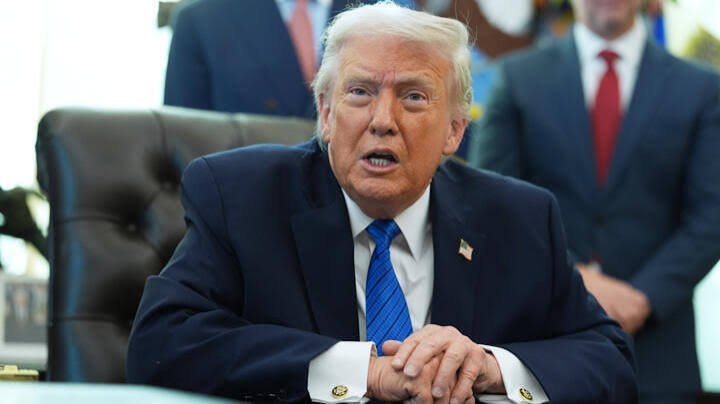
WASHINGTON: President Donald Trump has rejected suggestions that the United States is pushing for renewed negotiations with Iran, declaring that Washington has “almost total control” of the Strait of Hormuz as fresh military exchanges push US Iran Tensions deeper into a dangerous new phase.
Trump made the remarks on September 2 while responding to a report that his administration was privately seeking to bring Tehran back to negotiations. He denied that claim and instead argued that the U.S. position in the Strait of Hormuz had strengthened, Reuters reported.
Trump dismisses talk of new negotiations
The latest comments came amid conflicting signals over whether diplomacy could resume. Trump has said the United States is not currently talking with Iran, while Tehran has maintained that Washington must honour commitments under an interim agreement before any meaningful progress can occur.
The dispute has intensified US-Iran tensions after renewed military exchanges in recent days. The United States launched fresh strikes against Iranian targets on September 1, while Iran responded with retaliatory attacks, according to Reuters.
Trump’s claim of “almost total control” over the Strait of Hormuz should be understood as a political and military assertion, not as evidence that the waterway has returned to normal operations.
Shipping through Hormuz remains severely disrupted
The Strait of Hormuz remains one of the world’s most strategically important maritime chokepoints, but shipping traffic has fallen sharply as the conflict has intensified.
Only four commodity vessels transited the waterway on Tuesday, compared with about 13 on average over the previous 10 days, according to preliminary vessel-tracking data cited by Reuters.
The disruption is significant because the waterway previously handled nearly one-fifth of global oil shipments. The threat to commercial traffic has turned U.S.-Iran tensions into a major concern for energy markets and global shipping.
Fresh military action raises stakes
The latest escalation followed U.S. military strikes on Iranian targets and retaliatory Iranian action, adding to fears that the conflict could widen further across the Middle East.
Iran’s Revolutionary Guards have warned that further U.S. military action could lead to additional restrictions on the Strait of Hormuz, although the precise legal and operational status of shipping access remains subject to rapidly changing conditions.
The U.S. administration, meanwhile, has continued to focus on military and economic pressure rather than presenting a clear timetable for new negotiations.
Oil markets are watching every move
The impact of the conflict is already visible in energy markets. Oil prices rose as traders responded to fresh U.S.-Iranian strikes and the possibility of further supply disruptions, according to Reuters.
The prospect of reduced movement through the Strait of Hormuz is especially sensitive because a prolonged disruption could affect oil and liquefied natural gas supplies reaching global markets.
For US-Iran tensions, that means the diplomatic confrontation now carries consequences far beyond Washington and Tehran. Energy-importing countries and major shipping companies are closely watching whether military pressure will produce negotiations or trigger another escalation.
What happens next remains uncertain
Trump’s rejection of the latest claims about U.S.-Iran negotiations has made an immediate diplomatic breakthrough appear less likely. However, the positions of both governments have shifted repeatedly during the wider crisis.
The U.S.-Iran tensions remain highly volatile, with military operations, economic pressure and diplomacy now unfolding simultaneously. Trump’s assertion of “almost total control” of the Strait of Hormuz will face a practical test in whether commercial shipping can safely resume at normal levels.
For now, the clearest signal is that neither side has shown a stable path toward de-escalation.