F-16 Crash Michigan: National Guard Fighter Jet Crashes After Possible Bird Strike
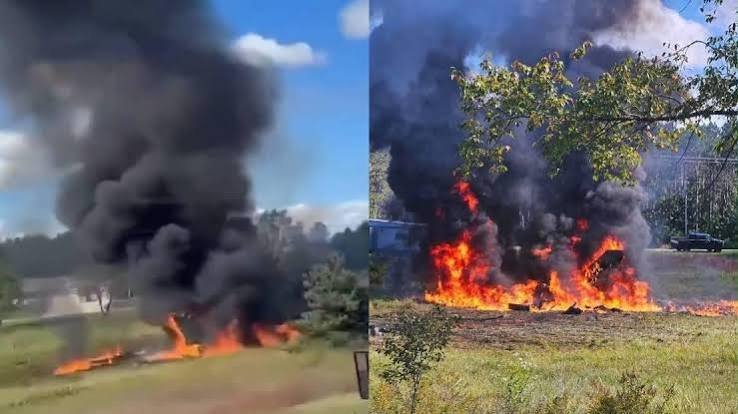
MICHIGAN: A Texas Air National Guard F-16 Fighting Falcon crashed in Grand Traverse County on Thursday, September 17, during a routine training mission, forcing the pilot to eject before the aircraft went down in a rural area near Traverse City. The pilot survived and was taken to a local hospital in stable condition.
The F-16 crash Michigan incident involved an aircraft assigned to the 149th Fighter Wing at Joint Base San Antonio-Lackland in Texas. The unit was participating in training activities at the Alpena Combat Readiness Training Center in northern Michigan.
According to the Associated Press, the pilot was the only person aboard the aircraft and safely ejected. Grand Traverse County Sheriff Michael D. Shea later said the pilot was conscious and able to communicate with law enforcement at the hospital.
F-16 Crash Michigan Under Investigation
The precise cause of the F-16 crash Michigan remains under investigation. Military officials have not confirmed that a bird strike caused the accident.
However, radio communications between the aircraft’s wingman and air traffic controllers indicated that a possible bird strike may have occurred. The wingman reported a potential mayday and said he believed the other F-16 may have hit a bird before the pilot ejected.
The report has therefore been treated as a possible explanation rather than an established cause. Officials are expected to examine the aircraft, flight data and other evidence as part of the investigation.
The Texas Military Department said the aircraft was conducting a routine training mission when it experienced an incident. The 149th Fighter Wing also confirmed that the crash is being investigated.
Pilot Ejects Before Fighter Jet Crashes
The pilot successfully ejected from the aircraft before it struck the ground. The National Guard F-16 was flying in the Grand Traverse County area when the emergency developed.
The crash occurred in a rural area near Blair Township, south of Traverse City. Witnesses reported hearing a loud impact and seeing a large plume of smoke after the aircraft went down.
There were no reported injuries to people on the ground. Authorities nevertheless established emergency measures around the crash site because of hazards associated with the wreckage.
Michigan State Police ordered residents within approximately one mile of the crash site to evacuate after a hazardous chemical spill was reported. The area was subsequently declared safe and the evacuation order was lifted.
US Fighter Jet Accident Prompts Emergency Response
The US fighter jet accident triggered a coordinated response involving Michigan State Police, local law enforcement and emergency management officials.
Authorities initially urged people near the crash area to remain indoors and avoid approaching the wreckage. The response reflected concerns over debris and hazardous materials associated with the damaged military aircraft.
The National Guard F-16 had been operating from the Alpena training facility as part of ongoing military exercises. The 149th Fighter Wing is based at Joint Base San Antonio-Lackland and routinely conducts training designed to prepare personnel for operational deployments.
The US fighter jet accident adds another investigation to the U.S. military’s continuing review of aircraft mishaps during training operations. Officials have not indicated that the crash was connected to hostile activity or any broader security incident.
For now, the pilot’s safe ejection remains the key confirmed outcome, while investigators work to determine what caused the F-16 crash Michigan and whether the reported bird strike played a role.
The investigation remains active, and additional information about the aircraft’s mechanical condition, flight path and possible cause could emerge as authorities examine the wreckage.