Vande Mataram Ruling: Supreme Court Says Conscientious Objectors Should Not Face Criminal Penalties
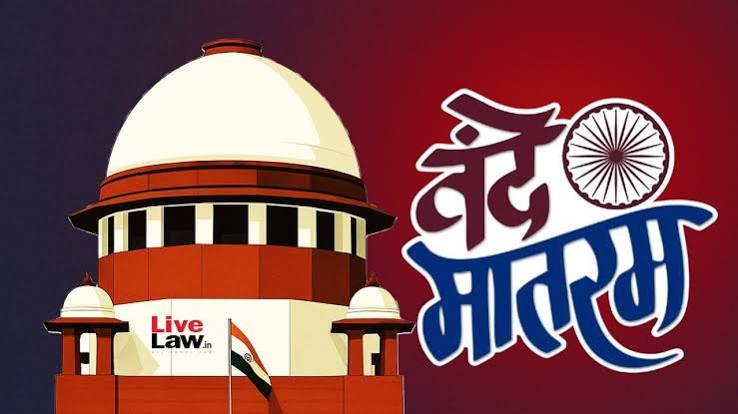
NEW DELHI: The Supreme Court on Tuesday indicated that a person who respectfully refuses to sing Vande Mataram on grounds of religion or conscience should not face criminal consequences. The observation came during a hearing on Carnatic vocalist T M Krishna’s petition challenging the 2026 amendment to the Prevention of Insults to National Honour Act, 1971.
The Vande Mataram ruling has drawn attention because the Court referred to its 1986 judgment in Bijoe Emmanuel v. State of Kerala, which protected schoolchildren who declined to sing the national anthem for reasons of conscience while maintaining respect for it.
According to LiveLaw, a bench headed by Chief Justice Surya Kant and comprising Justices Joymalya Bagchi and V Mohana said the principle established in the 1986 judgment should govern the amended law. The Court also indicated that it would examine whether conscientious objectors can be subjected to criminal penalties.
TM Krishna Petition Challenges Six-Stanza Requirement
The TM Krishna case challenges Section 3 of the amended law along with Ministry of Home Affairs directions concerning the rendition of all six stanzas of Vande Mataram at specified official functions.
Krishna’s petition argues that the later four stanzas contain references to Hindu deities and that compelling their rendition raises questions concerning freedom of conscience, religious freedom, freedom of expression and secularism. These are arguments made by the petitioner and have not been finally adjudicated by the Court.
The amended Section 3 applies criminal penalties where a person intentionally prevents the singing of the National Anthem or National Song, or causes disturbance to an assembly engaged in such singing. The provision allows imprisonment of up to three years, a fine, or both.
Court Leaves National Song Status To State
During the hearing, the bench indicated that deciding what constitutes the National Song, including whether two, four or six stanzas should be used, is for the democratic state rather than the Court to determine.
The Supreme Court India proceedings therefore focused on a narrower constitutional question: whether criminal consequences can apply to someone who respectfully declines to sing because of a protected matter involving conscience or religion.
Justice Bagchi referred directly to Articles 25 and 26 while discussing religious freedom. The Court also stressed that the 1986 Bijoe Emmanuel judgment remains the governing precedent unless changed by a later decision.
TM Krishna Case Now Awaits Centre’s Response
The TM Krishna case remains pending. The Court has sought the Union government’s response while leaving the constitutional challenge open for further consideration.
The hearing comes during a period of active Supreme Court India litigation involving questions of statutory powers, constitutional rights and enforcement. The court’s recent Supreme Court proceedings have also involved scrutiny of how legal requirements are implemented by public authorities.
The Vande Mataram ruling should therefore be read as a statement made during the pending proceedings, rather than a final judgment disposing of Krishna’s constitutional challenge. The Court has not finally decided all issues raised in the petition.
The Supreme Court India hearing has nevertheless placed the interaction between national symbols, criminal law and freedom of conscience directly before the apex court. Further proceedings will determine how those issues are addressed under the amended law.