BRICS Security Tightens as Delhi Restricts Flights Across 300-Km Zone
New Delhi has entered a tightly controlled aviation period as India hosts the 18th BRICS Leaders’ Summit, with temporary restrictions covering aircraft operations around the capital from Friday, September 11, through Sunday, September 13.
The Directorate General of Civil Aviation (DGCA) has ordered restrictions on flying activities by flight-training organisations in seven northern states and separately prohibited certain light aircraft, unmanned aerial vehicles and other small aerial platforms within a 300-kilometre radius of Delhi.
The measures are part of the security arrangements for the summit, which is being held at Bharat Mandapam in New Delhi from September 11 to 13. The DGCA said the restrictions were approved by the competent authority and were intended as a precautionary security measure.
Restrictions begin at 7 am on September 11
The DGCA restrictions are scheduled to remain in force from 7 am on September 11 until 11 pm on September 13.
Flying Training Organisations in Uttar Pradesh, Punjab, Haryana, Madhya Pradesh, Uttarakhand, Rajasthan and Himachal Pradesh have been instructed not to conduct flying activities during that period.
The DGCA communication specifically covers aircraft operating from flight-training organisations, including light and microlight aircraft, hang gliders and helicopters. The restrictions apply even to aircraft starting operations from the affected training facilities.
The wider airspace measures extend beyond flight schools.
According to the DGCA order reported by PTI and multiple Indian news organisations, light and microlight aircraft, unmanned aerial vehicles and similar long-range aerial vehicles are prohibited within 300 km of Delhi during the specified period.
A separate 100-km restriction applies to hang-gliders, paragliders, paramotors, aero-models, drones and similar short-range aerial vehicles.
Non-scheduled flights face additional restrictions
The restrictions also affect non-scheduled aviation around Delhi during the summit period. A report published by NDTV Profit said non-scheduled flights within the 300-km zone would be restricted during the security window, while regular scheduled commercial operations would continue under applicable arrangements.
This distinction is important for passengers. The measures are not a blanket shutdown of Delhi’s commercial airspace.
The restrictions are instead aimed at controlling general aviation and other aircraft movements while international leaders and senior delegations arrive in the capital.
Reporting on the summit’s aviation preparations indicates that authorities have been preparing multiple airports and parking facilities for the large number of special aircraft associated with the event. Hindustan Times reported that around 35 special aircraft, including VVIP and charter aircraft, were expected to arrive in connection with the summit, with parking arrangements made at Delhi, Air Force Station Palam, Noida International Airport and Hindon.
Regular passenger flights are not being grounded
The restrictions should not be interpreted as a suspension of normal commercial air travel to and from Delhi.
Scheduled passenger services are expected to continue, although airport operations and surrounding road traffic are subject to heightened security arrangements and possible temporary controls during VIP movements.
The distinction between scheduled and non-scheduled operations has also been used in previous major security events in the capital. However, the current restrictions are specifically tied to the 2026 BRICS Summit and the DGCA’s September 7 communication.
For ordinary passengers, the principal concern is therefore not an across-the-board flight ban but the possibility of operational and access changes associated with the arrival and departure of foreign leaders.
Delhi prepares for a major diplomatic gathering
The aviation restrictions are one part of a much larger security operation.
The 18th BRICS Leaders’ Summit is taking place at Bharat Mandapam in New Delhi. Reuters reported that India is hosting the summit on September 12-13, with leaders including Chinese President Xi Jinping, Russian President Vladimir Putin and Iranian President Masoud Pezeshkian attending, while the UAE is represented by Crown Prince Sheikh Khaled.
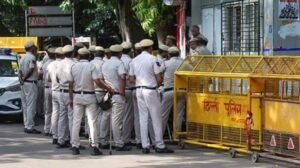
Delhi authorities have also introduced extensive traffic arrangements for the summit.
The Delhi Traffic Police has identified more than 35 roads that may be subject to controlled movement and established 22 diversion points. It has advised commuters travelling to the airport and major railway stations to allow additional time and use public transport, particularly the Metro, where possible.
The aviation preparations have similarly required coordination between airports, security agencies and aviation authorities.
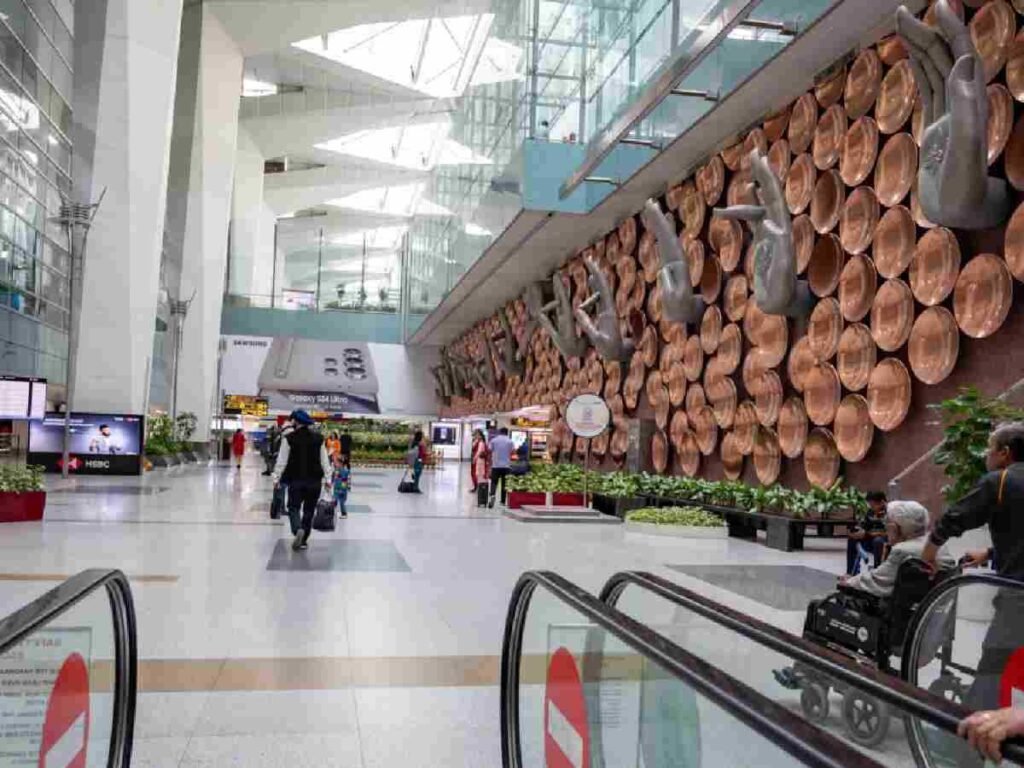
Delhi airport has also been preparing for additional international traffic. The airport’s Terminal 3 Pier C has been repurposed from domestic to international use to help accommodate the expected increase in international passengers associated with the summit.
Why the 300-km restriction matters
A 300-km radius represents a substantially wider security perimeter than the immediate airspace around Delhi.
The restriction gives authorities greater control over smaller aircraft and unmanned aerial systems that could otherwise operate well outside the central New Delhi area. The separate 100-km restriction on drones and other short-range aerial vehicles creates an additional layer of protection closer to the capital.
At the same time, flight-training operations in seven states have been temporarily suspended, extending the security measures beyond Delhi’s borders.
The DGCA has described the restrictions as precautionary measures intended to support the safe and smooth conduct of the summit.
For aviation operators, the restrictions mean that any affected flight planned during the September 11-13 window needs to be checked against the applicable DGCA instructions and operational permissions.
For passengers on scheduled airlines, there is currently no indication that the summit restrictions amount to a general suspension of commercial air services.
The restrictions are due to expire at 11 pm on September 13, unless authorities issue further instructions.
The situation remains subject to operational and security changes during the summit period.