Kerala’s ₹19 Crore EV Push Could Transform NH 66 Into India’s First Electric Truck Corridor
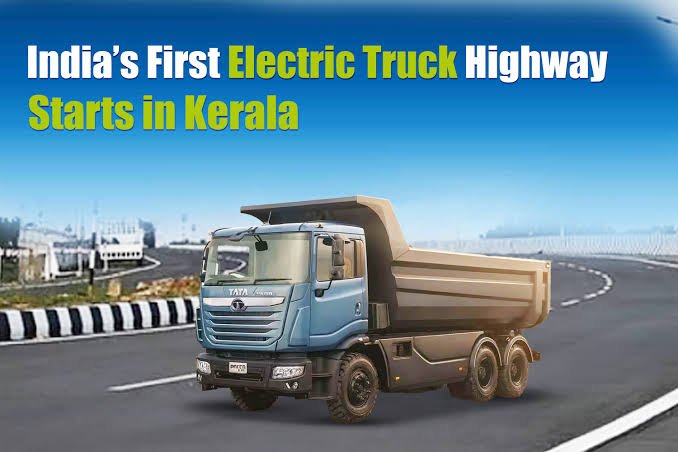
THIRUVANANTHAPURAM: Kerala is laying the groundwork to turn the 622-km stretch of National Highway 66 from Kasaragod to Thiruvananthapuram into India’s first electric truck corridor, a major proposal that could reshape freight transport and charging infrastructure for heavy vehicles.
The proposed Kerala Electric Corridor is based on a study by the Kerala State Electricity Board Ltd (KSEBL) and the International Council on Clean Transportation (ICCT). Released at the India Clean Transport Summit 2026 in Delhi, the study estimates an initial investment of ₹19 crore and 12.5 MW of charging capacity will be required, according to The New Indian Express.
NH 66 is being planned for electric freight
The Kerala Electric Corridor would cover NH 66 across the state and focus specifically on the charging requirements of electric trucks. Unlike charging infrastructure designed mainly for passenger vehicles, the project would require substantial power capacity and planning for heavy-duty freight transport.
The study used FASTag data from four toll plazas, national truck deployment information, GPS data from 13,355 trucks and 339,692 parking records to understand truck movement and identify charging needs, India Today reported.
KSEBL has described the initiative as a way to prepare the power grid before electric trucks become more common. The proposal could therefore become an important test case for the future of India’s EV Infrastructure, particularly as freight electrification moves beyond passenger cars and two-wheelers.
₹19 crore is only the starting point
The initial 12.5 MW charging network is aimed at developing the Kerala Electric Corridor by 2030. However, the long-term requirements could grow sharply.
By 2050, the corridor could require 1,939 chargers with a combined capacity of 204.5 MW, involving an estimated investment of ₹338 crore, according to the KSEBL-ICCT study.
Daily electricity demand for truck charging is projected to rise from 32 MWh in 2030 to 833 MWh in 2050. That highlights the challenge behind the India EV Infrastructure transition: building charging stations alone will not be enough without preparing electricity distribution networks for heavy-duty vehicles.
Major charging hubs could emerge across Kerala
Kochi, Kozhikode and Kollam are expected to become important charging hubs along the proposed Kerala Electric Corridor. The Thiruvangad-Kumbalam section alone could require 76.4 MW of charging capacity by 2050, according to Onmanorama’s report on the study.
KSEBL is also moving to expand the state’s wider EV charging network. The utility has proposed more than 200 fast-charging stations across Kerala, with a tender already issued for 207 stations, The New Indian Express reported.
This expansion could complement the state’s efforts to strengthen India’s EV Infrastructure across both passenger and commercial transport.
Funding could draw on existing EV schemes
The project is expected to use existing central and state funding channels. The Union government has earmarked ₹2,000 crore under the PM E-DRIVE scheme for public charging infrastructure, while ₹63.12 crore has already been sanctioned for a charging network in Kerala, according to Onmanorama.
The proposed Kerala Electric Corridor could become one of the clearest examples of a state preparing its power system for electric freight before widespread adoption takes place.
The development also adds to India’s broader electric-mobility expansion, which includes vehicles such as the Ather Konark electric scooter.
A potential model for electric freight
KSEBL Director M P Rajan said the project could show how a state utility can make freight electrification practical while preparing the grid for future demand. The broader goal is to create a Kerala Electric Corridor that could offer lessons for other states.
If the project progresses as planned, India EV Infrastructure could move into a new phase in which long-distance commercial trucks become a major focus alongside cars, buses and two-wheelers.