India Rejects Pakistan-China Boundary Joint Commission After Islamabad Meeting
NEW DELHI: India has rejected the Pakistan-China Boundary Joint Commission after its first meeting in Islamabad on September 16, saying the mechanism has no legal basis concerning territories claimed by New Delhi.
India challenges the joint commission
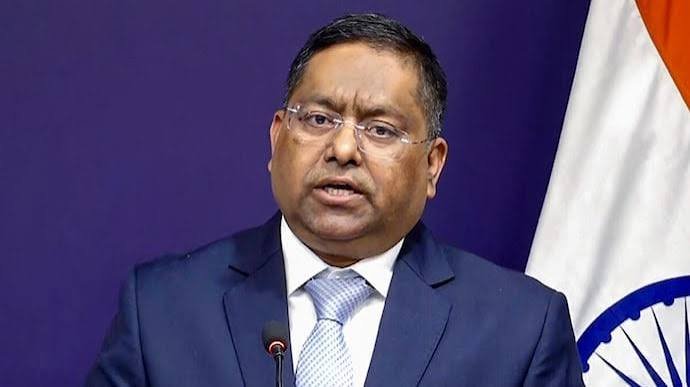
External Affairs Ministry spokesperson Randhir Jaiswal said India’s position on the India rejects Pak-China boundary commission issue remained clear and consistent. He said there was no recognised boundary between Pakistan and China in relation to territories that India considers part of Jammu and Kashmir and Ladakh. The Indian Express reported on India’s response
The Pakistan-China Boundary Joint Commission was operationalised by Islamabad and Beijing on September 16. Pakistan’s Ministry of Foreign Affairs said the mechanism would support cooperation in border management, joint border surveys, trade flows and people-to-people connectivity.
1963 agreement remains central
India’s objection is closely tied to the China-Pakistan Boundary Agreement of 1963. New Delhi has never recognised that agreement and maintains that it is illegal and invalid because it concerns territory India claims.
The India rejects Pak-China boundary commission position therefore extends beyond the new mechanism itself. Jaiswal said Pakistan had no authority to enter arrangements concerning Indian territory that India says is under Pakistan’s illegal and forcible occupation.
India has also consistently opposed the China-Pakistan Economic Corridor because part of its route passes through territory claimed by India.
Pakistan and China set out their position
For Islamabad and Beijing, the Pakistan-China Boundary Joint Commission is a bilateral framework for practical border cooperation. Pakistan has described its operationalisation as a significant milestone in bilateral relations.
The stated functions include border management and joint surveys, alongside measures intended to facilitate trade and people-to-people connectivity. The commission’s creation does not, however, resolve the separate territorial dispute between India, Pakistan and China.
The India rejects Pak-China boundary commission position means New Delhi does not accept the premise that Pakistan and China can establish arrangements affecting territories claimed by India.
Wider India-China context
The development comes as the India-China boundary dispute remains unresolved despite renewed diplomatic engagement. Earlier coverage of recent India-China talks has highlighted efforts to stabilise the frontier while the underlying territorial disagreement continues.
India’s objection to the Pakistan-China Boundary Joint Commission is therefore connected to its broader position that arrangements between other states cannot determine the status of territory claimed by New Delhi.
What India’s rejection means
The India rejects Pak-China boundary commission stance does not prevent Pakistan and China from operating their bilateral mechanism, but it establishes that New Delhi will not recognise any territorial implications arising from it.
The Pakistan-China Boundary Joint Commission can continue its stated work on border management and related cooperation between Islamabad and Beijing. India, however, has made clear that such activities will not alter its stated position on Jammu and Kashmir and Ladakh.
For New Delhi, the dispute centres on sovereignty and the validity of the 1963 agreement. For Pakistan and China, the commission is being presented as a bilateral instrument for managing practical border issues.
The India rejects Pak-China boundary commission position is consequently likely to remain part of India’s diplomatic response to future Pakistan-China arrangements concerning the disputed region. The Pakistan-China Boundary Joint Commission now has a functioning bilateral framework, but its activities remain contested by India.