Sikh Truck Driver Stabbed 17 Times in US, Suspect Charged
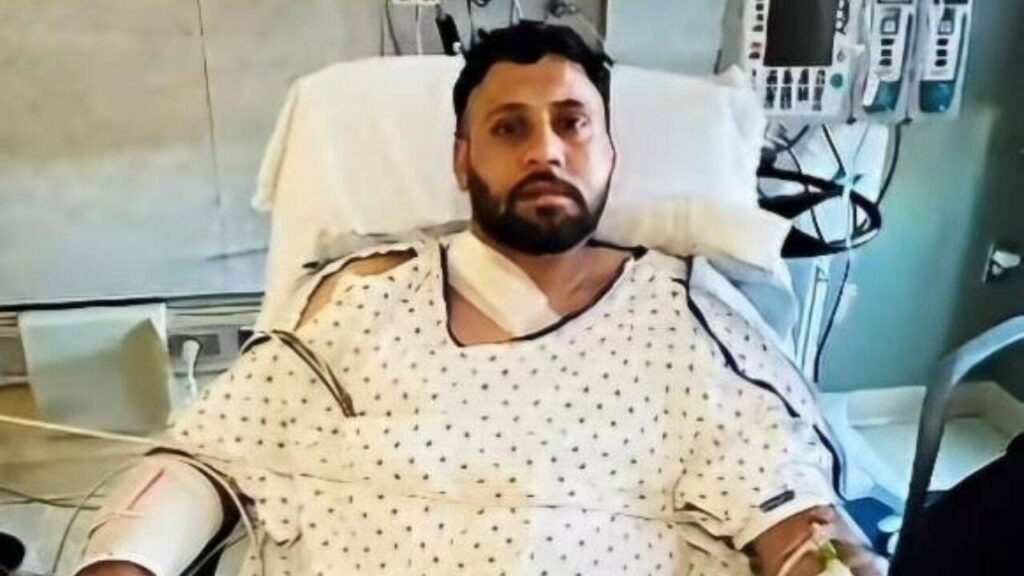
A 28-year-old Punjabi Sikh truck driver was stabbed 17 times inside a restroom at a Wyoming rest stop early Sunday, September 13, leaving him with injuries to his neck, chest, arms and ribs. A suspect was arrested less than 90 minutes after the attack and has been charged with attempted first-degree murder.
The attack happened at the Bitter Creek Rest Area on Interstate 80, about 41 miles east of Rock Springs, according to the Sweetwater County Sheriff’s Office. Deputies were called at about 3:27 a.m. after reports of a stabbing. The victim was taken to a trauma facility, while the suspect fled east in a tractor-trailer toward Rawlins.
The driver, identified in media reports as Gurvinder Singh, told NPR that he was travelling toward Pennsylvania when he stopped at the rest area. He said he noticed another man behind him as he entered the bathroom but did not initially think anything was wrong.
Singh said the man then attacked him without warning, beating him before pulling out a knife and stabbing him repeatedly. He managed to leave the restroom but collapsed outside and called for help.
Suspect arrested after fleeing the rest area
Charging documents reported by Cowboy State Daily identify the suspect as Andrew Kris Bzdak, 45. Prosecutors have charged him with attempted first-degree murder.
Investigators said video from a nearby truck showed the victim walking toward the restroom before another man followed him inside. The camera did not capture the assault inside the bathroom, but it showed the alleged attacker leaving shortly afterward and returning to a truck.
A family at the rest area also heard screaming and saw a man leave the building. The family followed the suspect’s truck for a distance and photographed identifying information, which was passed to investigators. Wyoming Highway Patrol later stopped the vehicle near Rawlins and took Bzdak into custody.
The Sweetwater County Sheriff’s Office said shortly after the attack that there was no known motive and no continuing threat to the public. The investigation remains ongoing.
Singh says he does not know why he was attacked
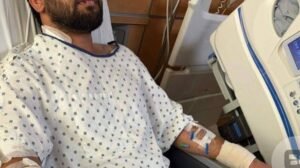
Speaking from his hospital bed, Singh said he could not understand why he had been targeted.
“I don’t know why this happened. I don’t know why they attacked me,” he told NPR, according to multiple reports citing his interview.
Singh has worked as a commercial truck driver for about three years, according to reporting on his account. He said the assault has left him worried about what could happen to other Punjabi Sikh truck drivers travelling across the United States.
A Hispanic family who was at the rest stop helped him after he emerged from the bathroom, according to Singh’s account. Their observations also provided investigators with information that helped identify the suspect’s vehicle.
Attack follows controversy over DHS ‘Mr Singh’ post
The stabbing has drawn additional attention because it occurred four days after a controversial social media campaign by the U.S. Department of Homeland Security.
On September 9, DHS posted an AI-generated graphic on its official X account styled as a Transformers movie poster. It showed a brown-skinned, bearded man wearing a head covering and identified him as “Mr Singh.” The graphic included the line, “Get off our roads; you don’t know how to drive, Mr Singh,” alongside the phrase “Self-deport or find out.”
The campaign was part of the Trump administration’s broader immigration-enforcement messaging concerning commercial drivers and undocumented immigrants. The “Mr Singh” imagery drew criticism from Sikh and Indian-American organizations, which argued that using a common Sikh and Indian surname alongside imagery associated with South Asian identity risked stereotyping an entire community.
DHS subsequently removed the post after the backlash. Reporting at the time said the department maintained that its campaign was focused on immigration enforcement and unsafe or unlicensed commercial drivers.
No established link between the post and the stabbing
The timing has prompted Sikh and South Asian advocacy groups to call for investigators to examine whether racial, ethnic or religious bias played any role in the Wyoming attack.
That concern, however, should not be confused with an established connection.
Authorities have not publicly said that Bzdak was motivated by the DHS post, and the charging information reported so far does not establish that the stabbing was a hate crime. The Sweetwater County Sheriff’s Office initially said there was no known motive.
The American Sikh Council has called for a full investigation into the circumstances surrounding the attack, while other civil-rights and community organizations have also urged authorities to establish whether bias was involved. Reports on those calls have emphasized that the organizations are not presenting a connection between the DHS post and the stabbing as proven.
The distinction is significant: the stabbing itself is established through police records and charging documents, while the motive remains an investigative question.
Community concerns grow as investigation continues
The incident has drawn condemnation from several U.S. political figures and community organizations.
Rep. Raja Krishnamoorthi of Illinois condemned the stabbing and connected his comments to broader concerns about hostility toward Sikh and South Asian Americans. Rep. Mike Thompson of California also called for a thorough investigation and for the person responsible to be brought to justice.
The investigation into the Wyoming attack remains active. Bzdak faces an attempted first-degree murder charge, while the central unanswered question is why Singh was attacked.
For now, investigators have established the sequence of the assault and arrested a suspect, but they have not publicly established whether the victim’s Sikh identity, ethnicity, immigration status or anything connected to the recent DHS campaign played a role.
This story may be updated as new information becomes available.