A Warming Himalayas Puts Water, Livelihoods and Economies at Risk
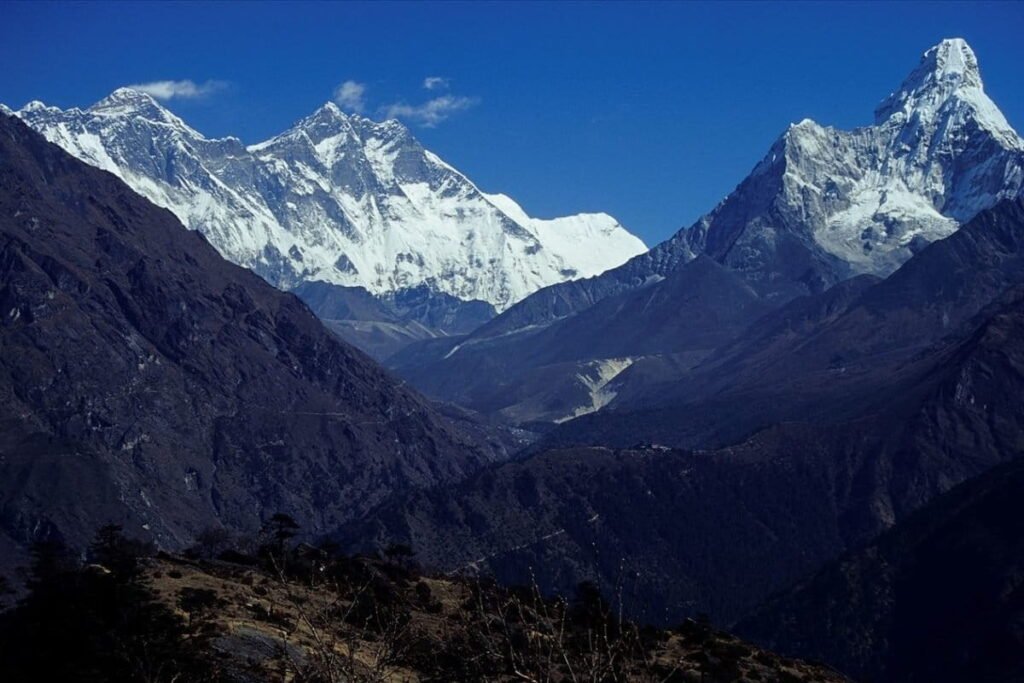
HONG KONG — The Himalayas are approaching a critical tipping point as glaciers lose mass at an accelerating rate, increasing risks to water supplies, communities and economies across South Asia, according to a new regional assessment released this month.
The report, Prosperous and Resilient Himalayas, says Himalayan glaciers are losing mass 65% faster than they were a decade ago. It warns that the region is also moving toward “peak water” around the middle of the century, when glacier-fed river flows are expected to reach their maximum before beginning to decline.
The assessment was produced by sustainability advisory firm Systemiq with the Integrated Mountain Initiative and technical contributions from the International Centre for Integrated Mountain Development (ICIMOD) and India’s G.B. Pant National Institute of Himalayan Environment. An abridged version was released on Sept. 9, ahead of the full report expected in October.
The warning comes after a devastating glacier-related disaster along the Nepal-Tibet border in late August. Reuters reported that cascading landslides and flash floods following the collapse left at least 1,300 people confirmed dead and more than 5,300 missing across Nepal and China’s Tibet region.
Glacier retreat is creating new hazards
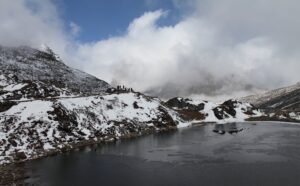
As glaciers shrink, they can leave behind lakes contained by unstable rock and ice. Those lakes can pose a serious downstream hazard if their natural barriers fail.
The new report says India alone has 56 glacial lakes classified as very high risk, while Reuters reported that close to 200 Indian glacial lakes have been identified as high risk.
Monitoring remains limited compared with the scale of the mountain system. Reuters reported that only 21 glaciers are currently monitored on the ground out of an estimated 40,000 glaciers across the Hindu Kush Himalaya, which stretches across eight countries from Afghanistan to Myanmar.
ICIMOD has separately warned that the Himalayan cryosphere is approaching a critical tipping point and says glacier wastage in the region has accelerated sharply since 2000. Its monitoring data also show substantial long-term ice loss among the glaciers being observed.
The water problem could change over time
The term “peak water” refers to a point at which increasing glacier melt temporarily boosts river flows before shrinking ice reserves eventually cause those flows to decline.
That shift matters because Himalayan rivers support agriculture, hydropower, industry and domestic water supplies across densely populated parts of Asia.
The Systemiq report says the Himalayas underpin more than 20% of India’s GDP when the wider downstream economic connections of Himalayan water are considered. A separate Times of India report based on the assessment estimated the figure at 21.5%, or about ₹64.8 lakh crore, while saying Himalayan states capture only around 5% of the economic value generated by this wider system.
The report therefore argues that the mountains should be treated not simply as an environmental or disaster-management issue but as critical economic infrastructure.
That exposure extends beyond the mountain states themselves. Water originating in the Himalayas supports agriculture and other economic activity downstream, meaning disruption to mountain ecosystems can spread through supply chains and regional economies.
Climate pressure is not the only concern
The assessment identifies pressures at global, regional and local levels.
Global warming is accelerating the loss of snow and ice. At the same time, the report says black carbon deposited on glaciers is contributing significantly to melting. It estimates that roughly one-third of Himalayan glacier melt is driven by black carbon, much of it associated with emissions from sources such as brick kilns in the plains.
Unlike global greenhouse-gas emissions, reducing regional sources of black carbon is a lever that governments in the region can address more directly, the report says.
The mountains also face high costs for infrastructure and public services. Systemiq estimates that building and delivering services in Himalayan areas can cost roughly 2.5 times more than in the plains.
That combination — difficult terrain, rising climate risks and economic dependence downstream — makes adaptation particularly challenging.
Calls for coordinated action
The report proposes 10 priority transitions focused on protecting natural systems, strengthening resilience and developing economic activity suited to mountain environments.
Systemiq estimates that these measures could generate an average adjusted return of roughly eight times the rupee invested when economic, ecological, social and avoided-loss benefits are included. That figure is the report’s assessment rather than an independently established financial return.
Lord Nicholas Stern, chair of the Grantham Research Institute on Climate Change and the Environment at the London School of Economics, said the ecological system beneath the Himalayas is approaching a tipping point and argued that its protection is central to the future economic security of communities across South Asia.
ICIMOD Director General Pema Gyamtsho said glaciers, permafrost and high-mountain slopes are changing rapidly and called for cross-border monitoring, shared risk information, early-warning systems and coordinated investment.
The need for cooperation reflects the geography of the problem. Rivers, glaciers and climate hazards do not stop at national borders, while decisions about infrastructure, land use, emissions and disaster preparedness are generally made at the national or local level.
What happens next
The full Prosperous and Resilient Himalayas report is scheduled for publication in October, according to Systemiq. The organization has released the abridged version earlier than planned following the August disaster in Nepal and the wider Himalayan region.
For governments, the immediate challenge is to improve monitoring and early-warning systems while addressing longer-term pressures on glaciers, watersheds and mountain communities.
The scientific outlook is not that Himalayan water supplies will suddenly disappear. Rather, the concern is that a system that has historically provided relatively predictable water, ecological services and economic support is becoming less stable. How quickly that change unfolds will depend partly on future warming and the region’s ability to adapt.
For hundreds of millions of people who depend directly or indirectly on the Himalayas, the distinction matters: the risks are already visible, while the larger consequences are expected to build over decades.