Nepal glacier collapse climate change: Study Links Rapid Warming to Deadly Himalayan Floods
NEPAL: A World Weather Attribution assessment released September 17 says rapid warming and changes in ice, permafrost and precipitation likely weakened conditions around the August 26 disaster on the Nepal-China border. This is central to Nepal glacier collapse climate change coverage. The Himalayan floods scientific study describes warming as a destabilising factor acting on pre-existing geological weaknesses. The findings put Nepal glacier collapse climate change under scrutiny. For global warming environmental news, the distinction between contributing conditions and a single proven cause is significant.
What the study found
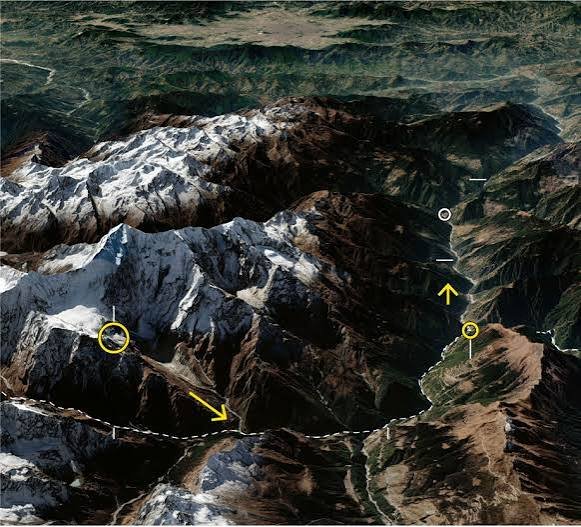
The assessment examined the failure of a large rock wall on Langtang Lirung at about 5,150 metres above sea level. Part of the overlying glacier also collapsed, producing a rock-and-ice avalanche that became a debris flood and then a water-dominated flash flood.
The Himalayan floods scientific study found an unusually warm 12-month period before the failure, with July and August especially warm. Researchers also found that the elevation of the freezing threshold has been rising by about 100 metres per decade. A higher freezing level can contribute to permafrost degradation, glacier thinning and more precipitation falling as rain.
For Nepal glacier collapse climate change reporting, an important qualification is included: researchers did not determine whether this specific avalanche would have occurred without human-caused climate change. Saying warming alone caused the collapse would go beyond the evidence.
Why the findings matter
The assessment records more than 1,300 confirmed deaths in Nepal as of September 14, more than 5,000 missing, about 13,700 people rescued and more than 8,600 treated. A wall of water, ice, rock and sediment reached the Rasuwagadhi border 22 kilometres downstream in about seven minutes; the flow averaged 188 km/h.
For global warming environmental news, the important point is the interaction of several hazards rather than glacier retreat alone. The report links warming, permafrost degradation, rainfall patterns, glacier loss and geological instability. The Himalayan floods scientific study also stresses that these factors can interact. It says existing warning and adaptation systems can reduce losses from conventional river floods, but the August event exceeded the predictive and design limits of many measures.
What remains unproven
The Nepal glacier collapse climate change question cannot be reduced to a single cause. The study says geological structure controlled where and how the slope failed. It also notes that the 2015 earthquake may have weakened the underlying rock mass, although its specific contribution to the 2026 failure cannot yet be confirmed.
The Himalayan floods scientific study reports that glaciers in the region have been losing mass at a rate equivalent to more than half a metre of thinning per year, while the Langtang-Lirung glacier’s recession accelerated after 2010. Glacier thinning and permafrost loss can alter the stability of adjacent rock walls.
The assessment strengthens the evidence that human-caused warming intensified conditions associated with instability, while stopping short of proving that climate change alone triggered the collapse. That caveat matters in global warming environmental news.
The findings build on earlier glacier collapse reporting and Himalayan glacier loss coverage.
For Nepal glacier collapse climate change coverage, the verified conclusion is that the disaster was a cascading rock, ice and water event, while the exact destabilising sequence remains under investigation. For global warming environmental news, the study shows how warming can alter the conditions in which compound mountain hazards occur.
The Himalayan floods scientific study therefore supports a narrower conclusion than the original claim: climate warming likely helped destabilise the setting, but scientists have not established climate change as the sole cause of the August collapse.