
Chippewa County Measles Case Confirmed by Health Officials
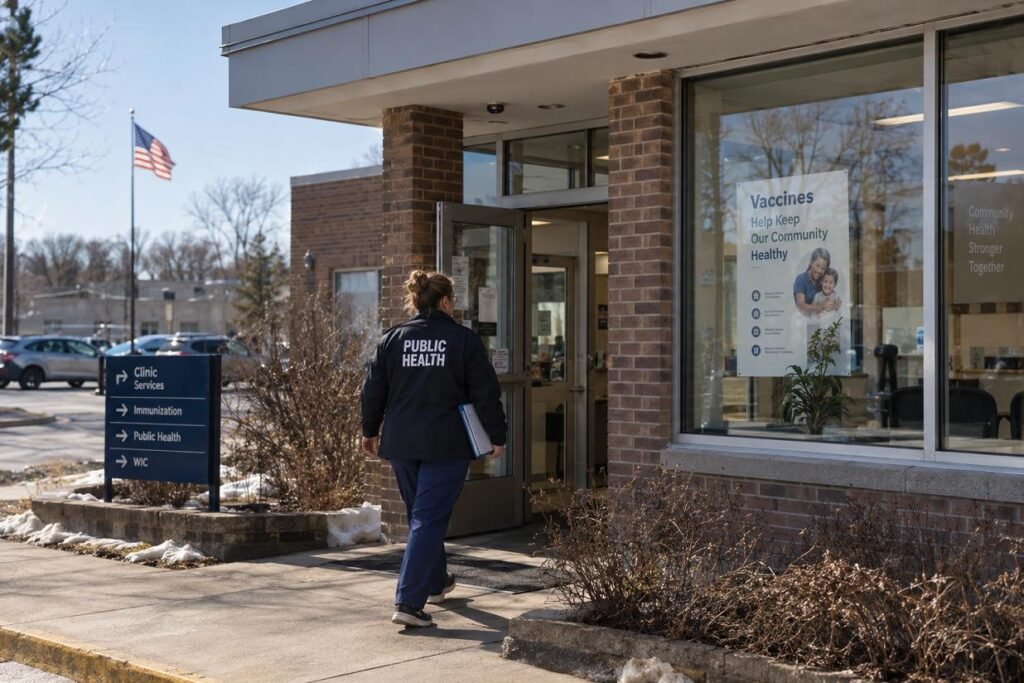
A case of measles has been confirmed in a Chippewa County resident, Wisconsin health officials said Tuesday, as authorities work to determine whether anyone else may have been exposed to the highly contagious virus.
The Chippewa County Department of Public Health confirmed the diagnosis in partnership with the Wisconsin Department of Health Services. Testing at the Wisconsin State Laboratory of Hygiene confirmed the infection.
The case is associated with out-of-state travel and is not considered connected to the ongoing measles outbreak in southwest Wisconsin, according to the state’s latest outbreak update. As of Sept. 22, Wisconsin had recorded 171 confirmed measles cases in 2026.
Health officials investigating possible exposures
Public health officials are working with the infected person and their health care providers to establish where potential exposures may have occurred and identify people who may have been in contact with the virus.
People identified as having a potential exposure will be contacted directly, the Chippewa County Department of Public Health said.
At this point, officials have not identified any public exposure locations connected to the case. If investigators determine that people may have been exposed at a public location and those individuals cannot be identified directly, health officials said they will release that information to the public.
Chippewa County Health Officer Brittnay Herrick said the department is working with other public health partners as the investigation continues.
“Measles is highly contagious, so confirming a case in our community is concerning,” Herrick said, according to the county health department. She urged residents to know their vaccination status and watch for information from local health officials.
The county has also published measles information advising anyone who believes they may have the illness to stay home and contact a health care provider before going to a clinic or other medical facility. That allows health care workers to take precautions to avoid exposing other patients and staff.
Wisconsin has reported cases in six counties
The Chippewa County diagnosis is part of a broader increase in measles activity in Wisconsin this year.
According to the Wisconsin Department of Health Services, confirmed cases have been reported since August in Grant, Iowa, Lafayette, Marathon, Vernon and Chippewa counties. The largest outbreak has been centered in southwest Wisconsin, where local transmission has been documented in Grant, Iowa, Lafayette and Vernon counties.
DHS reported 161 confirmed and six probable cases in that southwest Wisconsin outbreak as of Sept. 18. The agency said its investigation indicated that measles was spreading locally in those counties.
The separate cases in Marathon and Chippewa counties were associated with out-of-state travel and were not linked to the southwest Wisconsin outbreak, according to DHS. No public exposure sites had been identified for either case as of Sept. 22.
What residents should watch for
Measles is highly contagious and spreads through the air when an infected person coughs or sneezes. The virus can remain infectious in an airspace for up to two hours after an infected person has left, according to the Centers for Disease Control and Prevention.
Initial symptoms commonly include fever, cough, a runny nose, and red or watery eyes. A characteristic rash generally develops several days after those initial symptoms. The CDC says symptoms typically begin seven to 14 days after infection.
People who believe they have been exposed should contact a health care provider promptly rather than arriving at a medical facility without warning. The CDC recommends calling ahead so appropriate arrangements can be made to reduce the risk of exposing others.
The virus is particularly concerning because people can transmit measles before they realize they are infected. According to the CDC, infected people can spread measles from four days before through four days after the rash appears.
Vaccination remains the main protection
Health officials are encouraging residents to check their measles vaccination status.
The CDC recommends two doses of the measles, mumps, and rubella, or MMR, vaccine for children. Two doses are about 97% effective at preventing measles, while one dose is about 93% effective.
Vaccination status is particularly relevant during an exposure investigation because people without immunity may be at greater risk of infection. The CDC says that, following an exposure, health care providers can determine whether someone has evidence of immunity and advise them about measures that may reduce the risk of developing measles.
The Chippewa County Department of Public Health maintains local measles information and directs residents to Wisconsin DHS for statewide case updates.
Investigation remains underway
The immediate focus for Chippewa County officials is identifying anyone who may have been exposed and determining whether additional public notifications are necessary.
No public exposure locations had been identified as of Sept. 22, and officials have not announced a connection between the Chippewa County case and Wisconsin’s southwest outbreak.
The health department and Wisconsin DHS are expected to provide additional information if investigators identify public exposure sites or if the state’s measles situation changes significantly.
This story may be updated as new information becomes available.