ECI Dissent: Election Commissioners Raise 14 Objections Against CEC Gyanesh Kumar, Opposition Renews Removal Demand
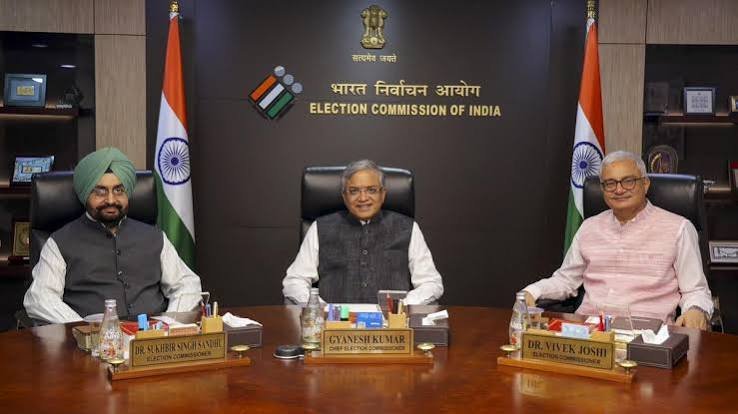
NEW DELHI: An internal dispute has emerged within the Election Commission of India after Election Commissioners Sukhbir Singh Sandhu and Vivek Joshi formally recorded at least 14 objections over decisions concerning electoral rolls, voter registration and the Special Intensive Revision (SIR) exercise. The disclosures have triggered fresh political demands concerning Chief Election Commissioner Gyanesh Kumar.
The ECI dissent was detailed in an investigation by The Indian Express published on September 23. The report said the two commissioners raised their objections over a 10-month period, including four objections recorded on a single day.
What The ECI Dissent Concerns
The reported ECI dissent covers several aspects of electoral-roll administration. These include the addition, deletion and restoration of voter names, appeals connected with the SIR process and access to the digital databases used to manage electoral rolls.
One dispute concerns changes made to Form 6, the application used by new voters to register. The two commissioners reportedly questioned the addition of SIR-related declarations to the form, with records cited by the investigation showing objections over whether the changes could be made without amending existing rules.
Another issue involves the centralisation of access to electoral-roll databases. Sandhu and Joshi reportedly raised concerns that state-level election officials could face restrictions in accessing or modifying voter records.
The investigation also examined cases in West Bengal and Goa. In Goa, 97 voters who had been found eligible by Electoral Registration Officers were reportedly left off the final roll after the software could not record the decisions.
Gyanesh Kumar Named In Internal Dispute
The objections were addressed or copied to Gyanesh Kumar, who has served as Chief Election Commissioner since February 2025. The investigation said the disagreements raised questions over how decisions and communications were being handled within the three-member constitutional body.
The reported Election Commission controversy comes against the backdrop of the nationwide SIR exercise, which began in Bihar in June 2025 and has since expanded to other states and Union territories.
The Election Commission has rejected the suggestion that its decisions were taken without the approval of all three commissioners. Commission sources said on September 23 that decisions, including those concerning SIR, had been approved unanimously by Gyanesh Kumar, Sandhu and Joshi.
Opposition Renews Pressure On CEC
The disclosures quickly prompted renewed political demands. TMC Rajya Sabha leader Derek O’Brien called for Parliament to bring out an earlier motion seeking the removal of Gyanesh Kumar, while senior advocate and Rajya Sabha MP Kapil Sibal called for the CEC’s suspension and a halt to the SIR process.
Those are political demands and do not represent a parliamentary decision to remove the CEC. An earlier Opposition-backed removal motion against Kumar was rejected by the Rajya Sabha Chairman and Lok Sabha Speaker in April.
The Election Commission controversy comes as election administration has already faced scrutiny in several states, including Rajasthan’s 2026 civic polls, where authorities had received reports concerning electronic voting machines and other polling-related complaints.
What Happens Next
The latest developments leave two competing positions on record. The investigation documents objections raised by two Election Commissioners on specific electoral-roll and administrative issues, while the Commission has maintained that its formal decisions were unanimous.
The ECI dissent is therefore currently a dispute over internal objections, decision-making and electoral-roll administration rather than a final finding that any election law was violated.
The Election Commission controversy is likely to remain politically significant as scrutiny of the SIR process continues and Opposition parties press for further parliamentary action.