Nagaland Spurious Liquor Deaths: 19 Dead as Police Probe Deepens After Methanol Detection
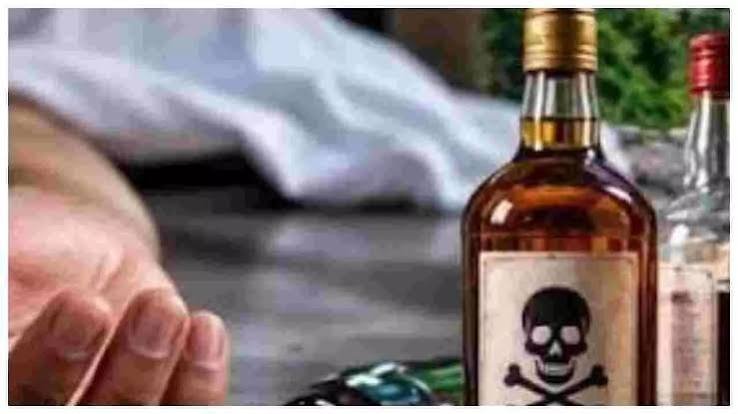
NAGALAND: At least 19 people have died after allegedly consuming suspected spurious liquor in Mokokchung and Tuensang districts, while police have arrested 19 people and expanded raids to trace the source and distribution network. A separate forensic finding has also detected methanol in samples linked to earlier deaths in Tuensang, although its concentration has not yet been established. NDTV
The Nagaland Spurious Liquor Deaths investigation is now focused on both the substance involved and the network suspected of supplying the liquor. Police have constituted a Special Investigation Team headed by Additional Superintendent of Police I Bunglang Chang. Senior Superintendent of Police Vesupra Kezo said investigators had obtained leads but that it was too early to disclose details.
Mokokchung And Tuensang Record 19 Deaths
Police said Mokokchung recorded eight deaths, while Tuensang reported 11. In Mokokchung, six deaths were reported from the Mangkolemba sub-division and two from the Mokokchung Police Station-II area.
The Nagaland Spurious Liquor Deaths case came into sharper focus after four deaths and four cases of illness were reported in Mangkolemba on September 24. Two further deaths were reported on September 25, taking the district’s toll to eight.
The deaths in Tuensang occurred earlier in September. The methanol finding relates specifically to seized samples connected with that earlier Tuensang case and does not, by itself, establish that methanol caused all 19 deaths.
Nagaland Hooch Tragedy SIT Traces The Supply Chain
The Nagaland Hooch Tragedy SIT has been tasked with investigating the deaths and tracing the source and supply chain of the suspected adulterated liquor. Police have carried out multiple raids, with 19 arrests reported and thousands of bottles and cans seized.
A Forensic Science Laboratory report dated September 24 found methanol, also known as methyl alcohol, in samples connected to the Tuensang investigation. The finding was qualitative, meaning the laboratory detected the substance but could not determine how much was present.
According to NDTV, the Dimapur laboratory could not complete quantitative testing because the required equipment was unavailable. The samples were therefore sent to the Central Forensic Science Laboratory in Guwahati for further analysis.
The Nagaland Hooch Tragedy SIT must now establish whether the detected substance is connected to the fatalities and determine how the suspected liquor entered circulation.
Nagaland Prohibition Law Remains In Force
The police response has expanded into a statewide crackdown as authorities search for suspected suppliers and distributors. Nearly 3,000 bottles were reported seized in the initial police action, while later reporting said combined seizures across the affected districts had crossed 3,200 bottles and cans.
The Nagaland Prohibition Law refers to the Nagaland Liquor Total Prohibition Act, 1989. The prohibition framework has been in force since 1990, making the circulation of suspected illicit liquor a significant enforcement issue for state authorities.
The Nagaland Prohibition Law has also been the subject of previous public and legislative debate, particularly over the continued presence of illegal and adulterated alcohol despite the prohibition framework.
Police have urged residents to avoid unidentified, unlabelled or suspected illicit alcoholic beverages. They have also advised anyone who develops dizziness, blurred vision, breathing difficulties or loss of consciousness after consuming alcohol to seek immediate medical attention.
For now, the Nagaland Spurious Liquor Deaths investigation remains active. The Guwahati forensic examination is expected to provide more information about the methanol concentration in the seized samples, while police continue tracing the suspected supply network.
The Nagaland Hooch Tragedy SIT has not publicly disclosed the full evidence against individual suspects. Arrests alone do not establish guilt, and the investigation will have to determine the role of each person.
The Nagaland Prohibition Law therefore remains central to the wider context as authorities work to establish the cause of the deaths and identify those responsible for distributing the suspected liquor.