India and China Seek Stability Without Ending Strategic Rivalry
Cupcake ipsum dolor sit amet. Chocolate bar topping ice cream. Toffee tiramisu icing croissant marzipan candy canes I love sesame snaps powder.
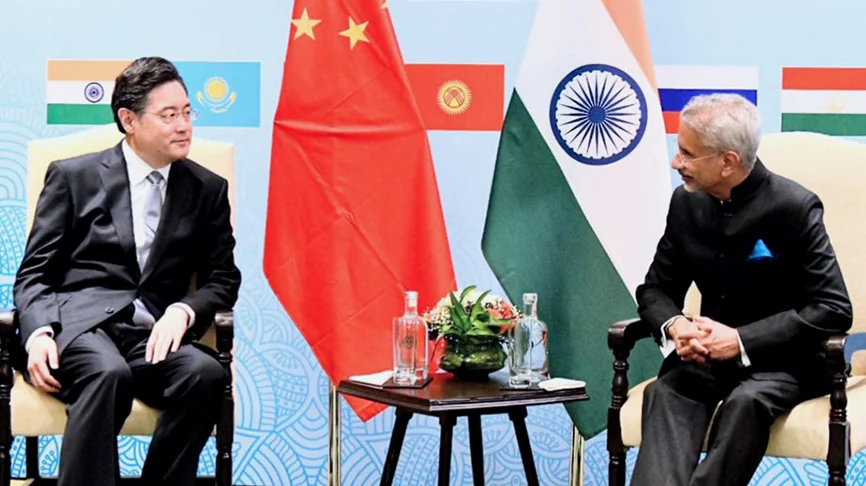
India and China should focus on stabilising their disputed border and managing their wider strategic differences rather than expecting an immediate settlement, Chinese strategic affairs scholar Hu Shisheng has said.
Speaking to The Hindu ahead of Tuesday’s 25th round of Special Representatives talks in Beijing, Hu said the relationship was moving towards what he described as a more stable form of competitive coexistence. He cautioned, however, that the underlying differences between the two countries had not disappeared.
“Structural differences between China and India have not disappeared,” Hu said, according to The Hindu. He described the current phase of the relationship as “strategic risk management rather than strategic realignment.”
The comments came as India’s National Security Adviser Ajit Doval and Chinese Foreign Minister Wang Yi met in Beijing for the latest round of talks on the long-running boundary dispute. China’s Foreign Ministry confirmed that Wang and Doval would co-chair the 25th round on August 25, with discussions also covering bilateral, regional and international issues.
Doval had arrived in Beijing on Monday for a two-day visit. On Tuesday, before the boundary talks, he also met Chinese Vice President Han Zheng. The Indian Embassy in China said the two discussed strengthening peace and tranquillity in the border areas and improving bilateral relations across economic, political and multilateral forums.
Stability before a border settlement
Hu, who is associated with the China Institutes of Contemporary International Relations in Beijing, said the immediate emphasis on the border was likely to be on preventing misunderstandings and miscalculations rather than producing a breakthrough on the boundary question.
He pointed to the need for stronger military and diplomatic communication and for turning an “early harvest” proposal on boundary delimitation into a functioning process.
The proposal emerged from the 24th round of Special Representatives talks held in New Delhi in August 2025. At that meeting, the two sides agreed to establish an Expert Group under the Working Mechanism for Consultation and Coordination on China-India Border Affairs to explore early progress on boundary delimitation in appropriate sectors. They also agreed to create a working group on border management.
China’s Foreign Ministry said earlier this month that officials from the two countries had held the 36th WMCC meeting in New Delhi on August 6. The meeting covered boundary delimitation, border management, the development of communication mechanisms and cross-border exchanges. The two sides also agreed to maintain diplomatic and military communication and safeguard peace and tranquillity in the border areas.
That provides some evidence of continued engagement, but it does not amount to a settlement of the wider boundary dispute.
A relationship moving cautiously
The talks are taking place after several years of severe strain in bilateral relations following the 2020 military confrontation along the Line of Actual Control.
Both countries have since taken steps to reduce tensions and restore dialogue. The 24th round of Special Representatives talks in August 2025 produced a 10-point consensus covering border management, delimitation, de-escalation mechanisms, trans-border rivers and the reopening of traditional border trading markets.
Hu said the current approach should not be interpreted as a fundamental strategic reset.
Instead, he described the emerging relationship as one in which the two sides could keep the border peaceful, restore practical cooperation and expand coordination in forums such as BRICS and the Global South while continuing to compete strategically.
His assessment is significant because it places the recent improvement in India-China ties within a narrower framework: reducing the risk of confrontation without resolving the issues that have driven competition between the two countries.
BRICS adds pressure for a stable relationship
The Beijing talks also come only weeks before India is due to host the BRICS summit in New Delhi on September 12-13.
Chinese President Xi Jinping is expected to attend the summit, although Reuters reported on August 24 that his travel plans had not yet been formally confirmed. If the visit goes ahead, it would be Xi’s first trip to India in seven years and could provide an opportunity for another meeting with Prime Minister Narendra Modi.
That possibility gives the border discussions an additional diplomatic dimension.
Hu said both sides have an interest in keeping the border stable and creating a favourable political atmosphere before the summit. He also suggested that Doval’s visit could help address potential obstacles ahead of possible leader-level engagement.
At the same time, neither Beijing nor New Delhi has indicated that the underlying boundary dispute is close to being resolved.
China’s Foreign Ministry has described the Special Representatives mechanism as the main channel for negotiations on the boundary question and an important platform for broader communication. For the 25th round, Beijing said the two sides would continue discussions in the spirit of understandings reached by their leaders and seek to keep the border areas peaceful and tranquil.
India has similarly continued to stress the importance of peace along the frontier. External Affairs Minister S. Jaishankar recently said that peace and tranquillity in the border areas are a prerequisite for good relations with China.
For now, the immediate test is whether the latest round can turn the mechanisms agreed over the past year into practical progress on border management and delimitation.
The broader question — whether India and China can build a durable relationship while their strategic interests continue to diverge — remains unresolved.