
Supreme Court Steps Up Scrutiny of Illegal Construction Across India
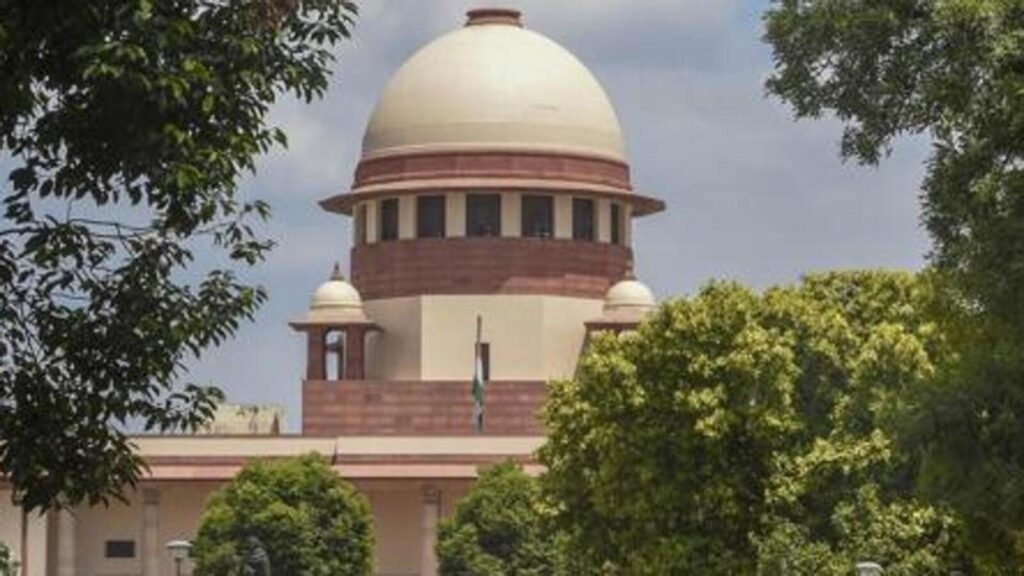
NEW DELHI: The Supreme Court on Thursday directed authorities across the country to file affidavits detailing the action taken against unauthorised constructions, days after a building collapse in Delhi’s Satya Niketan killed seven people and injured 12.
A Bench of Justices Ahsanuddin Amanullah and R. Mahadevan accepted a proposal from amicus curiae Ajit Kumar Sinha that authorities should place reports before the court on their compliance with earlier directions concerning illegal construction and building safety.
The court said the affidavits should not be limited to Delhi and Lucknow. The matter has been listed for September 15 at 2 p.m., when the court is expected to consider the reports and the continuing enforcement action.
Satya Niketan collapse brings safety concerns back before court
The latest proceedings followed the collapse of a five-storey paying guest building in Satya Niketan, in Delhi’s Motibagh area. Seven people died, and 12 were injured in the incident.
The Satya Niketan case is also before the Delhi High Court. On September 7, the High Court directed the Municipal Corporation of Delhi (MCD) to submit a report and fixed September 25 for the next hearing. The Supreme Court decided not to interfere with those proceedings for now.
Instead, the Supreme Court asked the authorities to submit information in the ongoing proceedings before it as well.
“The High Court is requested to monitor the (PIL) case at short intervals,” the Supreme Court said, according to the order as reported by SCC Times.
The court therefore left the Delhi High Court proceedings in place while requiring separate compliance reports in the Supreme Court matter.
Court’s scrutiny extends beyond Delhi
The Supreme Court’s proceedings are not confined to the Satya Niketan collapse.
The case has developed into a broader examination of unauthorised construction and illegal changes in land use across India. In earlier orders, the court had directed municipal corporations and municipalities in state and Union Territory capitals to undertake surveys and report on violations.
The court had also expressed concern that merely issuing notices against illegal structures was not enough. Authorities were expected to take action permitted under law, including sealing or demolition where appropriate.
According to the latest court proceedings, inspections have already been conducted in parts of Delhi, including Lajpat Nagar, Malviya Nagar, Saket and Sarojini Nagar, as well as in Aliganj in Lucknow. The inspections were carried out in areas covered by the court’s earlier directions.
The September 10 order specifically requires authorities to report on compliance with directions issued on March 25 and August 5, 2026.
Earlier orders called for concrete enforcement
The Supreme Court’s wider proceedings began with concerns over unauthorised construction and failures by local authorities to enforce building and land-use regulations.
In March, the court expanded the matter beyond an individual dispute and moved toward a nationwide examination of illegal construction. Subsequent orders called for fresh affidavits setting out actual enforcement measures, rather than simply describing surveys or identifying violations.
The court’s scrutiny has included questions about sealing and demolition, accountability of officials, completion certificates and the unauthorised conversion of residential properties for commercial purposes.
The proceedings have also drawn attention to the role of municipal and planning authorities in preventing illegal structures from being built in the first place.
Delhi steps up enforcement after the collapse
The Satya Niketan tragedy has prompted a separate enforcement drive by the MCD.
The civic body said it had surveyed more than 1,200 paying guest properties in Delhi as part of an assessment of structural safety. The survey classified buildings according to visible safety and repair conditions, with dangerous structures subject to further action.
On Wednesday, the MCD reported 34 demolition actions across its 12 zones and the sealing of 17 properties. It also issued 22 show-cause notices and passed four demolition orders in its enforcement drive against unauthorised construction and other violations.
The civic body’s action follows earlier demolitions and sealing operations after the Satya Niketan collapse.
The Indian Express reported that, including earlier action since the collapse, the MCD had demolished 58 buildings, sealed 24 properties and issued orders for 31 further demolitions by September 10.
What happens next
The immediate next step is the Supreme Court hearing scheduled for September 15 at 2 p.m. Authorities are expected to place affidavits before the court showing how they have complied with its earlier directions.
The Delhi High Court will continue hearing the Satya Niketan public interest litigation separately, with the next hearing scheduled for September 25.
The Supreme Court’s latest order does not itself order a nationwide demolition drive. Rather, it requires authorities to account for the enforcement measures already undertaken in response to the court’s earlier directions.
That distinction is important as the court continues to examine whether local authorities are acting effectively against illegal and potentially unsafe construction.
The proceedings remain ongoing.