Iran School Strike That Killed More Than 150 Draws UN War Crime Finding
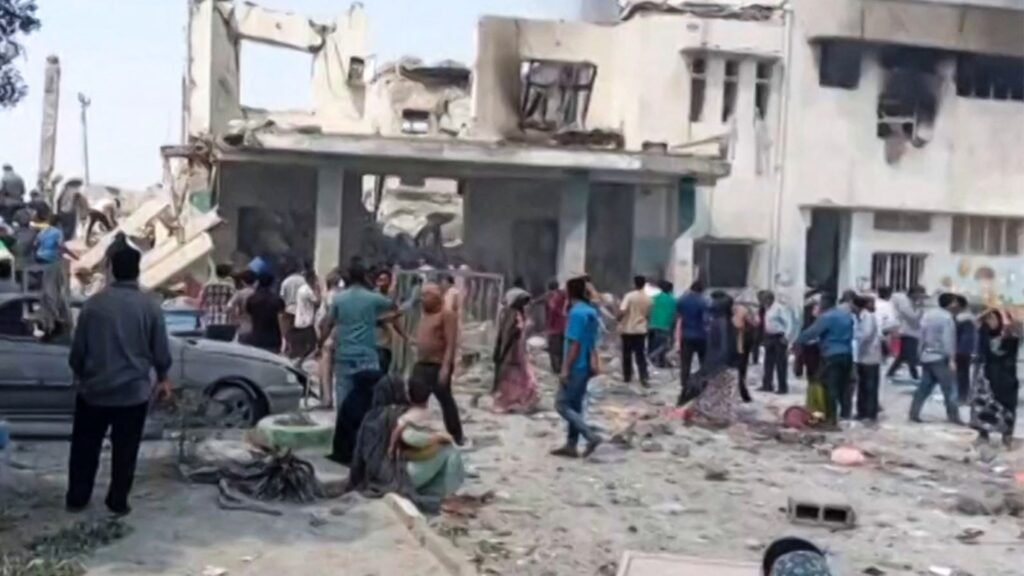
GENEVA — A United Nations-backed fact-finding mission has found “reasonable grounds” to believe that US forces committed war crimes in two strikes in Iran in February, including a missile attack on a primary school in the southern city of Minab that killed more than 150 people.
The findings were published Thursday by the Independent International Fact-Finding Mission on Iran and are due to be presented to the UN Human Rights Council in Geneva. The mission said the Minab strike constituted an indiscriminate attack that caused civilian deaths and damage to civilian infrastructure.
The school attack took place on February 28, during the opening phase of the US-Israeli military campaign against Iran. The mission identified the site as the Shajareh Tayyebeh Primary School in Minab, in Iran’s Hormozgan province.
The precise death toll has varied across reports. The UN mission cited 157 people killed, including about 123 children under the age of 13, while Iranian officials have reported more than 150 deaths. Other investigations have produced somewhat different casualty estimates.
UN mission questions US targeting process
The investigators said the school was a clearly identifiable civilian building and found no evidence that it was being used for military purposes at the time of the attack.
The mission said US forces failed to take all feasible measures to verify that the building was a legitimate military objective before striking it. Investigators pointed to features including school signs, child-oriented murals and playground areas that indicated its civilian function.
The report also examined how the target was identified. According to the mission’s findings, US forces relied on intelligence that indicated a senior Iranian military figure was present at the location but did not adequately verify the information before the attack.
The investigators concluded that the failure went beyond a simple targeting error, saying the United States acted recklessly regarding the risk of striking a civilian site. Reuters reported that the mission characterized the attack as an indiscriminate strike under international law.
The finding differs from the US position that the school was not intentionally targeted. US officials have previously described the incident as an error, while a Pentagon investigation into the strike remains ongoing.
Second strike examined in southern Iran
The UN mission also investigated a separate strike in Lamerd, where it said missiles dispersed tungsten pellets over a sports complex and nearby residential area.
The attack killed 22 civilians, according to the mission, and also damaged residential buildings and a school. The investigators similarly concluded that the strike amounted to an indiscriminate attack. US Central Command has denied responsibility for the Lamerd strike.
Taken together, the two incidents accounted for at least 178 civilian deaths, according to the UN findings.
Washington rejects the UN finding
The White House rejected the mission’s conclusions.
White House spokeswoman Anna Kelly criticized the UN Human Rights Council, saying the body had produced what she described as “unserious nonsense” over the years. She argued that Iran, rather than the United States, had committed war crimes during the conflict.
The Pentagon did not comment directly on the UN report, but said its own investigation into the Minab incident remains underway. The US government has previously maintained that its military operations are conducted in accordance with the law of armed conflict.
The Iranian and US permanent missions in Geneva had not immediately responded to Reuters’ requests for comment when the initial findings were reported.
UN mission also accuses Iran of crimes against humanity
The report did not focus exclusively on US military conduct.
The same UN fact-finding mission said Iranian authorities committed serious human rights violations during a crackdown on nationwide anti-government protests that began in late December.
The mission said killings, torture, arbitrary detention and other abuses occurred on a large scale and concluded that many of those violations amounted to crimes against humanity.
The dual findings place scrutiny on both US military operations and the Iranian government’s treatment of protesters and detainees.
The mission is an independent investigative body established by the UN Human Rights Council. Its findings do not themselves constitute a criminal conviction or initiate a prosecution. However, such reports can preserve evidence and contribute to future accountability efforts in domestic or international proceedings.
What happens next
The report is expected to be discussed by the UN Human Rights Council in Geneva. The mission has urged accountability for serious violations and the protection of evidence that could be relevant to future legal proceedings.
For the United States, a key unresolved issue remains the Pentagon’s own investigation into the Minab strike. Its conclusions have not been publicly released.
The UN findings therefore add a significant international legal assessment to an incident that Washington has previously described as an unintended strike. The underlying facts surrounding the targeting decision, the intelligence available to US forces and the chain of authorization remain central to determining what happened.
This story may be updated as new information becomes available.