Saudi Arabia F-35 Deal: US Approves $24.3 Billion Sale
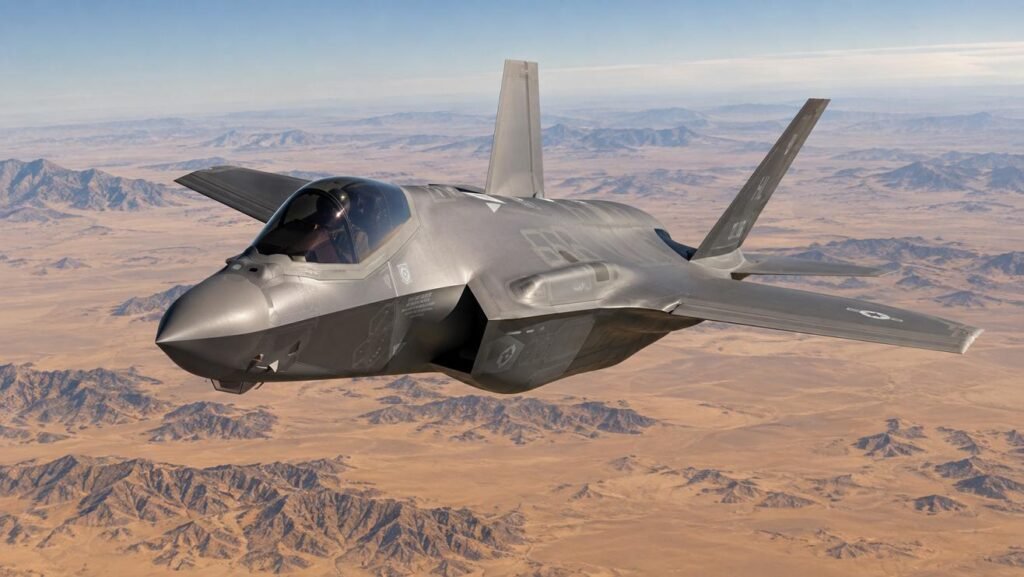
WASHINGTON — The United States has approved a potential sale of 48 F-35 Lightning II fighter jets to Saudi Arabia in a deal estimated at $24.3 billion, opening the way for one of the most consequential U.S. military aircraft transfers to an Arab country.
The State Department approved the proposed Foreign Military Sale on September 17 and notified Congress. The package covers the conventional takeoff-and-landing F-35A variant, 49 Pratt & Whitney F135-PW-100 engines and a broad range of support equipment. The sale is not yet final: congressional review remains a required step.
The proposal would also include secure communications equipment, navigation and cryptographic systems, electronic-warfare database support, training equipment, simulators, software, spare parts, technical documentation and logistics support. Lockheed Martin Aeronautics and Pratt & Whitney are identified as the principal contractors.
What the US has approved
The State Department’s determination is an approval of a possible Foreign Military Sale rather than confirmation that Saudi Arabia will immediately receive the aircraft.
Saudi Arabia has requested 48 F-35s and 49 engines — 48 for the aircraft and one spare — along with the associated support package. The estimated value of the proposed package is $24.3 billion.
The State Department said the sale would strengthen Saudi Arabia’s ability to defend itself and improve interoperability with U.S., regional and NATO forces. It also said the proposed transfer would not alter the military balance in the region.
The department has not provided a delivery timetable for the jets.
That means the announcement represents an important procedural step, but not an immediate arrival of F-35s in the Saudi inventory.
Congress still has a role
The proposed sale has been formally sent to Congress, where lawmakers have a period to review major arms-transfer notifications. The congressional process means the administration’s approval does not by itself complete the transaction.
The exact timetable for the congressional review and any subsequent contracting or delivery milestones was not specified in the announcement.
The Defense Security Cooperation Agency’s rules describe congressional notification as part of the formal Foreign Military Sales process and provide for a prescribed review period following notification.
Why the F-35 decision matters
The F-35 is a fifth-generation fighter built around stealth, advanced sensors, electronic warfare and networked operations. Its proposed transfer to Saudi Arabia is significant because Israel is currently the only Middle Eastern country operating the aircraft, according to reporting on the State Department decision.
For years, Washington’s arms policy in the Middle East has been shaped in part by the requirement to preserve Israel’s qualitative military edge, or QME, over potential regional adversaries.
The State Department’s own notification nevertheless says the proposed Saudi sale would not alter the regional military balance.
The decision has therefore attracted attention in Israel, where officials have previously raised concerns about transferring the aircraft to Saudi Arabia. The issue is particularly sensitive because the F-35 incorporates highly advanced technologies and has been closely controlled in the U.S. export market.
A long-running Saudi request
Saudi Arabia has sought access to the F-35 for years. Reuters reported that Riyadh made a direct appeal for the aircraft to President Donald Trump in early 2025. Trump later publicly backed the planned sale.
The proposal is part of a broader expansion of U.S.-Saudi defense ties. Riyadh has continued to acquire American military equipment while seeking to modernize its armed forces.
The timing is also significant because Saudi Arabia is facing heightened regional security pressures, including fighting involving Houthi forces in Yemen. Reuters reported that the kingdom has been drawn deeper into the wider Middle East conflict.
Saudi Arabia’s embassy in Washington welcomed the proposed F-35 sale, describing it as another step in the longstanding strategic and defense relationship between Riyadh and Washington.
Technology and regional security concerns
The F-35’s proposed transfer has also raised questions about protecting sensitive U.S. military technology.
The issue is not entirely new. Washington removed Türkiye from the F-35 program in 2019 after Ankara acquired Russia’s S-400 air-defense system, amid U.S. concerns about the security of F-35 technology.
Reporting on the Saudi proposal has also highlighted concerns among some U.S. lawmakers over Saudi Arabia’s expanding defense relationship with China. Those concerns have been raised in the context of protecting sensitive technology, although the State Department said proposed arms transfers undergo legal and strategic review.
The current notification does not mean that every question surrounding the transfer has been resolved. The congressional review, subsequent negotiations and eventual delivery process remain ahead.
No delivery date announced
There is no announced timetable for when Saudi Arabia could receive its first F-35 if the transaction is ultimately completed.
The proposed package also does not simply consist of 48 aircraft. Its $24.3 billion estimated value includes engines, training, software, communications and other support needed to operate and sustain the aircraft.
For now, the key development is the State Department’s decision to approve the potential sale and formally move it into the congressional review process.
Whether the transaction proceeds unchanged will depend on the remaining U.S. approval and contracting steps.