Nepal Floods Today: 22 Dead, 384 Travellers Missing
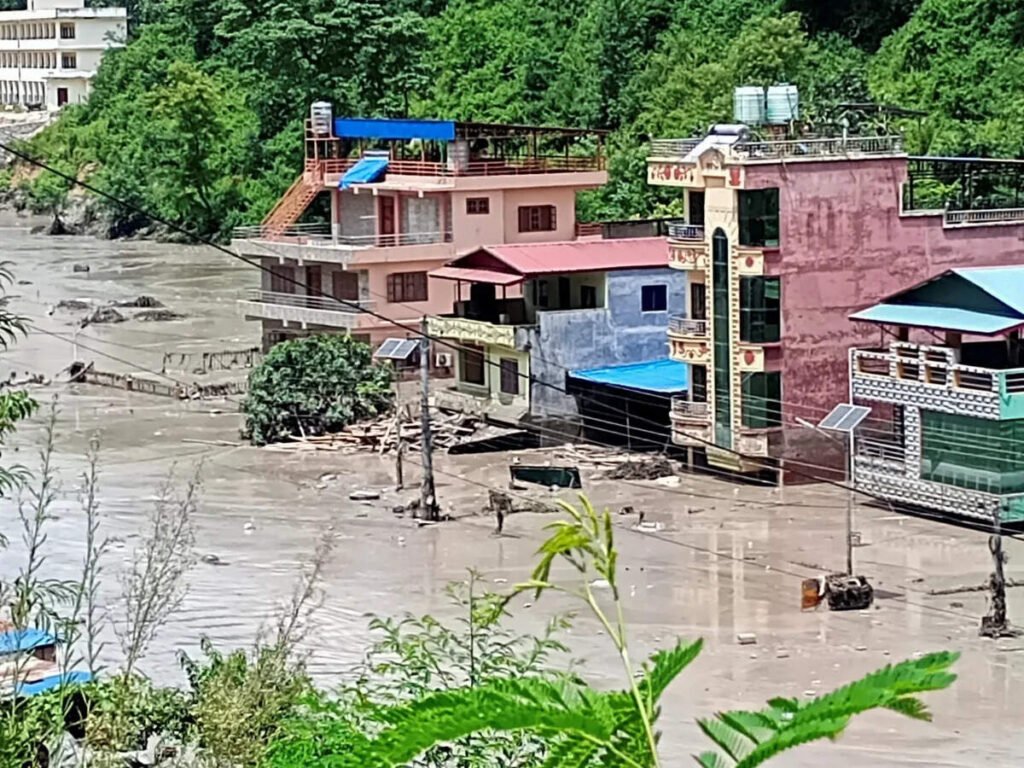
At least 22 people have been confirmed dead, and 384 tourists and travellers remain out of contact after a sudden flash flood swept through Nepal’s Rasuwa district near the Tibet border on Wednesday, August 26, according to the latest information available from Nepali authorities and local reporting.
The flooding struck the Bhote Koshi River corridor, with some of the worst damage reported around Timure and Syabrubesi in Rasuwa. Settlements, bridges, roads, security posts, customs facilities and hydropower infrastructure were damaged or swept away.
The latest casualty figure was reported by The Kathmandu Post at 6:20 p.m. local time. It said 22 people had been confirmed dead, while rescue teams continued searching affected areas.
Hundreds of travellers remain unaccounted for
The Nepal Tourism Board has reported that 384 travellers — 291 foreign nationals and 93 Nepali citizens — are currently out of contact.
The figure is preliminary. The board said the information was compiled from travel and tourism companies and is being checked with guides, local authorities and security agencies. Being listed as missing or out of contact does not by itself establish that a person has died.
Among the foreign nationals listed are 105 Indians, along with travellers from the United Kingdom, Malaysia, the United States, Australia, South Africa and the Netherlands. Many were travelling toward religious and trekking destinations, including the Kailash Mansarovar area.
The number of people unaccounted for is separate from other groups whose communications have been cut. The Kathmandu Post reported that 32 security personnel, 15 employees of the Rasuwa Customs Office and 60 people associated with the Langtang Khola hydropower project were also out of contact.
Because communications and road links have been severely disrupted, authorities have not yet established the full extent of the human and material losses.
Rescue operations face difficult conditions
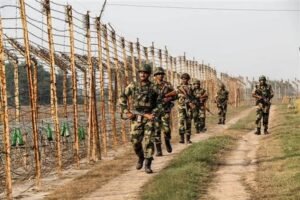
The Nepali Army, Armed Police Force and Nepal Police have been mobilised for search-and-rescue operations.
The latest local reporting said the Nepali Army had rescued 88 people by helicopter, with 13 of those rescued taken to Tribhuvan University Teaching Hospital in Kathmandu. Additional people were moved to safer locations, while injured residents were also being treated locally.
Helicopter operations have been repeatedly disrupted by bad weather. Several flights carrying rescue and relief supplies were forced to turn back, making access to some of the worst-hit areas difficult.
The Nepal government has also mobilised disaster-response agencies and medical and relief teams. Prime Minister Balendra Shah has called for search, rescue and relief operations to continue across the affected districts.
What caused the sudden flood?
The cause has not been conclusively established.
Nepal’s Department of Hydrology and Meteorology said there had not been heavy rainfall in the Rasuwa area on Tuesday or Wednesday, and significant rainfall was not expected there on Wednesday. That has led authorities and scientists to investigate an upstream event rather than treating the disaster as a conventional rain-fed flood.
A preliminary assessment discussed by scientists suggests that an ice avalanche may have blocked the Lhende River, allowing water to accumulate before a sudden release sent a surge downstream. A glacial-lake outburst is another possibility being investigated.
Rijan Bhakta Kayastha, a professor at Kathmandu University and climate researcher, said the assessment was preliminary. The National Disaster Risk Reduction and Management Authority also said it had received information suggesting an ice avalanche may have blocked a river, but stressed that no official conclusion had yet been reached.
That distinction matters because several early reports have offered different explanations for the flood. The precise trigger remains under investigation.
Damage spreads downstream
The flood has affected communities beyond Rasuwa, including areas of neighbouring Nuwakot.
Local officials reported extensive damage to bridges, markets and riverside settlements. The flood also damaged infrastructure along routes connecting Nepal with the Chinese border. A road linking Nuwakot with the border was reported to have suffered major damage, disrupting a key trade route.
The disaster has also hit Nepal’s energy infrastructure. Reports on Wednesday said around 430 megawatts of electricity-generating capacity, including hydropower and solar facilities, had been affected by damage to production, transmission and distribution infrastructure.
The scale of damage is still being assessed, and the final figure could change as rescue teams reach isolated areas.
Authorities warn people along the Trishuli
As floodwater moved downstream, authorities urged people living near the Trishuli River to move away from riverbanks and vulnerable settlements.
Nepal’s Department of Hydrology and Meteorology continues to display active hydrological warnings and river monitoring information for August 26. Its monitoring system lists water levels for major rivers and provides current flood information.
Officials have also warned of disruption to major road corridors, including routes connecting Kathmandu with western and central Nepal.
India and other countries affected
The large number of foreign travellers caught in the disaster has given the flood an international dimension.
The preliminary list of 384 unaccounted-for travellers includes 105 Indian nationals, making India the largest identified foreign-nationality group. The list is still being verified, so the number may change as authorities establish contact with travellers and their families.
The disaster has also affected the Nepal-China border region. On the Chinese side, a mudslide hit the Gyirong border area, with Chinese authorities reporting serious casualties and missing people. The extent of the impact on the Chinese side was also still being assessed on Wednesday.
What happens next
The immediate priority is locating people who remain unaccounted for, evacuating communities at risk and restoring access to areas cut off by damaged roads and communications infrastructure.
Search teams are continuing operations, but poor weather and difficult Himalayan terrain are limiting helicopter access.
Authorities are also expected to continue investigating the event that produced the sudden surge in the Bhote Koshi River. Until that investigation is complete, the precise cause should be treated as unresolved.
For families seeking information about travellers, the Nepal Tourism Board has published emergency contacts including toll-free number 1234, hotline 1144 and Tourist Police number 9851289445.
The death toll, missing-person figures and damage assessment may change as rescue teams reach more affected communities.
This story may be updated as new information becomes available.