
US ‘Mr Singh’ Poster Row: DHS Deletes Ad, Calls Criticism a ‘Laziest Lie’
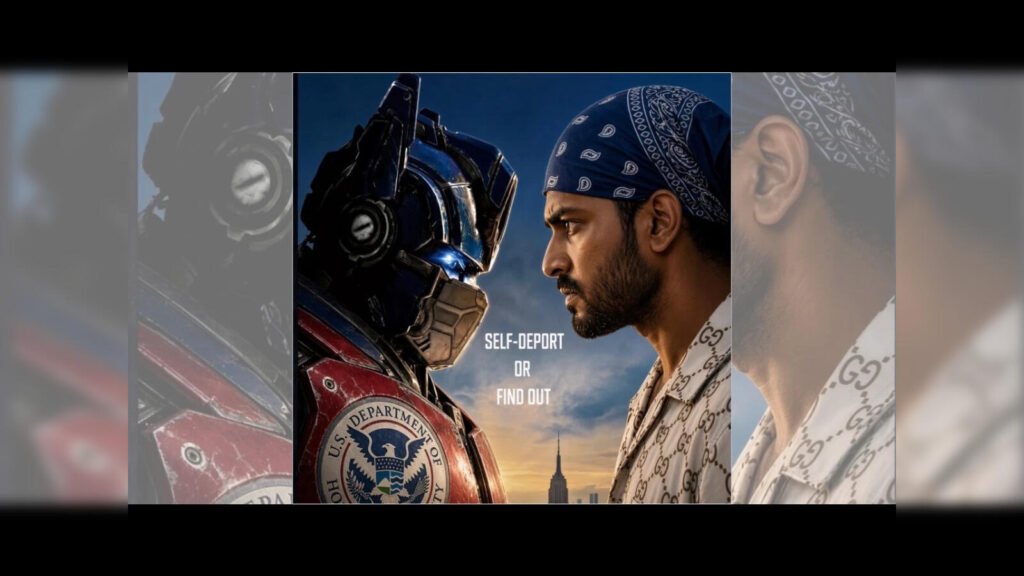
The U.S. Department of Homeland Security has removed an AI-generated social media poster featuring “Mr Singh” after Sikh and Indian-American groups accused the agency of racial stereotyping. The department has defended the post by saying it referred specifically to Harjinder Singh, an Indian truck driver charged in a fatal Florida crash.
The controversy intensified on Friday after Democratic Senator Adam Schiff accused DHS of using its immigration campaign to cast suspicion on the Sikh community. DHS responded on X: “This may be the laziest lie you’ve ever told and that’s saying something.” The exchange was visible on the department’s official account Friday.
This may be the laziest lie you’ve ever told and that’s saying something. https://t.co/JHl5nYZ9il pic.twitter.com/hU783FJsb9
— Homeland Security (@DHSgov) September 11, 2026
DHS deletes the controversial post
The original post appeared on DHS’s X account on September 9. Styled as a parody of the Transformers franchise, it showed a bearded, brown-skinned man wearing a head covering facing an image of Optimus Prime marked with a DHS insignia.
The poster carried the message: “Get off our roads, you don’t know how to drive, Mr. Singh.” It also used the slogan “Self-deport or find out.”
The imagery quickly drew criticism because “Singh” is a widely used surname among Sikhs and because the image appeared to associate a Sikh-looking man with dangerous driving and deportation.
DHS removed the post the following day. The New York Times reported that the department did not initially explain why it had taken the image down.
The timing also became part of the controversy. The post appeared shortly before the 25th anniversary of the September 11 attacks. Sikh men, particularly those wearing turbans or maintaining beards, were among people mistakenly targeted in anti-Muslim attacks after 9/11.
DHS says the poster depicted Harjinder Singh
After the backlash, DHS said the image was not intended to portray Sikh truck drivers as a group.
The department said the man shown was Harjinder Singh, an India-born truck driver accused of causing a fatal crash on Florida’s Turnpike in August 2025.
According to court and law-enforcement reporting, Singh was accused of making an illegal U-turn that left his tractor-trailer blocking the highway. A minivan collided with the truck, killing three people. Singh later pleaded not guilty to three counts of vehicular homicide and immigration-related charges.
DHS has repeatedly cited the case as part of its campaign against what it describes as illegal or improperly licensed commercial drivers.
In its response to the criticism, the department called the backlash “nonsensical drivel” and said Singh was an “illegal alien from India who should never have been in our country.”
The wording itself has become part of the wider dispute over whether the agency’s campaign is targeting individual cases or creating a broader association between immigration, Sikh identity and dangerous driving.
Sikh and Indian-American groups condemn the campaign
Sikh advocacy groups strongly objected to the use of the surname and imagery.
Harman Singh, executive director of the Sikh Coalition, described the campaign as racist and xenophobic and said Sikhs were still being profiled because of their appearance nearly 25 years after 9/11.
The Coalition of Hindus of North America also argued that dangerous driving cannot reasonably be tied to a particular ethnicity, religion, or surname.
The Hindu American Foundation separately called the post “racist, un-American, anti-Indian profiling/trolling” and said it supported an investigation into the federal agency’s messaging.
California Gov. Gavin Newsom’s press office also condemned the post, describing it as “racist propaganda targeting the Sikh community.”
DHS responded to Newsom by pointing out that Singh had received his commercial driver’s license in California.
Adam Schiff and DHS clash online
The dispute moved back into the spotlight Friday when Senator Adam Schiff criticized the administration and DHS on social media.
Schiff said the agency was casting suspicion on millions of Americans because of their background and appearance, calling the campaign hateful, disgraceful and un-American.
DHS answered with the sharply worded reply: “This may be the laziest lie you’ve ever told, and that’s saying something.” The response was posted from the department’s official X account.
The exchange adds a political dimension to a controversy that had already drawn criticism from advocacy groups, elected officials and members of the Indian-American community.
Hasbro objects to Transformers imagery
The dispute has also raised an unrelated but significant issue involving the use of the Transformers brand.
Hasbro, which owns the franchise, said the government posts featuring its characters were made without permission and did not represent the Transformers brand or Hasbro.
Hasbro’s statement was notable because the DHS campaign used recognizable versions of Optimus Prime and Megatron while promoting the administration’s immigration-enforcement message.
The company has separately described Optimus Prime as a character associated with qualities including humility, leadership, compassion, and justice.
The crash behind the controversy
The DHS campaign is rooted in a wider immigration and commercial-driving debate that began after the August 2025 Florida crash involving Harjinder Singh.
The crash killed three occupants of a minivan after Singh’s truck attempted a U-turn on Florida’s Turnpike. Singh was later charged and pleaded not guilty. The case became a political flashpoint between the Trump administration and California officials over the licensing of commercial drivers who are not U.S. citizens.
The administration subsequently tightened its focus on commercial driver’s licenses and immigration status, while DHS began highlighting individual cases involving truck drivers it said were unlawfully in the United States.
The Sikh community has argued that enforcement should focus on specific conduct rather than using names, appearance or ethnicity as shorthand for criminality.
For now, the original “Mr Singh” graphic has been removed. DHS has not indicated that it intends to apologize for the campaign, while the agency continues to defend its broader effort to target commercial-driving and immigration violations.
The dispute is therefore likely to remain focused on two competing claims: DHS’s assertion that it was highlighting a specific criminal case, and critics’ argument that the way the campaign was presented turned an individual case into a stereotype affecting a much larger community.
This story may be updated as new information becomes available.