Joseph Vijay Revives 50-Year-Old Sarkaria Commission Row Against DMK in Explosive Assembly Clash
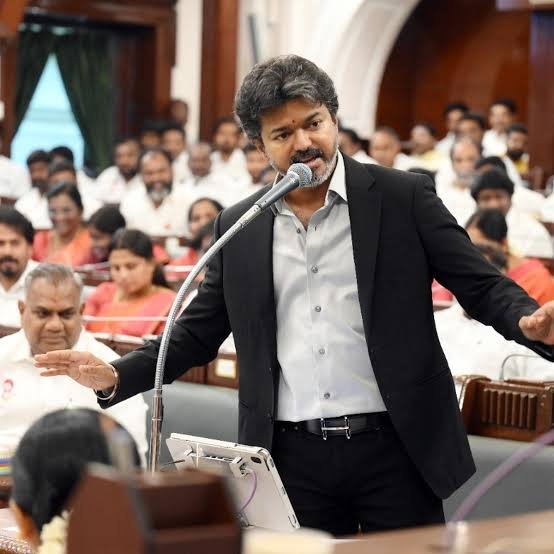
CHENNAI: Tamil Nadu Chief Minister Joseph Vijay has turned a decades-old corruption controversy into a fresh Assembly showdown with the DMK, invoking the Sarkaria Commission and recent Enforcement Directorate material during his reply in the state legislature on September 7. According to The New Indian Express, Vijay used the historic inquiry to revisit allegations linked to the DMK’s earlier period in power, while the confrontation triggered protests from DMK legislators.
Joseph Vijay goes back to the 1970s
The confrontation began when Joseph Vijay responded to Opposition criticism in the Assembly. He referred to records examining the Veeranam drinking-water project, a controversy dating to the DMK government of the 1970s.
Vijay cited an alleged 2.5% commission connected with a contract worth more than Rs 16 crore and referred to alleged payments of Rs 29 lakh between 1970 and 1974. He stressed that these were allegations recorded by the earlier inquiry rather than accusations newly created by his government.
Sarkaria Commission becomes political flashpoint
The Sarkaria Commission was constituted in 1976 to examine allegations against the then DMK ministry, making the inquiry roughly 50 years old. Vijay’s decision to revive its findings shows how historical corruption controversies remain politically relevant in Tamil Nadu.
The Chief Minister also moved to recent ED material, alleging that contractors were asked to provide between 7.5% and 10% of contract values as “party funds” during the previous DMK administration.
Those claims remain allegations. The speech did not establish criminal liability, and references to investigative material should not be treated as judicial findings.
DMK pushes back against Vijay
The DMK strongly objected to the approach inside and outside the Assembly. Members entered the well of the House and later walked out after the Speaker declined to give them the floor.
The clash reflects a broader political battle between the ruling Tamilaga Vettri Kazhagam (TVK) and the DMK. A separate legal dispute involving TVK minister Aadhav Arjuna and M.K. Stalin has also added to tensions between the two camps.
Inside the Assembly, the protests underscored the intensity of Tamil Nadu’s political debate only months into the new administration.
ED allegations add a modern layer
While the Sarkaria Commission supplied a historical example, Vijay used ED material to connect his attack to more recent allegations. He referred to claims involving senior DMK figures and alleged collections described as party funding.
The distinction between allegations, investigative material and proven wrongdoing has become central to the dispute. Vijay himself stressed that he was citing allegations recorded in documents rather than presenting them as fresh charges by his government.
The Chief Minister framed the documents as evidence of what he called a longer political culture of corruption. His strategy linked the historic inquiry with current investigations, giving the Assembly confrontation both historical and contemporary dimensions.
What the political fight means
The use of the Sarkaria Commission shows that the DMK’s record is becoming a political weapon for the new government as it seeks to define its identity. The debate is no longer limited to present policies; it is increasingly about competing narratives of Tamil Nadu’s political past.
For the DMK, the response centres on governance in the present and the need to distinguish allegations from convictions. For Joseph Vijay, revisiting old records provides a way to challenge the political legacy of a party that has dominated Tamil Nadu for decades.
The Assembly showdown marks another escalation in the state’s political contest, with Joseph Vijay keeping the focus on historic allegations as well as current ED claims.