India’s Russian Oil Trade Faces 100% US Tariff Risk Under New Bill
WASHINGTON/NEW DELHI — A sweeping US sanctions bill targeting Russia has reached President Donald Trump after the House of Representatives approved legislation that could expose major buyers of Russian oil and gas, including India, to tariffs of up to 100%.
The House passed the Lindsey O. Graham Sanctioning Russia and Iran Act of 2026 by 262-159 on Wednesday, September 16. The Senate had already approved the legislation, meaning it now goes to Trump for his signature.
The key point for India is that the bill does not automatically impose a 100% tariff on Indian exports to the United States. Instead, it gives Trump the authority to impose such tariffs on countries identified as major purchasers of Russian energy under conditions set out in the legislation.
That distinction matters for India’s oil market.
India is heavily exposed to Russian crude
India has become one of Russia’s largest crude oil customers since Moscow invaded Ukraine and the subsequent restructuring of global energy trade.
Reuters reported earlier this month that India was the second-largest importer of Russian oil, while Russia and India have developed payment arrangements using the rupee and rouble.
But India’s dependence has already shown signs of changing.
Indian imports of Russian crude fell sharply in August, according to industry data reported by Financial Express. Russian crude accounted for about 45% of India’s crude import basket that month, down from nearly 56% in July.
The decline was linked to supply and shipping constraints rather than evidence of a formal Indian decision to abandon Russian crude.
That means the new US legislation arrives at a time when India’s crude sourcing is already being affected by global supply conditions.
What the new US bill actually does
The legislation combines sanctions against Russian individuals, financial institutions and parts of the country’s energy infrastructure with measures aimed at countries that continue buying Russian energy.
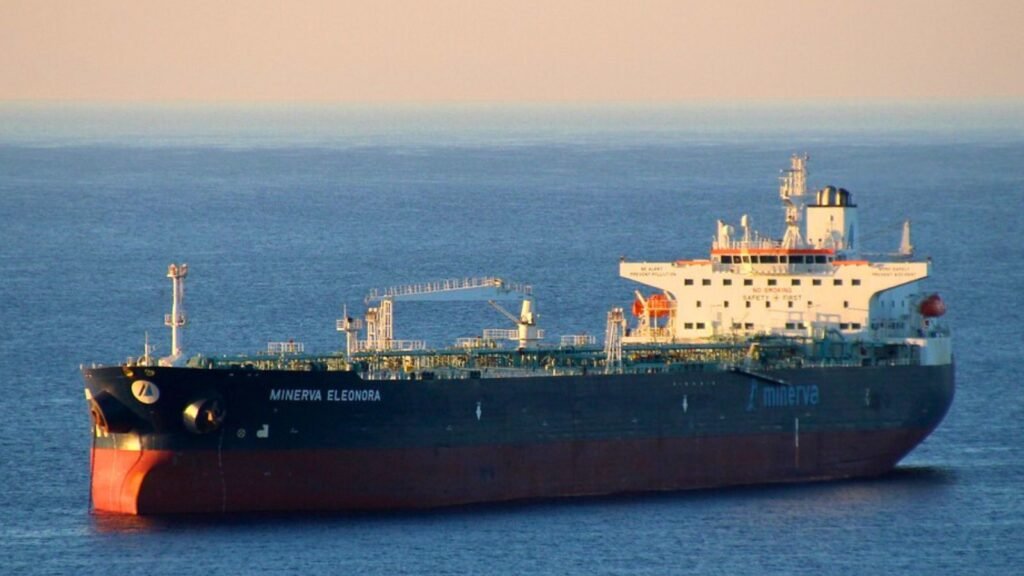
The bill also targets Russia’s so-called “shadow fleet” of vessels used to transport oil outside conventional Western sanctions mechanisms.
For major foreign purchasers of Russian oil and gas, the legislation gives the US president the power to impose tariffs of as much as 100% on imports from those countries.
India and China are among the countries that could fall within the measure’s scope because of their substantial purchases of Russian energy.
The tariff authority is discretionary. Trump would have to decide whether and how to use it.
That leaves a considerable gap between the legislation reaching the White House and an actual tariff being imposed on Indian goods.
Why the issue matters beyond crude oil
The immediate concern for India is not that the US will suddenly place a 100% duty on Russian crude itself.
The legislation works differently: it could make Indian goods entering the US more expensive if Washington uses the new tariff authority against India because of its Russian energy purchases.
That creates a potential conflict between two major parts of India’s economy — energy security and access to the US market.
India imports most of the crude oil it consumes, making the availability and price of international supplies particularly important. Russian crude has been commercially attractive at various points because of its pricing and availability, although those advantages have narrowed at times as shipping, insurance, and geopolitical risks have increased.
A significant reduction in Russian supplies could therefore force Indian refiners to compete more aggressively for crude from other producers.
That does not necessarily mean India would immediately stop buying Russian oil. It would depend on the level of any US tariff, the response of Indian refiners, alternative crude prices, shipping costs and the eventual terms of any US-India negotiations.
New Delhi says energy security remains the priority
India has responded by stressing its need to maintain reliable and affordable energy supplies.
The Ministry of External Affairs said New Delhi was closely following the US legislative development and reaffirmed India’s commitment to securing energy supplies through diversified sourcing while protecting its economic interests. Reuters reported that Indian officials had already discussed the potential bilateral and market implications with US counterparts.
The position reflects India’s longstanding argument that its crude purchases are driven by energy requirements and market conditions rather than an attempt to support any particular side in the Russia-Ukraine conflict.
India has also continued to maintain close diplomatic and economic ties with Moscow. Prime Minister Narendra Modi and Russian President Vladimir Putin met in New Delhi on September 11 and agreed to strengthen their countries’ partnership.
The trade relationship adds another complication
The potential tariff threat comes as India and the United States continue to manage a broader trade relationship.
Any US decision to use the new authority against India could therefore affect more than the country’s oil procurement strategy. It could also become a factor in wider India-US trade discussions.
At the same time, Washington would have to weigh the consequences of imposing punitive tariffs on a major trading partner. A 100% tariff on Indian exports to the US would be a much broader economic measure than a restriction aimed solely at Russian energy purchases.
The legislation’s supporters argue that pressure on major Russian energy buyers is necessary to reduce Moscow’s revenues and strengthen US leverage over the Russia-Ukraine conflict. Critics in Congress have raised concerns about the breadth of the tariff powers being handed to the president.
What happens next
The immediate next step is Trump’s decision on whether to sign the legislation.
If it becomes law, the tariff provisions still would not mean an automatic 100% duty on Indian goods. The administration would have to determine how to use the authority provided by Congress and which countries fall within the relevant provisions.
For India, the more immediate issue will be whether Washington uses the legislation as negotiating leverage or moves toward actual trade penalties.
The oil market will also matter. India’s ability to replace Russian barrels depends not simply on finding alternative suppliers but on the price, availability, shipping costs and refining suitability of those supplies.
For now, India’s Russian oil trade continues, while the US has acquired a new legislative mechanism to put pressure on it.
The question is no longer whether Washington has the authority contemplated by the bill. It is how, and whether, the Trump administration chooses to use it.
This story may be updated as new information becomes available.