US House Passes Russia Sanctions Bill Giving Trump Power to Impose 100% Tariffs on India
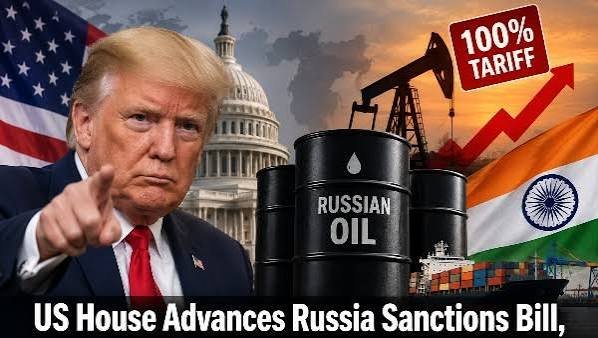
WASHINGTON: The US House of Representatives has passed a Russia sanctions bill that would give President Donald Trump authority to impose tariffs of up to 100% on major purchasers of Russian oil and gas, including India. The legislation, formally titled the Lindsey O. Graham Sanctioning Russia and Iran Act of 2026, passed the House by 262-159 on September 16 and now goes to Trump for his decision.
House approves sweeping Russia sanctions measure
The US Russia sanctions bill India is concerned about contains sanctions targeting Russian officials, financial institutions and the country’s energy sector, along with measures aimed at Russia’s so-called shadow fleet.
According to the US Senate Foreign Relations Committee, the legislation would provide additional tools to target Russia and entities supporting its war in Ukraine.
The House vote followed Senate approval of the measure in August. The Senate had passed it by an 86-11 vote.
100% tariff authority could affect India
The most significant provision for New Delhi is the tariff mechanism. The bill allows the president to impose targeted duties of up to 100% on countries that are among the largest importers of Russian-origin crude oil or natural gas, as well as countries involved in sanctions evasion.
That means the 100% tariff India Russian oil issue currently represents a potential policy measure rather than an immediate new tariff on Indian imports.
The legislation specifically identifies the five largest countries importing Russian crude oil and natural gas as potential targets.
India remains a major buyer of Russian crude, making the measure particularly significant for its energy policy and bilateral relationship with Washington.
India says energy security remains priority
The US Russia sanctions bill India response has focused on protecting the country’s energy requirements. According to Reuters, India said it would continue to pursue diverse energy supplies based on market conditions and national requirements.
The Indian government has also indicated that it is monitoring the latest US legislative developments and assessing their implications for bilateral relations and economic interests.
For India, the potential 100% tariff India Russian oil exposure comes against a broader backdrop of efforts to maintain affordable and reliable energy supplies.
Impact could extend beyond crude imports
The 100% tariff India Russian oil could have consequences beyond the direct cost of Russian crude. Any major change in India’s access to Russian energy could affect procurement patterns, refiners, trade flows and the wider energy market.
The issue also arrives as Indian equities remain sensitive to global crude prices, foreign investment and geopolitical developments. Those existing oil risks could become more significant if the US administration moves towards implementing the tariff authority.
The potential US Russia sanctions bill India impact will ultimately depend on whether Trump signs the legislation and, if so, how the administration exercises the powers granted by Congress.
Bill awaits Trump’s decision
The US Russia sanctions bill India now moves from Congress to the White House. The House approval does not itself impose the proposed 100% tariff.
If enacted, the legislation would give Trump substantial discretion over whether to impose duties and which qualifying countries to target.
The 100% tariff India Russian oil provision therefore represents a potential escalation rather than a confirmed new levy. For New Delhi, the immediate focus will be on the final US decision, the scope of any measures adopted and their effect on India’s energy security and trade relationship with Washington.