Trump Links Saudi Nuclear Cooperation to Israel Normalization
Cupcake ipsum dolor sit amet. Chocolate bar topping ice cream. Toffee tiramisu icing croissant marzipan candy canes I love sesame snaps powder.
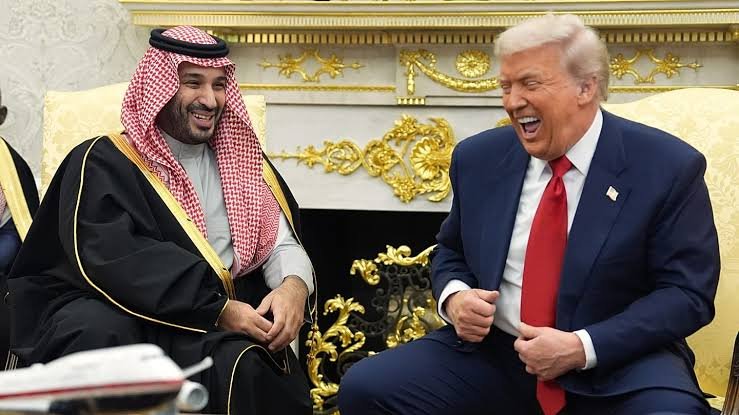
WASHINGTON — President Donald Trump has sent a proposed civilian nuclear cooperation agreement with Saudi Arabia to Congress, putting the long-awaited U.S.-Saudi nuclear partnership into a formal congressional review while maintaining a political condition that could determine whether the pact ever takes effect.
The agreement was transmitted to Congress on Monday, according to a U.S. administration official cited by Reuters. Trump has insisted that the agreement will only proceed if Saudi Arabia normalizes relations with Israel by joining the U.S.-brokered Abraham Accords.
The nuclear agreement itself was signed on July 22 by U.S. Energy Secretary Chris Wright and Saudi Energy Minister Prince Abdulaziz bin Salman. The U.S. Energy Department described it as a peaceful nuclear cooperation agreement, or “123 agreement,” providing the legal framework for long-term civilian nuclear cooperation between Washington and Riyadh.
The congressional submission marks the next formal stage for the agreement. Under the review process, Congress has 90 session days to consider the pact. If lawmakers do not block it through the statutory process, the agreement can take effect.
Nuclear cooperation and a political condition
The agreement is intended to support Saudi Arabia’s civilian nuclear program and open opportunities for U.S. companies to supply nuclear technology and equipment.
The Energy Department has said the partnership could expand American nuclear technology exports, support U.S. jobs and supply chains, and strengthen nuclear safety and nonproliferation standards. It also described the arrangement as a multibillion-dollar, decades-long partnership.
But the diplomatic condition Trump attached has complicated the agreement.
Trump first made the requirement public on July 23, one day after the nuclear agreement was signed. He said the civil nuclear deal was “totally subject” to Saudi Arabia joining the Abraham Accords, which would mean establishing formal relations with Israel. The White House subsequently confirmed that this was Trump’s position.
The condition was not included in the Energy Department’s announcement of the agreement on July 22. That announcement focused on civilian nuclear cooperation, nonproliferation and commercial opportunities.
Saudi Arabia has not joined the Abraham Accords and has maintained that normalization with Israel requires meaningful progress toward Palestinian statehood. Reuters has reported that Riyadh’s position remains a significant obstacle to the normalization effort.
Nuclear safeguards remain a concern
The agreement has also attracted scrutiny over the extent of safeguards governing Saudi Arabia’s future nuclear activities.
The U.S. administration has described the agreement as supporting nuclear nonproliferation. Trump has separately said that Saudi Arabia would not be allowed to enrich uranium under the arrangement.
However, reporting on the agreement has raised questions about provisions related to uranium enrichment and the safeguards that would apply to the Saudi program. Reuters reported that nonproliferation critics have objected to the absence of some safeguards they consider important for preventing uranium enrichment or spent-fuel reprocessing from being diverted toward weapons-related purposes.
The full text of the agreement has not been made publicly available. The Associated Press reported that the agreement submitted to Congress is classified, making its detailed provisions difficult for outside observers to assess.
That has added another layer of uncertainty as lawmakers begin reviewing the pact.
A difficult diplomatic equation
For Washington, the nuclear agreement sits alongside a broader effort to deepen strategic and economic ties with Saudi Arabia while encouraging the kingdom to establish formal relations with Israel.
The Abraham Accords, negotiated during Trump’s first presidency, brought Israel into formal relations with several Arab states. Saudi Arabia, however, has remained outside the framework.
Riyadh’s position has been shaped heavily by the Israeli-Palestinian conflict. Saudi Crown Prince Mohammed bin Salman said in 2024 that Saudi Arabia would not recognize Israel without the establishment of an independent Palestinian state, with East Jerusalem as its capital.
That position clashes with the current Israeli government’s opposition to Palestinian statehood, making a straightforward Saudi-Israeli normalization agreement difficult.
The nuclear deal therefore involves two separate but increasingly linked issues: Saudi Arabia’s pursuit of civilian nuclear capabilities and Washington’s effort to secure a diplomatic breakthrough between Riyadh and Jerusalem.
Congress now has a formal role
The congressional review allows lawmakers to examine the agreement and raise objections, particularly over nuclear safeguards and the political conditions surrounding its implementation.
The administration has argued that the pact meets U.S. nonproliferation requirements. Energy Secretary Wright said when the agreement was announced that it incorporated high standards for nuclear safety, security and nonproliferation.
But congressional scrutiny could focus on whether those safeguards are sufficient, especially given Saudi Arabia’s strategic importance and the wider nuclear competition in the Middle East.
The agreement also has major commercial implications. The Energy Department says it is designed to give U.S. companies greater access to Saudi Arabia’s emerging nuclear-energy market. Reuters reported that the arrangement could allow American firms to export civilian nuclear technology, including Westinghouse’s AP1000 reactor technology.
For now, the agreement has cleared one procedural hurdle by reaching Congress. Its ultimate future remains tied to both the congressional review and Trump’s demand for Saudi-Israeli normalization.
Riyadh has yet to publicly indicate that it is prepared to join the Abraham Accords on the terms Trump has set. That leaves the nuclear agreement moving through the U.S. process while its central political condition remains unresolved.