Trump Says US-Iran Talks Were ‘Very Good’ as Explosion Heard Near Hormuz
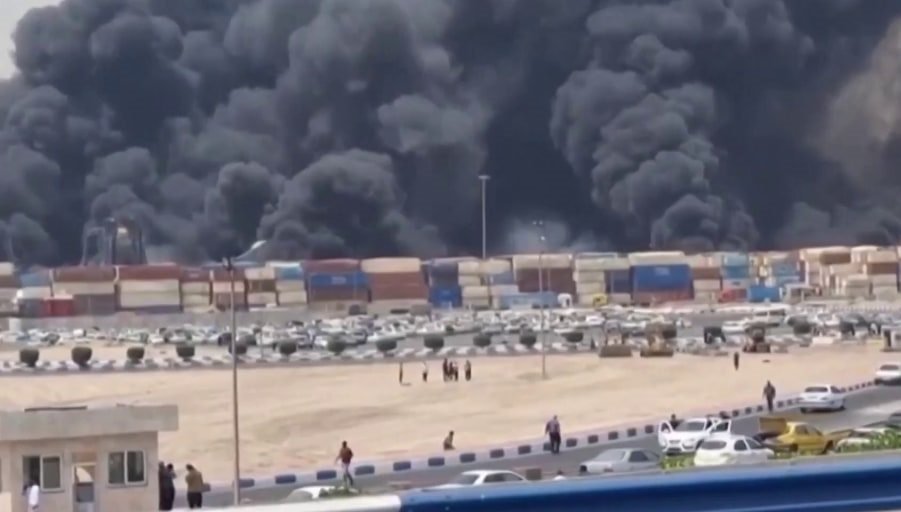
NEW DELHI, September 23, 2026 — An explosion was heard near Iran’s Qeshm Island in the Strait of Hormuz on Wednesday as US and Iranian officials pursued diplomatic contacts on the sidelines of the United Nations General Assembly in New York.
Iran’s state news agency IRNA reported that the sound appeared to have come from the direction of the sea. The cause and impact of the explosion were not immediately clear, and there was no initial report of damage on Qeshm Island.
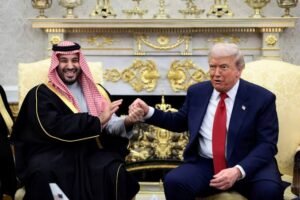
The incident came hours after US President Donald Trump said American and Iranian representatives had held what he described as a “very good” and “very productive” meeting. The talks lasted about three hours, according to Trump, and further discussions were expected.
The combination of diplomatic contacts in New York and a fresh security incident near one of the world’s most strategically important waterways highlighted the uncertainty surrounding efforts to end the conflict.
US and Iranian officials hold talks in New York
The discussions took place on Tuesday on the sidelines of the UN General Assembly.
Trump said his special envoy Steve Witkoff and Jared Kushner, the president’s son-in-law and an adviser involved in the negotiations, met with Iranian representatives.
Trump characterized the meeting as positive but acknowledged that the Iranian officials involved were not the country’s highest-level representatives. He said additional talks would take place “in the near future.”
Witkoff gave a somewhat different description of the format. In a post on X, he said US and Iranian delegations conducted lengthy discussions through mediators who moved between the two sides.
“We hope” the discussions would prove constructive and promising, Witkoff said.
Iranian state media reported that Foreign Minister Abbas Araghchi was involved in the discussions with the American side. Al Jazeera also reported that Iranian state media described the contact as being requested by Washington and focused on Tehran’s conditions for reopening the Strait of Hormuz.
Iran links Hormuz reopening to conditions
The Strait of Hormuz has become one of the central issues in the negotiations.
A senior Iranian official told Reuters on Tuesday that Iran could reopen the waterway within seven days if Washington eased military pressure and lifted its blockade of Iranian ports. The official said Tehran had already sent a proposal to the United States through mediators on September 16.
Iranian state media separately reported that Tehran’s conditions for reopening the strait included lifting the US naval blockade, releasing frozen Iranian assets and ending the war across what it calls the “resistance” fronts. Reuters reported those conditions based on Iranian state media.
The demands have not been presented as an agreed framework between Washington and Tehran. They remain part of Iran’s stated position in the diplomatic process.
The Strait of Hormuz is a critical route for global energy shipments, making any sustained disruption there a concern well beyond the Middle East.
Explosion near Qeshm remains unexplained
Against that diplomatic activity, the reported explosion near Qeshm Island added another layer of uncertainty.
IRNA said the sound appeared to originate from the sea and that there was no reported impact on the island. Iranian authorities had not publicly established what caused the explosion at the time of the initial reports.
Qeshm, Iran’s largest island, sits in the Strait of Hormuz and has previously been the location of reports of explosions during the conflict. On September 15, Reuters reported that IRNA had cited local sources saying several explosions were heard near Qeshm, apparently from the direction of the sea. The cause was also unclear at that time.
There was no verified evidence in the available reports linking Wednesday’s explosion to the US-Iran diplomatic contacts or attributing it to a particular military operation.
Trump combines diplomacy with renewed threats
The talks followed a tense speech by Trump at the UN General Assembly.
Trump said he faced a choice between reaching an agreement that would allow Iran to rebuild and taking military action against the Islamic Republic. His remarks included a threat to “annihilate” Iran if a settlement could not be reached.
At the same time, Trump has continued to signal that he sees negotiations as a possible route to ending the conflict.
Earlier Tuesday, Secretary of State Marco Rubio said Trump was open to meeting Iranian President Masoud Pezeshkian during the UN gathering. Rubio said engaging directly with counterparts was important even when agreement was not guaranteed.
Pezeshkian arrived in New York for the General Assembly, while an Iranian official had previously told Reuters that the delegation had authority to pursue diplomatic discussions.
What remains unclear
The latest talks have not produced a publicly announced agreement or a confirmed timetable for ending hostilities.
The two governments also differ in how they describe the New York engagement. US officials have spoken of meetings involving Witkoff and Kushner, while Witkoff emphasized that mediators shuttled between the American and Iranian delegations. Iranian state media reported direct contact involving Araghchi and Witkoff.
What is clear is that the two sides have reopened a channel for diplomacy while the conflict and pressure around the Strait of Hormuz continue.
For now, the cause of the explosion near Qeshm Island remains unconfirmed. The diplomatic discussions are also continuing, with Trump saying another round of talks is expected soon.
This story may be updated as new information becomes available.