Trump Pulled Back as US Strike on Houthis Neared Launch
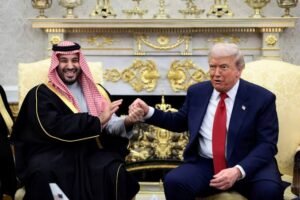
The United States came close to launching airstrikes against Yemen’s Houthi forces after Saudi Crown Prince Mohammed bin Salman urged President Donald Trump to intervene, but Trump reversed the decision before the operation began, according to a New York Times report published Sunday.
The reversal came after a rapid sequence of decisions inside the Trump administration. On Wednesday, Trump told advisers he did not favor direct US strikes against the Houthis. A day later, after speaking with Mohammed bin Salman, Trump instructed the Pentagon to prepare for possible airstrikes, according to US officials cited by The New York Times.
By Sunday, however, the president had changed course again.
US military preparations had reportedly advanced considerably. Commanders had approved target lists, and personnel were loading bombs onto aircraft selected for the missions when Trump pulled back, according to two people briefed on the operation. The White House did not publicly explain the reversal.
The episode leaves Washington trying to balance two competing concerns: Saudi Arabia’s demand for help against an expanding Houthi offensive and the Trump administration’s effort to avoid opening another US military front while American forces remain engaged in the wider conflict with Iran.
MBS pressed Trump for direct US action
Donald Trump had been weighing Saudi requests for military assistance for roughly two weeks, according to The New York Times.
The issue became more urgent after Mohammed bin Salman called Trump on Thursday and again urged the United States to help stop the Houthis’ advance, administration officials told the newspaper.
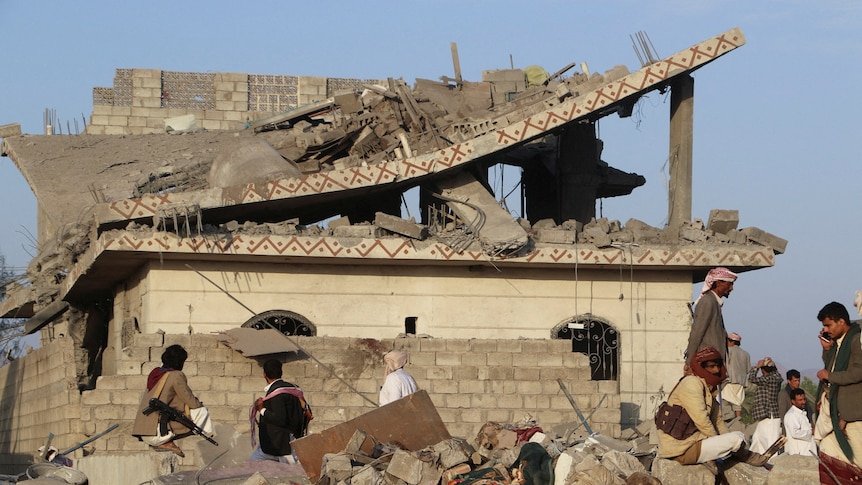
The appeal came as the Houthis expanded their position along Yemen’s western coast and increased attacks on Saudi Arabia. Their advances have brought the group closer to the Bab el-Mandeb Strait, one of the world’s key maritime chokepoints connecting the Red Sea with the Gulf of Aden.
Saudi Arabia had previously sought US military assistance, but Washington initially stopped short of direct attacks. Reuters reported on September 11 that Trump had spoken with Mohammed bin Salman at least twice and declined to authorize US strikes at that stage, while Washington agreed to provide intelligence-sharing and targeting support.
That position changed after the latest appeal from Riyadh.
Pentagon prepared for an attack
According to the New York Times reporting, Trump’s order triggered preparations for an air campaign against Houthi positions.
By the time the president reconsidered, military commanders had identified targets and US personnel were preparing aircraft for the operation. The report said the strikes were close to beginning when Trump decided not to proceed.
The White House declined to discuss Trump’s deliberations on the record. A senior administration official said only that the United States has a defense agreement with Saudi Arabia and would defend its allies.
The decision was also reportedly opposed by or met with deep skepticism from members of Trump’s inner circle. Administration officials cited concerns about adding another military commitment while the United States is already dealing with the conflict involving Iran.
That concern is central to the administration’s dilemma. Direct US attacks on the Houthis could strengthen Washington’s military relationship with Saudi Arabia, but they could also pull American forces deeper into the renewed Yemen conflict.
Why Saudi Arabia wants US help
The Houthi offensive has created a direct security problem for Saudi Arabia.
The group has launched missiles and drones toward Saudi territory while expanding its control over strategically important areas along Yemen’s Red Sea coast. Recent attacks have included strikes or attempted strikes affecting Riyadh and Saudi energy infrastructure, according to Saudi officials and international reporting.
The escalation is also taking place against the backdrop of a wider US-Iran confrontation and disruption to major Middle Eastern shipping routes.
The Bab el-Mandeb Strait is particularly important because it connects the Red Sea to the Gulf of Aden. Any prolonged disruption there could affect shipping between the Indian Ocean and the Suez Canal.
Reuters reported earlier this month that the Houthi advance had put Washington in a difficult position because the group was moving toward territory that could give it greater leverage over the strait.
Trump says Houthis are not targeting the US
Trump has also pointed to a separate factor in deciding whether to attack.
On Sunday, he told Fox News reporter Trey Yingst that Washington was in constant communication with the Houthis and that they had agreed not to fight the United States, according to an Agence France-Presse report carried by NDTV. Trump had made a similar claim earlier in September.
The Houthis have separately signaled that they do not intend to target US vessels in the Red Sea.
Mohamed al-Bukhaiti, a member of the Houthi political bureau, told The Associated Press that Washington had reached out to the group after its advance toward the Bab el-Mandeb Strait. He said the Houthis had confirmed that they were not targeting the United States or other countries in the strait, while maintaining their campaign against Saudi Arabia.
That communication does not mean the conflict has eased. The Houthis continue to attack Saudi targets, while Riyadh remains engaged militarily against the group.
US warns of wider escalation
Washington has nevertheless raised its security warnings for the region.
The US State Department has warned Americans that the conflict between Saudi Arabia and the Houthis could escalate rapidly. The department has also restricted travel by US government employees to the Saudi cities of Taif and Yanbu without special authorization.
Yanbu is particularly significant because it is a major Saudi Red Sea port and the western terminus of the kingdom’s East-West oil pipeline.
The security concerns come as the wider Middle East conflict continues to disrupt energy and shipping routes. Reuters reported that the attacks and uncertainty surrounding the Strait of Hormuz have already contributed to major volatility in global oil markets.
The US-Saudi relationship is now part of the calculation
Trump’s decision is not simply about Yemen.
Saudi Arabia is an important US partner in the broader confrontation with Iran, and the Trump administration needs Riyadh’s cooperation on military and regional matters. The New York Times reported that some US military officials have argued that American forces need Saudi assistance in the Iran conflict.
That makes the Houthi issue particularly difficult for Washington. Saudi Arabia wants direct US action against a group attacking its territory, while the White House has reasons to avoid another open-ended military commitment.
For now, the decision is no.
The United States has not launched the planned airstrikes against the Houthis, although the New York Times reported that the administration’s position could change. The Pentagon’s preparations show how close Washington came to direct military involvement, while the subsequent reversal demonstrates that the question remains unresolved.
The immediate conflict, meanwhile, continues. Saudi Arabia is still fighting the Houthis, the group retains its position along strategically important parts of Yemen’s Red Sea coast, and Washington remains engaged with both Riyadh and the Houthis through different channels.
The next US decision could determine whether the current conflict remains primarily a Saudi-Houthi confrontation or develops into a direct American military campaign in Yemen.