
She Said She Was 12. A Brazilian Court Found She Was an Adult
Cupcake ipsum dolor sit amet. Chocolate bar topping ice cream. Toffee tiramisu icing croissant marzipan candy canes I love sesame snaps powder.
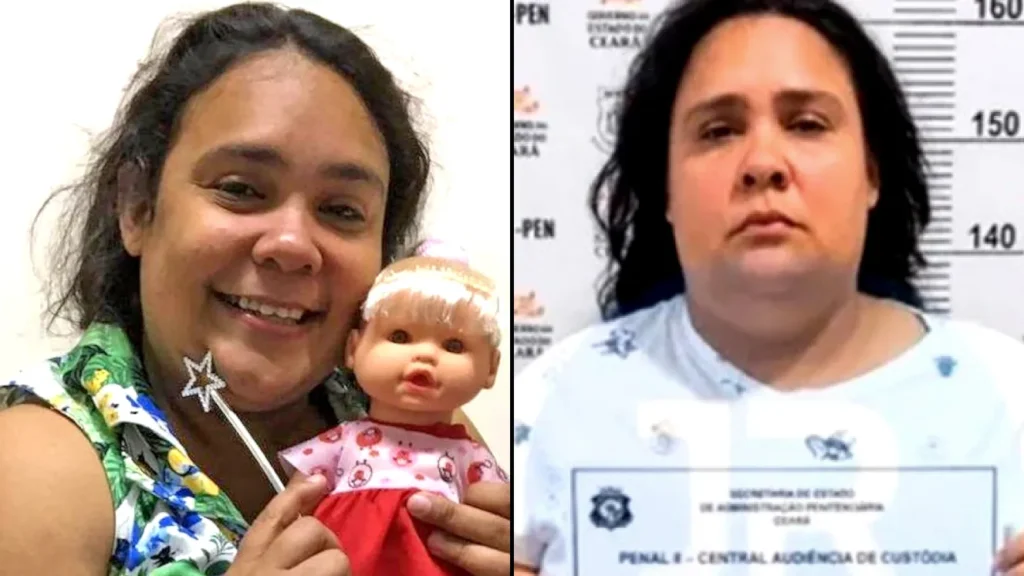
A Brazilian woman who spent about 14 months living with a family after pretending to be a 12-year-old girl has been convicted of fraud and false identity, with a court in Santa Catarina sentencing her to nearly two years of combined prison terms.
Amanda Maria Souza de Oliveira, who was 37 when she was arrested in June and is now reported as 38, had presented herself as a vulnerable adolescent named Gabriele. She told the family she had suffered abuse, abandonment, and health problems and claimed to have autism.
The Court of Justice of Santa Catarina said the woman created and maintained a false identity, deliberately led the family to believe she was a child, and obtained material benefits through the arrangement, including housing, food, medication and other expenses.
The court sentenced Oliveira to one year, six months, and 10 days in prison for fraud, along with four months and 18 days of detention for false identity. The initial regime is semi-open. The judge also maintained her preventive detention and did not allow her to remain free while appealing the decision.
How the deception unfolded
The case began in Joinville, in the northern part of Santa Catarina, after Oliveira approached a family in the Pirabeiraba district.
According to the court, she initially presented herself as an adult with experience in baking and sought help finding work. Her story later changed. She began portraying herself as a child in a vulnerable situation, giving the family a reason to continue providing shelter and support.
Earlier reports said she used the name Gabriele and adopted mannerisms intended to reinforce the claim that she was a young girl. Brazilian media reported that she used a high-pitched voice and child-oriented items, including a pacifier, doll, and baby bottle. She also reportedly gave explanations for her adult appearance, including claims involving forced hormone treatment during childhood.
The family eventually treated her as a daughter and provided day-to-day care for roughly 14 months.
The court did not describe the arrangement simply as a conventional legal adoption. Its account says Oliveira was welcomed into the family and treated as a daughter, receiving accommodation and financial support during the period.
A relative helped expose the identity
The deception began to unravel when a relative became suspicious of Oliveira’s story and searched for information about her.
That search reportedly uncovered references to a similar case in Rio de Janeiro. The relative then alerted authorities.
Oliveira was arrested on June 2, 2026, after police investigated the claims surrounding her identity. At the time, she was 37.
Brazilian newspaper Folha de S.Paulo reported that investigators linked her to alleged similar incidents in several states, including Minas Gerais, Paraná, Goiás, Ceará, Rio de Janeiro and Santa Catarina. In those cases, she was accused of using different identities and presenting herself as a vulnerable young person.
The earlier investigation was also significant because it helped establish that the Joinville case was not being treated as an isolated misunderstanding.
What the court found
The Santa Catarina court said the prosecution had established both the crimes and Oliveira’s responsibility through several forms of evidence.
These included documents gathered during the investigation, a forensic examination of a seized mobile phone, testimony from victims and witnesses, and Oliveira’s own admission that she had used a false name and age.
The court concluded that she had consciously created and maintained the fictional identity and had deliberately acted in ways designed to keep the family from discovering her true age.
A key part of the ruling concerned the material benefit she received. The court said the deception resulted in the family paying for her subsistence, including housing, food and medication.
Defense disputes the conviction
Oliveira’s defense has disputed the prosecution’s interpretation of her actions and said it intends to pursue available appeals.
Her lawyer, Lúcio Sousa, previously argued that Oliveira had experienced prolonged vulnerability and homelessness and characterized the creation of false identities as a survival mechanism. He also questioned whether the legal elements of fraud had been established, arguing that there was no allegation that she had directly stolen money from the family.
The case also involved a psychiatric evaluation. Earlier court proceedings included a separate mental-health assessment, conducted under a proceeding kept confidential by the court. The defense had argued that psychiatric issues were relevant to Oliveira’s responsibility for her actions.
The judge ultimately rejected the argument that she should be considered not criminally responsible, finding that she had acted deliberately and consciously.
A case that began with an arrest in June
The legal case moved quickly from investigation to trial.
On June 9, the Joinville court accepted the Public Prosecutor’s complaint accusing Oliveira of fraud and false identity, formally making her a defendant. At that stage, the court also ordered a separate mental-health assessment.
A hearing was held in August, during which the alleged victims, witnesses and technical experts gave evidence before Oliveira was questioned. The prosecution sought a conviction while the defense asked for acquittal.
The conviction followed on August 20.
The case remains subject to appeal, and the proceedings are being handled under judicial secrecy in Brazil.
What Happens Next
Oliveira remains in custody following the court’s decision and was not granted the right to appeal while free. Her defense has indicated that it will challenge the conviction through the available legal channels.
The most recent court ruling establishes the conviction and sentence in the Joinville case, while claims about similar incidents in other Brazilian states form part of the wider investigative background.