AI Cracks Napoleon-Era Cipher After 217 Years, Revealing A Secret 1809 Military Briefing
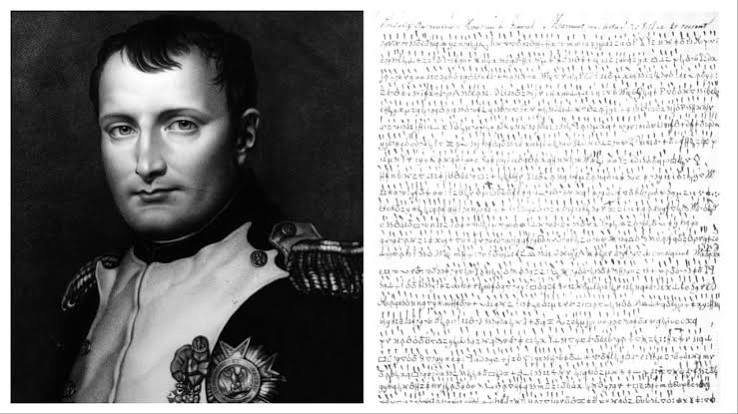
PARIS: A 217-year-old coded military letter sent on Napoleon Bonaparte’s orders has been deciphered with help from artificial intelligence after remaining unread since 1809. Carter Church, a staff AI engineer at cybersecurity company SentinelOne, said OpenAI’s GPT-6 Astra completed the transcription and cryptanalysis in about six hours from a single low-resolution image.
The Napoleon letter decoded AI story needs one historical clarification: Napoleon did not personally write the surviving cipher letter. He instructed his stepson, Eugène de Beauharnais, then Viceroy of Italy, to send the message to Marshal Auguste de Marmont, who was stationed in Dalmatia. Its purpose was to provide information on French and allied army positions before Austria’s 1809 campaign.
How The 217-Year-Old Cipher Was Cracked
The document contains about 1,300 cipher units and 155 distinct signs, including numbers, letters and unusual handwritten symbols. The encryption system had remained difficult to study because its original key was lost.
Church started with a scanned reproduction published in a French military journal in 1969. GPT-6 Astra first transcribed the symbols and then identified a partial table compiled by cryptology historian Daniel Tant. The table accounted for 33 signs, covering about one-third of the message, before the model worked through the remaining symbols using computational methods.
The AI decodes historical letter case therefore involved several stages rather than a simple translation. The process combined image transcription, historical research and cryptanalysis. Church has also published a proposed key, transcription and verification code for further examination.
What The Decoded Message Reveals
The recovered text is a military briefing from Eugène’s headquarters in late March 1809. It lists the positions of French and allied forces and discusses troop movements as Austria prepared to invade Bavaria in April.
According to Live Science, historians said the recovered wording can be compared with surviving correspondence from Napoleon that described what the message was intended to contain. That existing evidence provides an important way to assess the proposed reading.
The Napoleon Bonaparte mystery also produced a correction to the document’s historical dating. The cipher had previously been listed as a 1807 document, but the new reconstruction places it in March 1809, matching the circumstances of Napoleon’s instructions to Eugène.
Why The Decipherment Matters
The Napoleon letter decoded AI result does not mean every symbol has been settled. Church’s published reconstruction still identifies five unresolved signs, with alternative readings for several individual terms. The wider translation has nevertheless been reviewed against the known historical context.
The phrase AI decodes historical letter also points to a broader archival use for multimodal AI. Similar interest in combining visual material with text has appeared in recent AI-powered search developments, although historical decipherment remains a specialised task.
For the Napoleon Bonaparte mystery, the newly readable document provides a clearer record of how French commanders exchanged sensitive military information before the War of the Fifth Coalition. It also demonstrates how an overlooked archival problem can be revisited when old scans, partial historical research and modern computational tools are combined.
The AI decodes historical letter breakthrough is therefore significant less because it reveals an entirely unknown Napoleon strategy and more because it makes a previously inaccessible document available for direct study. Another chapter of the Napoleon Bonaparte mystery can now be examined through readable text rather than symbols alone.