Vande Bharat 180 kmph Trial Run Completed: Nagda-Kota Test Advances RDSO Certification
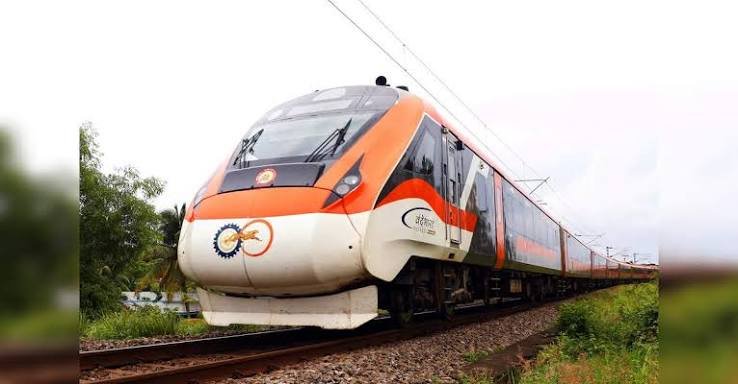
KOTA: Indian Railways’ new Vande Bharat Chair Car rake has successfully completed a loaded high-speed trial at 180 kmph on the Nagda-Kota-Sawai Madhopur section of West Central Railway. The test is part of a wider technical evaluation by the Research Designs and Standards Organisation (RDSO), with more trials still required before the rake can receive final speed certification. According to the Indian Express, the loaded oscillation test was completed successfully, but the certification process is not yet finished.
Vande Bharat 180 Kmph Trial Run Reaches Key Testing Stage
The Vande Bharat 180 kmph trial run involved the Chair Car rake travelling with the specified load and its air springs inflated. The trials are intended to assess ride quality, stability, vehicle behaviour and other safety-related parameters at high speeds.
The rake was manufactured at the Modern Coach Factory in Raebareli, Uttar Pradesh. It is equipped with a Siemens propulsion system and a Knorr-Bremse braking system, according to the railway information reported during the testing programme.
Nagda Kota Vande Bharat High Speed Test Has More Trials Ahead
The Nagda Kota Vande Bharat high speed test is being conducted as a multi-stage programme rather than a single speed run. Although the loaded oscillation trial has been completed at 180 kmph, an empty-condition oscillation trial is still pending.
Engineers must also conduct a coupler force trial and an emergency braking trial. The coupler test will examine the longitudinal forces acting between coaches during acceleration and braking, while the emergency braking test will assess braking performance and stopping distance at speeds of up to 160 kmph.
The testing programme is significant because reaching 180 kmph during one trial does not automatically authorise the train to operate commercially at that speed.
RDSO Vande Bharat Certification 2026 Still Pending
The RDSO Vande Bharat certification 2026 process will depend on the successful completion and evaluation of the prescribed tests. Recorded data from the trials will be reviewed by RDSO’s Testing Directorate against the required technical parameters before a final speed certificate is issued.
This means the Vande Bharat 180 kmph trial run marks a major testing milestone, but it should not be described as final approval for regular 180 kmph passenger operations.
Safety Features Included In The New Rake
The new Chair Car rake includes Kavach, India’s Automatic Train Protection system, along with CCTV cameras, emergency alarm push buttons and passenger-to-crew communication units.
It also has fire detection and suppression systems, automatic plug doors and sealed gangways between coaches. The train uses regenerative braking, which can return part of the energy generated during braking to the electrical system.
The latest Nagda Kota Vande Bharat high speed test also comes as Indian Railways continues expanding the Vande Bharat network, including the recently approved Surat-Udaipur Vande Bharat service, which is scheduled to connect Gujarat and Rajasthan with a new direct service.
Final Certification Depends On Remaining Tests
The RDSO Vande Bharat certification 2026 will only follow after the remaining trials are completed and the results meet the prescribed technical requirements. Until then, the 180 kmph run remains a successful high-speed test rather than a final operating clearance.