Aga Syed Ruhullah Mehdi Announces Resignation as Srinagar MP
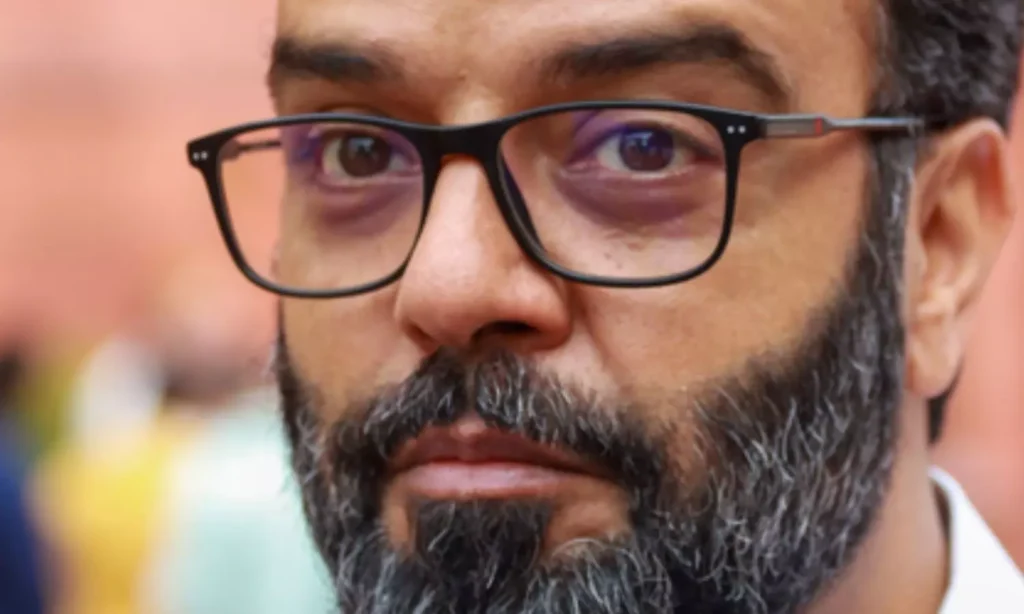
SRINAGAR — National Conference MP Aga Syed Ruhullah Mehdi has decided to resign from the Lok Sabha and quit the Jammu & Kashmir National Conference in November, escalating an increasingly public dispute with the party leadership over its position on Article 370 and Jammu and Kashmir’s constitutional future.
Mehdi told NDTV that he plans to submit his resignation as Srinagar MP on November 3, the 26th death anniversary of his father, Aga Syed Mehdi. The date was also reported by The Times of India and other news outlets.
The resignation has not yet taken effect. Mehdi remains the elected MP from Srinagar, and his stated plan is to formally resign later this year and seek a fresh mandate from voters.
The decision follows a direct challenge from National Conference president Farooq Abdullah, who had asked Mehdi to resign from Parliament and contest again if he disagreed with the party’s political position. Mehdi initially said he would respond to Abdullah but subsequently confirmed that he had accepted the challenge.
Dispute centres on Article 370
At the heart of the disagreement is the National Conference’s approach to the restoration of Jammu and Kashmir’s constitutional status.
Mehdi has repeatedly argued that the party should continue to press for the restoration of the constitutional provisions removed by the Centre in August 2019. In his latest letter to Farooq Abdullah, dated August 28, he questioned what he described as a shift in the party’s political position from restoring Article 370 and related constitutional protections toward seeking the restoration of statehood.
Mehdi argued that statehood alone should not be treated as the limit of Jammu and Kashmir’s political aspirations. He also questioned the National Conference’s commitment to promises made during the 2024 Assembly election campaign.
In a statement responding to Abdullah’s demand for his resignation, Mehdi said: “Rest assured, the resignation will come.” He added that accountability should come first and said he was awaiting Abdullah’s response to questions raised in his letter.
The dispute has increasingly moved beyond internal party criticism. Mehdi has held programmes and made public statements challenging the NC government’s record and its approach to the constitutional issue, while party leaders have questioned his continued criticism of the organisation despite being elected on its ticket.
Farooq Abdullah’s challenge
The immediate trigger for the latest escalation was Abdullah’s public challenge to Mehdi.
Abdullah, the veteran National Conference leader and former Jammu and Kashmir chief minister, told Mehdi to resign and seek a fresh mandate rather than continue criticising the party leadership from outside its political line. Mehdi’s subsequent response made clear that he was prepared to leave both the party and Parliament.
The disagreement reflects a wider tension within the National Conference over how far the party should continue to pursue the restoration of Article 370 after its abrogation in 2019.
Mehdi has taken a more confrontational position, arguing that political parties in Jammu and Kashmir should maintain pressure for restoration of the constitutional guarantees that existed before August 2019. In recent remarks, he has also called for a broader political platform to pursue that objective.
Mehdi won Srinagar with a clear margin in 2024
Mehdi entered the Lok Sabha after winning the Srinagar constituency in the 2024 general election on a National Conference ticket.
He secured 356,866 votes, or 52.85% of the vote, defeating Jammu and Kashmir Peoples Democratic Party candidate Waheed Ur Rehman Para by 188,416 votes. The official election record confirms Mehdi’s election from Srinagar on June 4, 2024.
His departure would therefore leave the Srinagar parliamentary seat vacant if and when the resignation is formally accepted.
That does not mean the seat is vacant now. Mehdi’s announcement concerns a planned resignation in November, and the parliamentary process would follow once a formal resignation is submitted and acted upon.
A growing rift with the National Conference
The disagreement between Mehdi and the National Conference has been developing for months.
Mehdi had already indicated in August that he had made up his mind to eventually separate from the party, although at that stage he described the timing as a matter of months rather than an immediate resignation. He had also suggested that the decision could be reconsidered if the party leadership took steps to address his concerns.
The latest announcement removes much of that ambiguity.
Mehdi now says he intends to leave both the National Conference and Parliament in November. His decision also means that the political disagreement will eventually be put before Srinagar voters if a fresh election is held following the vacancy.
For the National Conference, the episode puts one of its prominent parliamentary figures directly at odds with the party leadership. For Mehdi, the resignation would turn his criticism of the party’s direction into a separate political mandate.
What happens next
For now, Mehdi continues to serve as Srinagar’s Lok Sabha representative.
His stated plan is to submit his resignation on November 3. The formal parliamentary process and any subsequent election arrangements will depend on the resignation being submitted and accepted in accordance with parliamentary procedure.
Until then, the immediate political issue is whether Mehdi and the National Conference can resolve their differences before the planned resignation date.
Mehdi’s latest position suggests he does not intend to abandon his campaign over Jammu and Kashmir’s constitutional status. Instead, he appears prepared to take that argument directly back to voters outside the National Conference organisation.
The political significance of the move will ultimately depend on what follows his resignation and whether Srinagar voters give him a fresh mandate.