Rajasthan Man Arrested Over TN CM Vijay AI Deepfake Scam; Police Trace WhatsApp Fraud Network
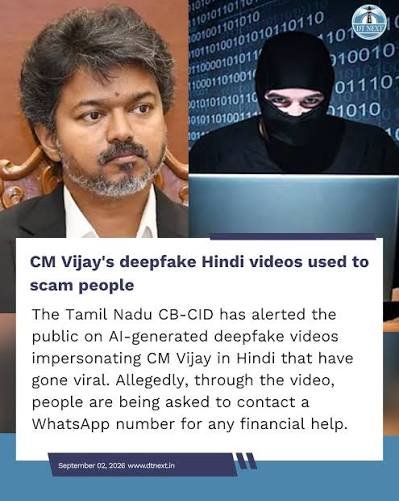
CHENNAI: Tamil Nadu Police have arrested a 28-year-old man in Rajasthan over an alleged scam involving AI-generated videos impersonating Chief Minister C. Joseph Vijay and falsely promising financial assistance. The TN CM Vijay AI Deepfake investigation has now moved across state lines as police trace the digital trail behind the WhatsApp-linked fraud.
Rajasthan arrest follows digital trail
The Tamil Nadu Crime Branch-CID’s Cyber Crime Cell detected the videos during routine online monitoring and registered a case on September 1. Investigators later traced the activity to 28-year-old Shyabu Khan and arrested him near Alwar on September 12 with assistance from Rajasthan Police, according to The Times of India.
The Rajasthan Deepfake Arrest followed an investigation spanning Rajasthan and Madhya Pradesh. Police seized mobile phones, SIM cards and a computer allegedly connected to the suspected fraud. Khan was subsequently brought to Tamil Nadu and remanded in judicial custody.
How the TN CM Vijay AI Deepfake scam worked
The manipulated clips showed a person resembling Vijay with digitally generated Hindi audio, creating the appearance that the Chief Minister was speaking directly to the public. The videos circulated on Facebook and other social platforms and allegedly directed people seeking financial help to a WhatsApp number.
Police had already warned about the TN CM Vijay AI Deepfake on September 3 after identifying similar clips. Investigators said the material was designed to deceive people rather than serve as parody or entertainment.
The videos were later removed, while information obtained from platforms and service providers helped investigators identify suspects and reconstruct the digital trail.
Police probe a wider network
The Rajasthan Deepfake Arrest could represent only one part of the wider investigation. Authorities are examining whether Khan acted alone or worked with others involved in creating and distributing the fraudulent videos.
Investigators also identified a person in Madhya Pradesh who was allegedly affected by the scam. Police are examining similar videos and social-media accounts as they try to establish how widely the operation spread.
Authorities have also said some similar clips appeared through Facebook accounts believed to be linked to another country. That remains an investigative lead and is not proof of responsibility by any specific foreign actor.
AI misuse moves beyond harmless trends
The case comes as generative AI continues powering legitimate visual experiments, from AI image trends to a ChatGPT photo trend.
But the TN CM Vijay AI Deepfake case highlights the darker risk when realistic synthetic media is combined with financial deception. A fabricated public figure can exploit familiarity and trust, making an ordinary online scam appear credible.
What people should watch for
The Rajasthan Deepfake Arrest also underlines why viewers should not assume that a convincing video is genuine. Tamil Nadu Police have warned people not to respond to phone numbers or join WhatsApp groups promoted through such videos.
For users, key warning signs include unexpected financial offers, requests to move conversations to WhatsApp and videos that cannot be verified through an official account or government channel.
The investigation into the TN CM Vijay AI Deepfake remains active, with authorities seeking additional participants. Until the inquiry is completed, claims about the wider network should be treated as allegations. The Rajasthan Deepfake Arrest is the latest major breakthrough, but the full scale of the alleged operation is still being determined.