
India Strongly Condemns Global Terror Networks at UN, Urging International Community to Face Ground Realities
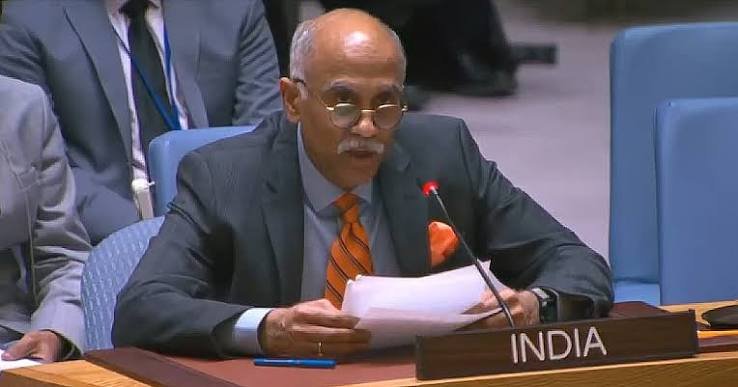
UNITED NATIONS: India used a September 16 UN Security Council briefing on Afghanistan to press its long-standing argument that terrorist networks and the environments that shelter them require stronger international accountability. Ambassador Harish Parvathaneni, India’s Permanent Representative, linked the discussion to the history of al-Qaida and the September 11 attacks, while warning about the continuing presence of groups such as Lashkar-e-Taiba (LeT) and Jaish-e-Mohammed (JeM). According to the Permanent Mission of India to the UN, the remarks were delivered during the UNAMA briefing on Afghanistan.
The remarks form the latest India UN terrorism statement to focus on what New Delhi describes as cross-border terrorism, safe havens and impunity. The global security UN speech came during a UNAMA briefing on Afghanistan on September 16, 2026.
India Highlights 9/11 Operatives Found In Pakistan
Parvathaneni said the architects and senior facilitators of the September 11 attacks were not simply fugitives hiding in remote caves. India’s statement cited Osama bin Laden, who was killed in Abbottabad in 2011, and Khalid Sheikh Mohammed, whom the statement described as the principal architect of the attacks and said was found in a residential house.
The statement also referred to other senior al-Qaida figures, including Ramzi Binalshibh, Walid bin Attash and Mustafa Ahmed al-Hawsawi. India argued that the locations where these figures were eventually found illustrated the challenge of terrorist networks operating within populated areas.
The remarks came days after the world marked the 25th anniversary of 9/11.
India Calls For Stronger Terror Accountability
The core of the cross border terror accountability argument was India’s call to address what it described as environments that provide terrorist groups with space, support and impunity. The statement specifically named LeT and JeM and urged the international community to confront what India characterised as continuing sanctuary for such organisations.
The cross border terror accountability question has been a recurring part of India’s diplomatic messaging on terrorism, including at UN forums. For New Delhi, the India UN terrorism statement is part of a broader position that counter-terrorism efforts should apply consistently and that states must not allow territory or institutions to become enabling environments for militant groups.
India’s framing also connects with its continuing disputes with Pakistan. Earlier reporting examined the wider India-Pakistan tensions surrounding the Indus Waters Treaty dispute, which followed the Pahalgam attack and subsequent diplomatic measures.
UN Afghanistan Briefing Provides Wider Context
The meeting itself was focused on Afghanistan. India’s statement connected terrorism in Afghanistan with wider regional security concerns, arguing that the international community should prevent terrorist networks from gaining space to operate.
The global security UN speech therefore extended beyond the September 11 anniversary. It placed Afghanistan, terrorist safe havens and international enforcement within the same security discussion. The global security UN speech also reinforced India’s call for sustained international cooperation against terrorist networks and their support structures.
The cross border terror accountability issue remains politically contested. India’s allegations concerning Pakistan’s support or sheltering of terrorist organisations represent New Delhi’s position and should not be treated as independently established by the statement itself.
For the India UN terrorism statement, the immediate significance lies in India reiterating its demand for consistent international counter-terrorism standards at a Security Council forum. The remarks also reinforce New Delhi’s continued emphasis on accountability for terrorist networks and those accused of enabling them.