Mette Frederiksen Says Greenland Security Pact Is Good for NATO and Europe
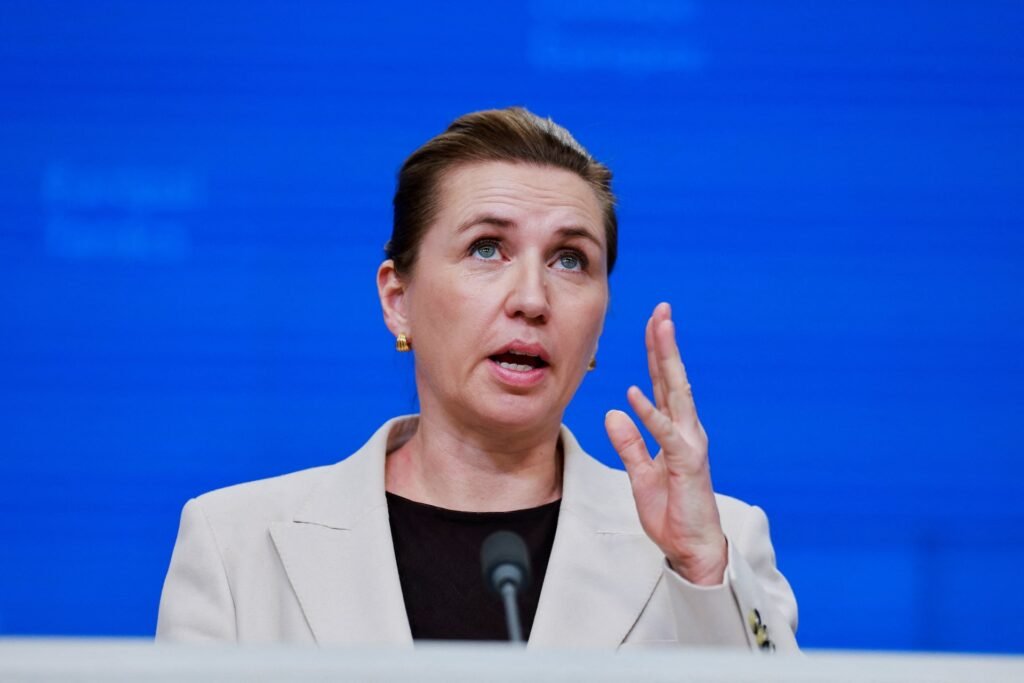
COPENHAGEN — Danish Prime Minister Mette Frederiksen has endorsed a planned security agreement between Denmark, Greenland and the United States, saying it will strengthen security in the Arctic and North Atlantic and benefit NATO and Europe.
The three governments said Friday that they expect to sign the agreement next week on the sidelines of the United Nations General Assembly in New York. The pact will still have to go through the necessary parliamentary procedures before it can take effect.
Frederiksen said the agreement would strengthen “our common security in the Arctic and the North Atlantic Area” and described it as beneficial for NATO and Europe. She also stressed that the arrangement recognizes the sovereignty and territorial integrity of the Kingdom of Denmark and the right of Greenland’s people to self-determination.
The announcement follows months of tension over President Donald Trump’s demands for greater US control over Greenland, the strategically located autonomous territory within the Kingdom of Denmark.
Trump describes permanent US security role
Trump said Friday that the United States had reached an agreement with Denmark and Greenland that gives Washington “permanent control” over Greenland’s security.
In a post on Truth Social, Trump said the agreement would prevent US adversaries from establishing military bases, maintaining a military presence or making sensitive investments in Greenland without American approval. He also said the United States would begin developing plans for a larger military presence on the island.
The precise text of the agreement has not yet been publicly released, however. Reuters reported that the deal would expand US military access, including basing and overflight rights, while restricting military or sensitive economic activity by countries outside the NATO framework.
That distinction is important because Trump’s description of the arrangement as giving Washington “permanent control” goes further than the language used by Denmark and Greenland in their statements.
Denmark and Greenland emphasize sovereignty
The Danish government has presented the agreement as a security arrangement rather than a transfer of sovereignty.
Greenlandic Prime Minister Jens-Frederik Nielsen said the agreement would strengthen the security of Greenland, the Kingdom of Denmark, the United States and the Western alliance. He also said it recognizes Greenland’s interests and its place in international cooperation.
The Danish government’s statement makes clear that the agreement is not yet in force. It is expected to be signed during the UN General Assembly and will then face the required parliamentary procedures.
The distinction matters because Greenland remains an autonomous territory within the Kingdom of Denmark. Copenhagen retains responsibility for foreign and defense policy, while Greenland has extensive self-government.
A new framework for the US military presence
The United States already has a long-standing military presence in Greenland. Denmark’s Foreign Ministry says the American presence is governed by a series of defense agreements dating back to the 1951 agreement on the defense of Greenland.
Pituffik Space Base, formerly known as Thule Air Base, is currently the only remaining US defense area in Greenland, according to the Danish government. Copenhagen says the United States and Greenland maintain ongoing cooperation concerning American military activities there.
The new agreement is intended to provide a broader and more permanent framework for US security access.
Reuters reported that the arrangement would prevent US adversaries from establishing bases or making sensitive investments in Greenland and could remain applicable even if Greenland eventually became independent. The exact mechanisms and scope of any future US military expansion remain subject to the final agreement and implementation process.
Why Greenland matters to Washington and NATO
Greenland’s location between North America and Europe gives it considerable strategic importance for Arctic and North Atlantic defense.
NATO Secretary General Mark Rutte said in July that Arctic security involved cooperation among the United States, Canada and European Arctic allies, including Denmark, Finland, Iceland, Norway and Sweden. He also said separate talks involving the United States, Denmark and Greenland were addressing future investments and troop deployments on the island.
The region has attracted increasing military and strategic attention as Russia and China expand their Arctic interests. Greenland’s geography also gives the United States an important position for monitoring activity across the Arctic and North Atlantic.
For Denmark and Greenland, however, the negotiations have also been tied closely to questions of sovereignty and political self-determination.
Deal follows months of political tension
Trump has repeatedly argued that Greenland is important to US national security and has sought greater American control over the territory. His earlier calls to acquire Greenland triggered strong reactions in Denmark and other European countries.
A joint statement issued by Denmark and several European leaders in January said Arctic security should be pursued collectively with NATO allies while respecting sovereignty, territorial integrity and existing borders. The statement also emphasized that Greenland belongs to its people and that decisions concerning Denmark and Greenland should be made by Denmark and Greenland.
The latest agreement represents a different approach: expanding US security and military access while leaving Greenland’s status within the Kingdom of Denmark unchanged.
Trump has portrayed the arrangement as resolving long-standing American security concerns. Secretary of State Marco Rubio likewise said the agreement addressed US national-security concerns in Greenland.
Formal signing is still ahead
The agreement has been announced but has not yet completed the process required for it to enter into force.
Denmark, Greenland and the United States are expected to sign it during next week’s UN General Assembly meetings in New York. Parliamentary procedures will follow.
Until the final text is published and the approval process is completed, some details about the agreement’s practical operation — including the precise scope of future US military activity — remain unclear.
For now, Frederiksen’s message is that the arrangement can strengthen Arctic and North Atlantic security without changing Denmark’s sovereignty over Greenland or Greenlanders’ right to determine their future.