Katmai’s Brown Bears Get Ready for Fat Bear Week 2026
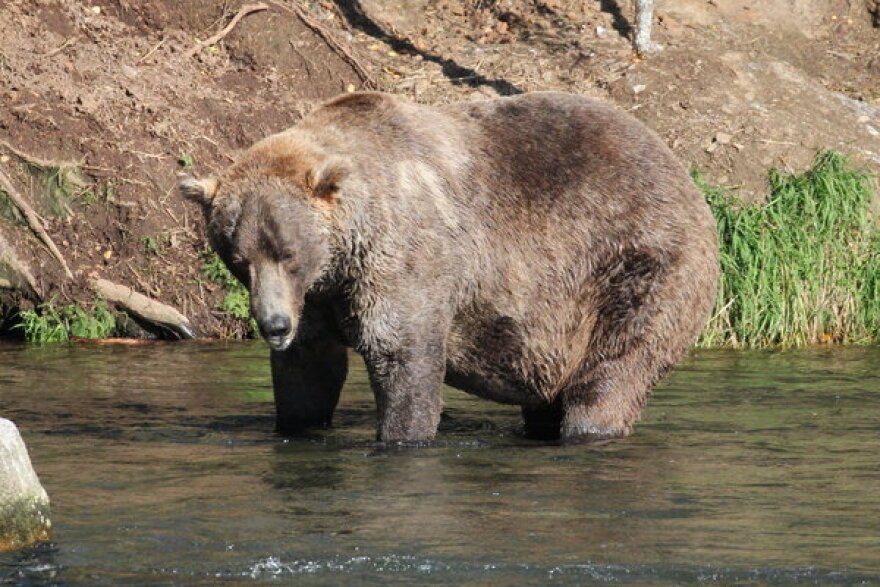
KING SALMON, Alaska — Fat Bear Week returns to Katmai National Park and Preserve on Sept. 22, bringing another round of online voting to determine which of the park’s brown bears has done the best job building fat reserves ahead of winter.
The 2026 tournament will run through Sept. 29, when the champion is scheduled to be crowned. The National Park Service has scheduled the reveal of this year’s contestants and bracket for Sept. 18. Explore.org lists the bracket reveal for 3 p.m. Eastern, or noon Pacific, and 11 a.m. Alaska time.
The tournament has become an annual celebration of the brown bears that gather around Brooks River to feed on salmon during the summer and early fall. The competition is run in partnership with the National Park Service, Explore.org and the Katmai Conservancy.
More cubs have been seen at Brooks Camp
One of the notable developments ahead of this year’s competition is the number of cubs being seen around Brooks Camp.
“There are more cubs at Brooks Camp this year than have been seen in a long time,” Katmai Superintendent Mark Sturm said in the National Park Service’s announcement for Fat Bear Week 2026.
Sturm said a new generation of bears is taking shape and preparing for winter in Katmai’s ecosystem. The park did not provide a numerical count in its announcement, so the observation should not be interpreted as a formal population estimate.
The increase in attention around the cubs comes after a summer that has also produced several notable observations on the Brooks River bear cameras, including difficult encounters between adult bears and cubs. Those incidents are part of the natural behavior researchers and park staff observe in the wild and are separate from the Fat Bear Week competition itself.
The 2026 bracket is still to be revealed
As of Sept. 18, the official 2026 bracket has not yet been published in the National Park Service’s announcement or Explore.org’s pre-reveal bear listings.
Explore.org says the 2026 contestants and bracket will be revealed during a Brooks Live Chat on Sept. 18. Until that reveal, lists circulating online should not automatically be treated as the confirmed 2026 field.
That distinction is particularly relevant because returning bears can attract attention from previous competitions. Bear 32, known as “Chunk,” won the 2025 competition, but the National Park Service had not confirmed the 2026 contestants in its Sept. 11 announcement.
How Fat Bear Week works
Fat Bear Week began in 2014 and developed from a smaller event built around photographs showing how dramatically individual bears change between the beginning and end of the feeding season.
The modern competition uses a single-elimination bracket. During the voting period, members of the public choose between bears in individual matchups, with the winner advancing toward the final. Explore.org says one vote is registered per email address for each poll. Voting is scheduled from Sept. 22 through Sept. 29, with no voting on Sept. 26 or 27.
The voting window runs from noon to 9 p.m. Eastern each competition day, according to Explore.org. The final is scheduled for Sept. 29, also known as Fat Bear Tuesday.
The competition is conducted online, meaning people do not have to travel to Alaska to participate. Explore.org also provides live cameras showing bears along Brooks River.
Why bears need to get fat
The contest’s central idea is tied to an important part of brown bear biology.
Katmai’s bears spend much of the summer feeding heavily before entering winter dens. Salmon are a major food source around Brooks River, and bears use the resulting energy reserves to survive the winter period when they do not eat.
The National Park Service says bears can lose up to one-third of their body weight during hibernation. Building sufficient fat reserves before entering a den is therefore directly connected to winter survival.
Brooks River becomes particularly important during the salmon season, when bears gather in large numbers to feed. Katmai describes salmon as a keystone part of the ecosystem supporting bears and other wildlife.
A global audience for an Alaska wildlife event
What began as a small park-related event has developed into an international online phenomenon.
The National Park Service said more than 1.7 million votes were cast from more than 100 countries during the 2025 competition, when Bear 32 “Chunk” was crowned champion.
The event also gives viewers an opportunity to observe wildlife remotely. Explore.org’s live cameras allow people to watch bears feeding and interacting along the Brooks River without entering the animals’ environment.
For Katmai, the competition serves a broader educational purpose as well. The National Park Service uses Fat Bear Week to introduce audiences to brown bear biology, salmon ecology, and the importance of maintaining intact wildlife habitat.
What happens next
The immediate milestone is the 2026 contestant and bracket reveal scheduled for Sept. 18.
Voting begins Sept. 22 and continues through Sept. 29, with the final scheduled for the last day. The winner will be the bear that receives the most votes in the championship matchup.
For now, the identities of this year’s full field remain the key missing piece. Once the bracket is published, viewers will be able to compare the contestants’ summer and late-season appearances and follow their progress through the tournament.
Fat Bear Week may be framed as a lighthearted online competition, but the reason the bears become so large each year is anything but trivial: they are preparing for one of the most demanding periods of their annual cycle.