
Made in India, Now Finding a Bigger Market in China
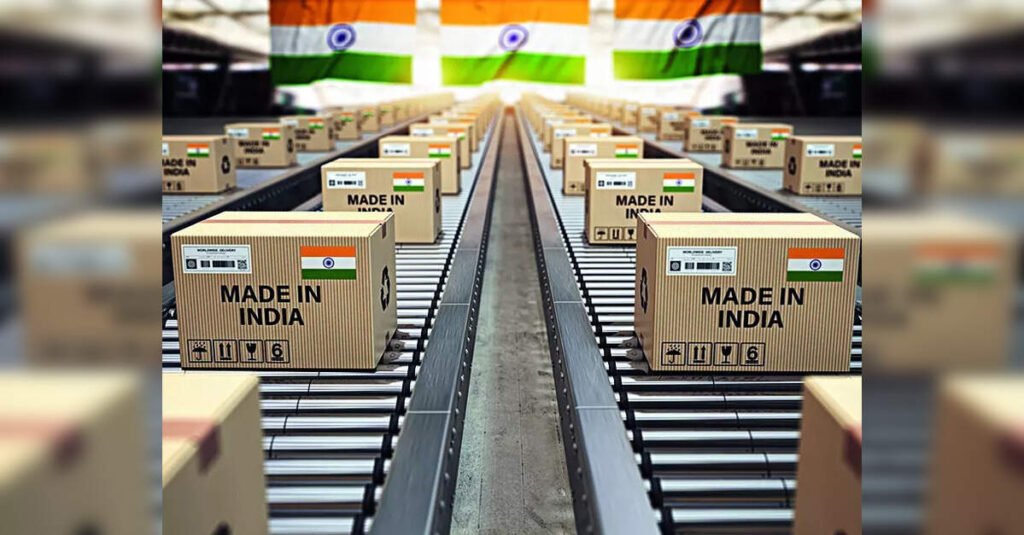
India is shipping substantially more manufactured goods to China, with electronics emerging as one of the main drivers of a nearly 40% increase in exports during the first five months of the current financial year.
An analysis of government trade data cited by Bloomberg shows that Indian exports to China rose almost 40% between April and August 2026. Electronics and engineering products accounted for much of the increase, although the overall value of Indian goods sold to China remains far below the value of Chinese goods entering India.
The headline figure needs some qualification: the nearly 40% increase refers to India’s overall exports to China, not to electronics exports alone. Electronics shipments to China increased by more than 15% during April-August compared with the same period a year earlier.
Electronics are becoming a bigger part of the China trade
The shift is notable because India-China trade has traditionally been dominated by Chinese exports to India.
Indian electronics shipments to China tripled to about $3.18 billion in the financial year ended March 2026, according to the government-data analysis reported by Bloomberg. Products contributing to the increase included printed circuit board assemblies, smartphones, display modules and telecommunications equipment.
The growth is also visible beyond finished products. India’s exports of printed circuit board assemblies have expanded sharply, with earlier Commerce Department data showing PCBA exports to China reaching about $1.5 billion in FY2025-26, compared with roughly $36 million a year earlier. Nearly 80% of India’s total PCBA exports went to China during the year.
That suggests Indian manufacturers are increasingly participating in regional electronics supply chains, even though much of the higher-value semiconductor and component ecosystem remains concentrated outside India.
AI and data centres are creating another source of demand
Industry representatives say the worldwide expansion of artificial intelligence infrastructure and data centres is helping create additional demand for electronic equipment and components.
Rajoo Goel, secretary general of the Electronic Industries Association of India, told Bloomberg that pressure on suppliers to meet demand for equipment used in AI-related products and data centres is contributing to the increase in Indian electronics exports to China.
The connection is indirect as well as direct. AI-related investment is increasing demand for servers, networking equipment, power-management systems and other electronic hardware. Suppliers across Asia are consequently facing stronger demand for components and assemblies.
India is attempting to capture more of that value through its expanding electronics manufacturing base.
The government said in March that electronics production had risen from about ₹1.9 lakh crore in 2014-15 to approximately ₹12 lakh crore in 2024-25. Electronics exports increased from around ₹38,000 crore to roughly ₹3.3 lakh crore over the same period.
Engineering exports are rising too
The improvement in exports to China is not limited to electronics.
Engineering exports increased by about 21% during April-August, with machinery and parts, automobile components and hand tools among the products contributing to the rise.
That broader increase matters because it suggests the latest movement is not simply a one-product story. Indian suppliers are finding opportunities in several manufacturing categories at the same time.
Still, China remains a relatively small market for India’s exports. It accounted for about 4.4% of India’s exports in the financial year ended March 2026, compared with just over 3% a year earlier. The United States remained a much larger destination, taking nearly one-fifth of Indian exports.
The trade deficit remains the bigger number
The increase in Indian exports should not be mistaken for a reversal in the bilateral trade relationship.
India imported $131.6 billion worth of goods from China in FY2025-26, while exports to China were about $19.5 billion. That left India with a merchandise trade deficit of roughly $112 billion with China.
Electronics are an important part of that dependence. Earlier Commerce Department data showed India imported $46.4 billion worth of electronics from China in FY2025-26, representing about 35% of India’s total imports from the country.
That creates a striking feature of India’s electronics story: the country is exporting more finished products and assemblies while continuing to rely heavily on China for components and industrial inputs.
The government has been trying to change that equation by expanding domestic electronics manufacturing and building capabilities in areas such as semiconductor packaging, chip design and component production.
At a July 2026 industry consultation, the Commerce Ministry outlined a longer-term ambition of reaching $150 billion in electronics exports by 2030, while stressing the need for a stable policy framework and deeper participation in global value chains.
Why the latest increase matters
The recent numbers show that Indian factories are gaining access to markets that have historically been difficult to penetrate.
Pankaj Mohindroo, chairman of the Indian Cellular and Electronics Association, told Bloomberg that the export increase showed Indian manufacturing was gaining credibility in global value chains. He also argued that the next challenge is to expand from components and sub-assemblies into a wider range of products while strengthening domestic design and component capabilities.
Another complication complicates the data.
Chinese customs figures do not show a matching increase in some categories, particularly printed circuit boards. Industry executives cited by Bloomberg said differences in the way the two countries classify goods could explain at least part of the discrepancy. That makes it difficult to attribute the entire increase to a single category or product flow.
For now, the most defensible reading is that India’s exports to China are growing rapidly from a relatively low base, with electronics and engineering goods providing important momentum.
The larger test will be whether this growth can be sustained and whether Indian manufacturers can capture more value domestically rather than relying on imported Chinese components. The latest export figures show progress on the first question, but they do not yet resolve the second.
This story may be updated as new information becomes available.