Bank Strike September 28-30: Salaries Early, Banks Open Sunday
NEW DELHI: The Centre has moved to reduce the disruption expected from a three-day nationwide bank strike by allowing September salaries, wages and pensions for Central Government employees to be disbursed on September 25, five days before the strike is scheduled to end.
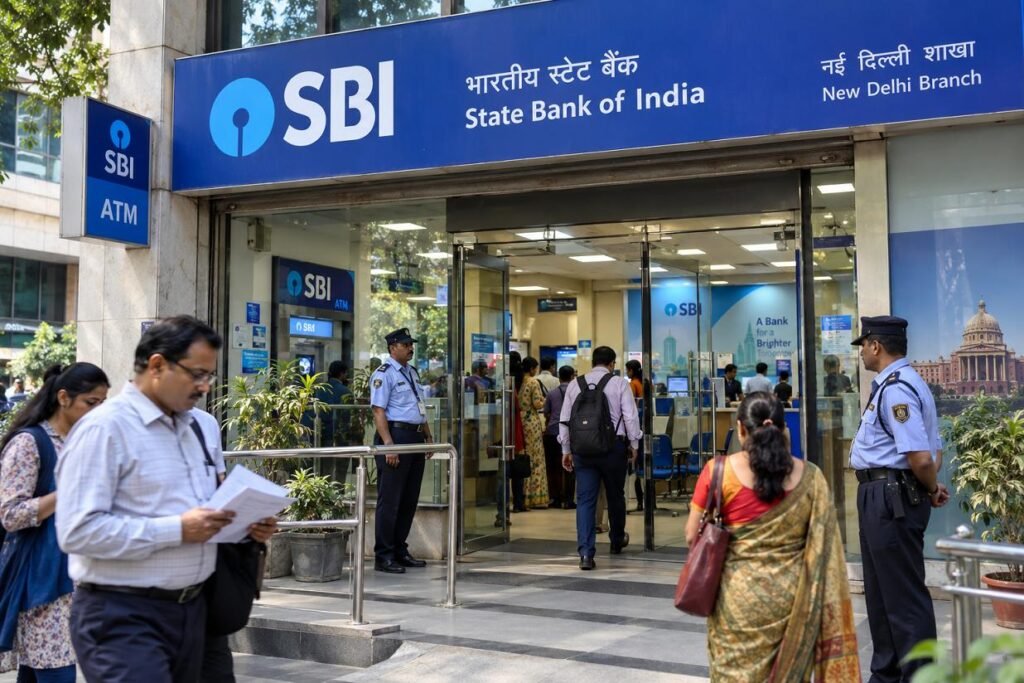
Public sector banks and Regional Rural Banks will also operate normally on Sunday, September 27, giving customers an additional banking day before the proposed strike begins on September 28.
The measures come as bank unions prepare for a three-day walkout from September 28 to 30. The timing has drawn particular attention because September 30 is the half-yearly closing date for banks, when reconciliation, provisioning and treasury and market-related operations are carried out.
The Finance Ministry has appealed to unions to defer the strike, but the United Forum of Bank Unions has said the action will proceed unless there is concrete progress on its demand for a five-day banking week.
Central government salaries to be paid early
An Office Memorandum issued by the Controller General of Accounts under the Ministry of Finance on September 23 allows Central Government offices to draw and disburse September salaries and wages on Friday, September 25.
The arrangement covers Central Government employees, including personnel in Defence, Posts and Telecommunications. September wages for industrial employees of the Central Government may also be paid on that date.
September pensions for Central Government pensioners may likewise be disbursed on September 25 through banks and Pay and Accounts Offices.
The payments will be treated as advance payments. The government order says any adjustment required after the employee’s or pensioner’s full-month entitlement is determined will be made from October 2026 salary or wages.
The memorandum also asks departments to consider processing other payments and banking transactions scheduled for the end of September in advance wherever feasible.
That provision is significant because the strike overlaps with the final days of the quarter, when government departments and businesses typically have a larger volume of payments and financial transactions to complete.
Banks to work on Sunday, September 27
The government has separately arranged for public sector banks and Regional Rural Banks to function on Sunday, September 27.
The Reserve Bank of India has approved the operation of bank branches, offices, ATM-linked branches and currency chests on the day.
September 26 is the fourth Saturday, which is ordinarily a bank holiday, while September 27 is a Sunday. Without the special Sunday opening, the weekend followed immediately by the three-day strike could have left customers facing a prolonged interruption in branch-based banking services.
The Finance Ministry said the Sunday arrangement was intended to ensure that customers’ genuine banking requirements were not affected for an extended period.
The measure does not cancel or postpone the proposed strike. It instead creates an additional working day immediately before the action begins.
Why are bank employees going on strike?
The United Forum of Bank Unions, an umbrella group of bank employee and officer unions, has called the September 28-30 strike primarily over the demand for a five-day banking week.
The government has already decided to keep the Performance Linked Incentive scheme in abeyance, addressing one of the issues raised by the unions. The five-day banking demand, however, remains unresolved.
The unions have argued that five-day banking was agreed to as part of the March 2024 wage revision settlement and have pressed the government to implement it.
The government has said the issue remains under consideration and that it must take other stakeholders’ views into account before making a decision.
A conciliation meeting involving the Deputy Chief Labour Commissioner, the UFBU, the Indian Banks’ Association, the Department of Financial Services and bank management was held in New Delhi on September 22.
The meeting did not produce an agreement sufficient for the unions to defer the strike.
Government warns of wider disruption
The Centre has highlighted the timing of the proposed strike as a particular concern.
September 30 is the half-yearly closing date for banks. A three-day stoppage beginning September 28 would therefore fall directly across a period when banks have to complete important accounting and financial operations.
The Finance Ministry has warned that disruption could affect customers, businesses, government transactions and international banking operations.
Bank management and the government have appealed to employees to reconsider the strike and continue negotiations.
For customers, banks have also advised using digital channels such as internet banking, mobile banking, UPI and ATMs for routine transactions where possible.
However, digital services do not eliminate every potential impact of a branch strike. Transactions requiring physical documentation, staff intervention, or branch-level processing could face delays if employees participate in the strike.
What happens from September 25 to September 30?
The government’s measures create a compressed timetable for transactions around the strike.
September 25: Central Government salaries, wages and pensions may be disbursed in advance.
September 26: Fourth Saturday, normally a bank holiday.
September 27: Public sector banks and Regional Rural Banks are scheduled to operate, with RBI approval covering branches, offices, ATM-linked branches and currency chests.
September 28-30: Three-day nationwide bank strike called by the UFBU.
September 30: Half-yearly closing date for the banking sector.
The government has also indicated that payments due toward the end of September may be processed earlier where practical.
Strike remains scheduled
As of September 24, the three-day strike remains scheduled for September 28, 29 and 30.
The unions have left open the possibility of reconsidering the action if there is concrete progress on five-day banking, but the latest available reports had announced no such agreement.
The Centre’s advance salary and pension instructions and the special Sunday banking arrangement are therefore preparations for a potential disruption, rather than evidence that the strike has been called off.
The immediate focus is now on whether further negotiations produce an agreement before September 28 and how extensively bank employees participate if the strike goes ahead.