Iran Answers Trump’s Threat With a Scene From Telugu Cinema
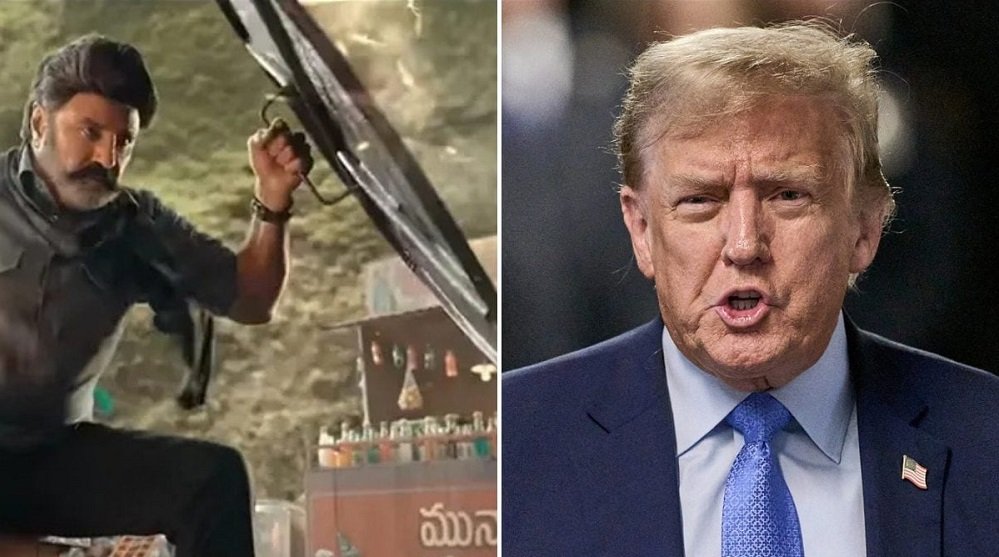
Iran has turned to Telugu cinema in its latest social-media response to US President Donald Trump, with its embassy in Zimbabwe sharing an action sequence from Bhagavanth Kesari after Trump threatened at the United Nations to “annihilate” the Islamic Republic.
The Iranian Embassy in Zimbabwe posted the 58-second clip on X on Wednesday, September 23. The video features Telugu actor Nandamuri Balakrishna in a confrontation with armed men and was accompanied by a message directly referencing Trump’s remarks.
“Trump talks about annihilating Iran. But he knows Iran is not defenseless,” the embassy wrote. It then added a reference to Indian cinema, saying that it had recently informed the US that it was “watching Bollywood instead of Hollywood.”
The post was clearly framed as a mocking response to Trump’s comments rather than an official statement outlining Iranian military policy.
Trump talks about annihilating Iran.
But he knows Iran is not defenseless.
Since we informed they have recently been watching Bollywood instead of Hollywood. pic.twitter.com/v6Le8zkH5X
— Iran Embassy in Zimbabwe (@IRANinZIMBABWE) September 23, 2026
Why Iran shared the Balakrishna scene
The clip comes from Bhagavanth Kesari, a 2023 Telugu-language action drama directed by Anil Ravipudi and starring Balakrishna in the lead role. The film also features Kajal Aggarwal, Sreeleela, and Arjun Rampal. Official film listings identify Telugu as its original language.
In the sequence shared by the Iranian embassy, Balakrishna’s character faces a group of armed men. The scene is built around an exaggerated action confrontation, making it a natural fit for a social-media meme responding to a military threat.
There was, however, a small cultural mix-up in the embassy’s post: Bhagavanth Kesari is a Telugu film from the South Indian film industry, commonly associated with Tollywood, rather than a Bollywood production. Multiple Indian publications noted the distinction after the post circulated.
The film itself was released in 2023 and was directed by Ravipudi, with Balakrishna playing the title character.
The post followed Trump’s UN warning
The Iranian embassy’s social-media response came one day after Trump’s address to the 81st United Nations General Assembly in New York.
During his September 22 speech, Trump said he faced a “big decision” over whether to reach an agreement that would allow Iran to rebuild or “annihilate the Islamic Republic” quickly. He also asked whether he should “drive them into hell,” while saying he believed a deal could eventually be reached.
The White House confirmed that Trump addressed the General Assembly on September 22 and presented his administration’s approach to Iran as part of a broader argument about US military strength and national security.
The remarks came amid an ongoing US-Iran conflict that has dominated the diplomatic agenda surrounding this year’s UN gathering. Reuters reported that Trump used the speech to warn Iran while also leaving open the possibility of a negotiated settlement.
Iran has used Indian cinema before
The Balakrishna clip was not the first time an Iranian diplomatic account has used Indian movie imagery to respond to Trump.
NDTV reported that an Iranian embassy in Tunisia had previously shared a meme featuring Bollywood actor Akshay Kumar. That post, published on September 8, referred to issues including an American drone, oil prices and the approaching US midterm elections.
The latest post takes the same broad social-media approach but uses a scene from South Indian cinema instead.
Its wording also gives the exchange a deliberately humorous tone. Rather than issuing a conventional diplomatic rebuttal, the embassy used a familiar action-film sequence to suggest that Iran should not be viewed as defenseless.
The clip is a political meme, not evidence of policy
The video itself does not provide evidence about Iran’s military capabilities or the country’s official response to Trump’s threat.
It is a piece of political messaging distributed through a diplomatic social-media account. The embassy’s accompanying text makes the intended message clear, but the action scene is fictional and comes from a commercial movie.
That distinction matters because the visual language of an action film can easily be mistaken for documentary imagery when detached from its original context.
The source of the clip can be independently established: Bhagavanth Kesari is a Telugu-language film starring Balakrishna, and the movie’s official promotional material identifies Ravipudi as its writer and director.
US-Iran tensions remain unresolved
Trump’s UN remarks and the Iranian embassy’s response came as diplomatic efforts around the conflict continued.
Trump said after his UN appearance that US and Iranian officials had held a meeting on the sidelines of the General Assembly, describing it positively. Reports from the UN gathering said the possibility of negotiations remained open despite the sharp rhetoric.
For now, the embassy’s Balakrishna video is best understood as a piece of public-facing Iranian messaging aimed at Trump and his administration.
The unusual choice of a Telugu action movie has also given the exchange a distinctly Indian-cinema angle, drawing attention to Bhagavanth Kesari and Balakrishna well beyond the film’s original audience.
The underlying US-Iran dispute, however, remains a matter of diplomacy, military policy and negotiations rather than cinema. The next significant developments will depend on whether the two sides can turn the contacts reported around the UN gathering into substantive negotiations.