Noel Tata Challenges N Chandrasekaran Reappointment as Tata Sons Chairman Amid Tata Sons Dispute
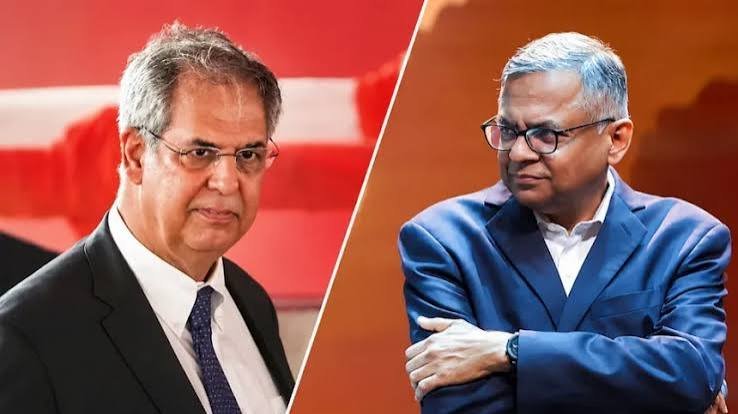
MUMBAI: The Tata Sons dispute has intensified after Tata Trusts Chairman Noel Tata challenged the validity of N Chandrasekaran’s reappointment as chairman of Tata Sons, arguing that the board could not use a casting vote to overcome the voting requirement attached to the Trusts’ nominee directors.
The dispute follows the September 17 board meeting, where N Chandrasekaran was approved for another five-year term. Noel Tata, one of the two Tata Trusts nominee directors, voted against the proposal, while fellow nominee Venu Srinivasan supported it.
The broader board vote passed 4-1 after independent director Harish Manwani, who chaired the meeting for the agenda, exercised a casting vote. Chandrasekaran recused himself from the discussion concerning his own reappointment.
Noel Tata Questions Casting Vote
Noel Tata and Tata Trusts have argued that the Articles of Association require affirmative support from a majority of the Trusts’ nominee directors for the chairman’s appointment or reappointment.
With the two nominee directors split 1-1, Tata Trusts says the required support was not obtained. It has rejected the argument that a casting vote could cure that shortfall.
The Trusts’ position is a legal claim, not a court ruling. The question is now whether the relevant provisions of Tata Sons’ Articles of Association allow a chairman’s casting vote to resolve this particular dispute.
According to Reuters, Tata Sons also backed consideration of a possible public listing at the same September 17 meeting, adding another major point of disagreement between the company’s board and the Trusts.
N Chandrasekaran Gets Another Five-Year Term
The board’s decision gives N Chandrasekaran another five years as Tata Sons chairman, but the approval has not ended the Tata Sons dispute.
Chandrasekaran had previously indicated in August that he would not seek another term. The board later asked him to reconsider, and he agreed before the September 17 vote.
The disagreement has exposed a deeper governance issue involving the relationship between Tata Trusts and the Tata Sons board. Tata Trusts holds roughly two-thirds of Tata Sons and has two nominee directors on the company’s board.
The dispute also comes after months of disagreement over strategic matters, including Tata Sons’ potential listing. The issue has gained additional relevance as Indian markets continue to monitor major public-market transactions such as the NSE IPO.
Legal Interpretation Now At The Centre
The immediate issue is not whether the board voted in favour of Chandrasekaran. It did. The question is whether that vote was legally sufficient under Tata Sons’ governance documents.
A legal opinion obtained by Tata Trusts from former Chief Justice of India D.Y. Chandrachud reportedly supports the Trusts’ interpretation that the nominee-director requirement could not be overridden by a casting vote.
Tata Sons has relied on a different interpretation of its Articles, including the provision governing casting votes in the event of an equality of votes.
The competing interpretations mean the status of the September 17 resolution could face further legal scrutiny.
What Happens Next In Tata Sons Dispute
For now, Noel Tata has formally challenged the process, while N Chandrasekaran remains approved by the Tata Sons board for another five-year term.
The Tata Sons dispute is therefore centred on the interpretation of the company’s Articles of Association, the role of Tata Trusts’ nominee directors and the scope of the chairman’s casting vote.
Any final determination on whether the reappointment is legally valid would depend on the applicable corporate documents, regulatory framework and, if the matter reaches court, judicial interpretation.
Noel Tata’s challenge has turned what was expected to be a leadership decision into a wider governance dispute over control, voting rights and the future structure of Tata Sons.