
CAIRO FUEL TANKER ACCIDENT: 5 Alarming Developments After Egypt Highway Fire Kills 31
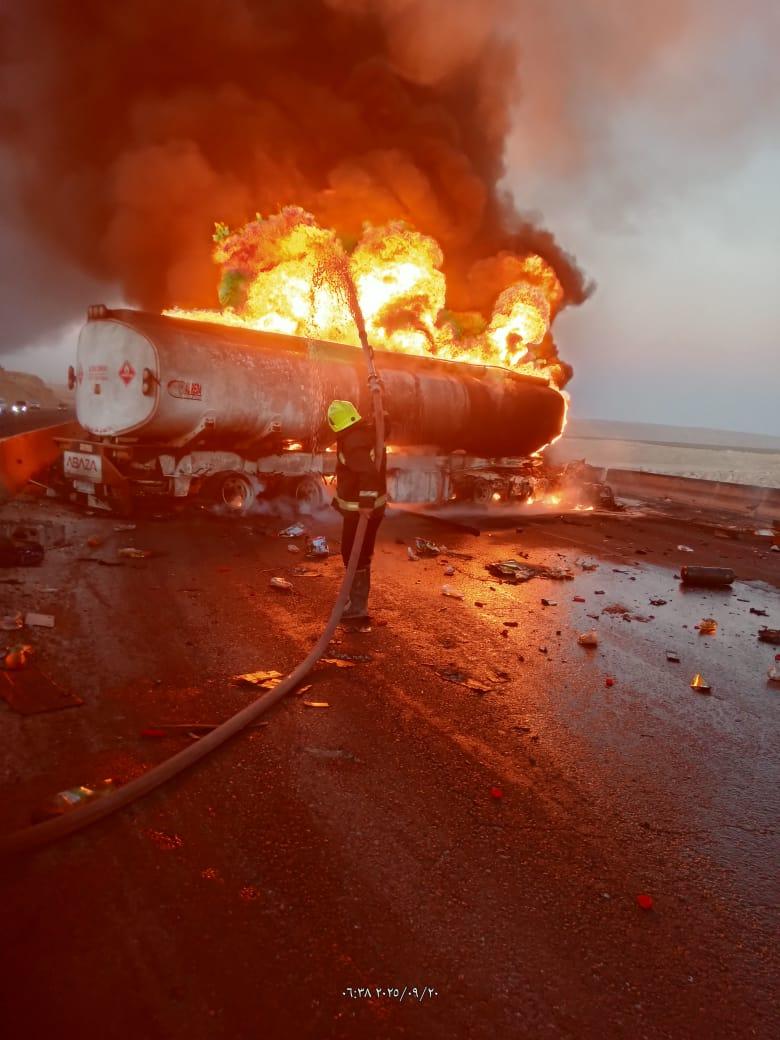
EGYPT: The Cairo fuel tanker accident killed at least 31 people and injured another 21 after a vehicle carrying petroleum products crashed and triggered a massive fire on a major highway surrounding the Egyptian capital on Wednesday, November 25, 2026.
The incident occurred on Cairo’s Ring Road in the Al-Warraq area of Giza, part of Greater Cairo. The resulting blaze spread across nearby vehicles, leaving more than two dozen cars and motorcycles burned.
Egyptian emergency services responded to the disaster, with rescue workers pulling people from burning vehicles as firefighters attempted to contain the flames. The Egyptian Health Ministry released the latest casualty figures, while prosecutors began procedures to identify victims whose bodies could not immediately be recognised.
The Egypt highway fire has become one of the country’s major road disasters in recent months, raising renewed concerns about road safety and the risks associated with transporting petroleum products.
According to the Associated Press, Egyptian authorities confirmed the fatalities and injuries following the incident.
1. Cairo Fuel Tanker Accident Leaves 31 Dead And 21 Injured
The latest reported figures indicate that 31 people died and another 21 sustained injuries in the disaster.
The crash involved a vehicle transporting petroleum products on the Ring Road, an important highway connecting different parts of Greater Cairo.
The fire spread rapidly across the surrounding area, affecting numerous vehicles caught near the incident.
Initial reports provided different casualty figures as emergency teams continued their operations. The Health Ministry subsequently reported 31 fatalities and 21 injured people.
The injured were transported to nearby hospitals for medical treatment.
The casualty figures underline the severity of the Cairo fuel tanker accident, particularly because the fire affected multiple vehicles rather than remaining confined to the tanker.
Authorities have also faced the challenge of identifying victims whose remains were badly affected by the fire.
2. Massive Fire Engulfs More Than Two Dozen Vehicles
The most destructive aspect of the incident was the speed at which the flames spread across the highway.
The petroleum-carrying vehicle caught fire following the crash, triggering a blaze that engulfed surrounding cars and motorcycles.
More than two dozen vehicles were left burned or severely damaged.
Images from the scene showed firefighters working among charred vehicles, while thick smoke rose above the highway.
Several motorists were caught in the affected area when the fire broke out. Rescue workers attempted to reach people trapped inside burning vehicles as emergency teams worked to control the flames.
The Egypt highway fire also disrupted traffic along one of the major routes surrounding Cairo.
Authorities had to manage the emergency response while preventing additional vehicles from entering the affected stretch.
The exact sequence of events leading to the crash and the subsequent spread of the fire remains subject to investigation.
3. Emergency Services Deploy Rescue Teams Across Giza
Egyptian emergency services launched a major response following reports of the tanker fire.
Ambulances transported injured people to nearby medical facilities, while Civil Protection teams worked to extinguish the flames and recover victims.
Health Minister Khaled Abdel Ghaffar monitored the medical response and said injured people had been taken to hospitals.
The Egyptian Health Ministry also coordinated with nearby medical facilities to ensure that emergency treatment was available.
The Egyptian Red Crescent deployed response teams to support rescue operations and assist affected people.
The scale of the response reflected the number of vehicles involved and the difficulties associated with reaching victims in an area affected by intense flames.
The disaster also required coordination between emergency responders, hospital authorities, traffic officials and investigators.
4. Egyptian President Expresses Condolences As DNA Identification Begins
Egyptian President Abdel-Fattah el-Sissi expressed condolences to the families of those killed in the disaster.
The Public Prosecutor’s Office also initiated DNA investigations to establish the identities of victims whose remains could not immediately be identified.
The identification process is particularly important in incidents involving extensive fires, where conventional identification methods may not be sufficient.
Investigators are also examining the circumstances surrounding the crash.
Authorities have not established a definitive cause for the disaster in the reporting available at the time of publication.
The precise sequence of events, including what caused the vehicle to crash and how the fire spread to surrounding traffic, must therefore remain subject to the ongoing investigation.
5. Egypt Highway Fire Renews Concerns Over Road Safety
The latest disaster has renewed attention on Egypt’s road safety challenges.
The country has experienced several serious road accidents in recent years, involving passenger vehicles, commercial transport and public transportation.
Egypt’s state statistics agency reported 5,829 road accident deaths in 2025, an increase of 10.8% compared with the previous year.
Factors frequently associated with serious road accidents include speeding, poor road conditions and inadequate enforcement of traffic regulations.
The latest incident also highlights the additional risks associated with vehicles transporting petroleum products through heavily used roads.
A crash involving such a vehicle can create dangers beyond the initial collision, particularly when nearby traffic becomes exposed to fire.
Previous major road accidents covered by Reportiva include the Mumbai Coastal Road BMW crash and the Greater Noida Thar crash.
Separately, industrial incidents involving hazardous materials have also highlighted the importance of emergency preparedness. The ONGC gas leak in Andhra Pradesh demonstrated how emergency teams and local authorities must coordinate when an incident creates risks for surrounding communities.
These incidents are different in their circumstances, but each demonstrates the importance of effective emergency response and public safety measures.
Investigation Continues Into The Deadly Cairo Crash
The immediate priority following the Cairo fuel tanker accident remains victim identification, medical treatment for survivors and the investigation into the circumstances of the crash.
The Public Prosecutor’s Office has initiated DNA procedures, while emergency and medical authorities have responded to the casualties.
Although the latest reported toll stands at 31 dead and 21 injured, investigators must establish the precise events that led to the tanker crash and the subsequent fire.
The disaster has also highlighted the risks associated with transporting petroleum products through busy urban transport corridors.
For Egypt, the Egypt highway fire is another major reminder of the importance of road safety, emergency preparedness and effective enforcement of transportation regulations.




