
Ramaphosa Wins Major Court Battle as Judges Set Aside Phala Phala Impeachment Report
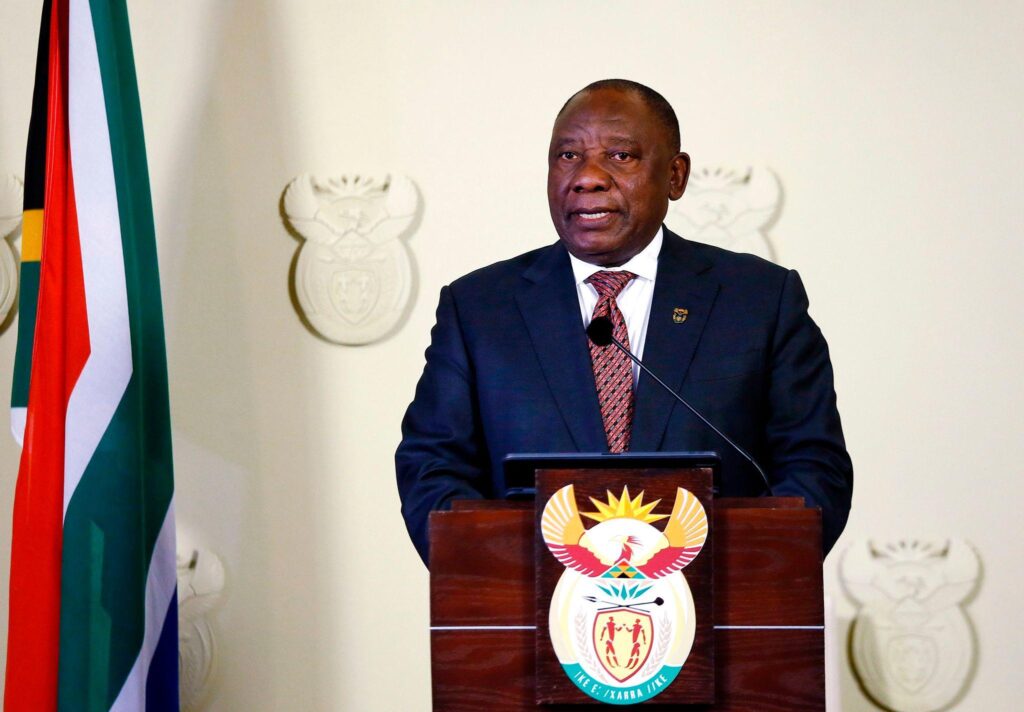
SOUTH AFRICA: President Cyril Ramaphosa has won a major legal battle after the Western Cape High Court set aside the parliamentary independent panel’s report that had raised the possibility of his impeachment over the Phala Phala farm theft scandal.
The full bench delivered its judgment on November 25, 2026, declaring the panel’s report unlawful and setting it aside in its entirety. The court also overturned steps taken by the National Assembly based on that report.
The decision removes the immediate legal foundation for the impeachment process arising from the 2022 panel findings. However, it does not amount to a judicial determination that every allegation surrounding the theft of foreign currency at Ramaphosa’s farm was false.
The judgment represents a significant political and constitutional development for South Africa, where the controversy has remained a source of pressure on the president for several years.
1. Cyril Ramaphosa Court Ruling Sets Aside Entire Panel Report
The Cyril Ramaphosa court ruling was delivered by a full bench of the Western Cape High Court comprising Judge President Nolwazi Mabindla-Boqwana, Judge Mark Sher and Judge Ncumisa Mayosi.
Ramaphosa had approached the court seeking a review of the independent panel’s report, which was prepared as part of the parliamentary process for considering his possible removal under Section 89 of South Africa’s Constitution.
In its order, the court declared the report unlawful and set it aside in its entirety.
It also reviewed and overturned any steps taken by the National Assembly pursuant to the report.
The judges directed each party to bear its own legal costs, including those associated with the earlier interim interdict application and the subsequent application for leave to appeal.
The full judgment is available through the South African Legal Information Institute, SAFLII.
2. What Was The Phala Phala Farm Theft Scandal?
The Phala Phala scandal originated from a theft at Ramaphosa’s private Phala Phala game farm in Limpopo province.
The incident took place on February 9, 2020, when burglars stole foreign currency reportedly worth approximately $580,000 that had been concealed inside furniture at the property.
The controversy became public in 2022 after former intelligence chief Arthur Fraser lodged a criminal complaint concerning the incident.
The complaint raised questions about the source of the foreign currency, the circumstances in which the theft was reported and the handling of the investigation.
Ramaphosa denied wrongdoing and maintained that the money came from a legitimate sale of buffalo.
The allegations subsequently became a major political issue, with opposition parties arguing that the circumstances surrounding the theft warranted an investigation into whether the president had violated the Constitution or committed serious misconduct.
Importantly, the allegations and the parliamentary panel’s preliminary findings were not equivalent to a criminal conviction.
3. Why The Independent Panel’s Report Became Unlawful
The original independent panel was established by Parliament to examine whether sufficient evidence existed to justify initiating an impeachment inquiry under Section 89.
It was chaired by former Chief Justice Sandile Ngcobo and included Justice Thokozile Masipa and Advocate Mahlape Sello.
In November 2022, the panel concluded that there was prima facie evidence suggesting Ramaphosa might have committed serious misconduct or violated constitutional obligations in connection with the farm theft.
Its findings covered four allegations arising from the incident.
Ramaphosa challenged the report, arguing that the panel had misunderstood its legal responsibilities and applied the wrong standard when assessing the available material.
The central question before the Western Cape High Court was whether the panel had properly interpreted its mandate under the National Assembly’s rules.
The court found serious legal errors in the panel’s approach and concluded that its report could not stand.
This distinction is important: the judgment concerned the legality of the panel’s assessment and process, rather than a final criminal determination about the underlying theft.
4. How The Impeachment Process Was Affected
The original panel report had created the possibility of a formal parliamentary investigation into whether Ramaphosa should be removed from office.
Under Section 89 of the South African Constitution, the National Assembly can remove a president if at least two-thirds of its members support removal on specified grounds.
These grounds include:
-
A serious violation of the Constitution or the law.
-
Serious misconduct.
-
Inability to perform the functions of office.
The impeachment process had faced several legal and parliamentary developments since the original report was released.
The Constitutional Court had also ruled on the parliamentary rules governing presidential impeachment proceedings in May 2026, requiring changes to the relevant procedure.
Following those developments, Parliament established an Impeachment Committee to examine the matter.
Ramaphosa subsequently obtained an interim court order in July 2026 preventing the committee from proceeding with its hearings while his legal challenge remained unresolved.
The November 25 judgment now sets aside the original panel report and the parliamentary steps taken pursuant to it.
This means the existing impeachment proceedings based on that report cannot simply continue as though the report remained legally valid.
5. What The Court Decision Means For Ramaphosa’s Presidency
The decision provides Ramaphosa with a significant political victory by removing the immediate threat arising from the disputed panel report.
The ruling also strengthens his position at a time when the Phala Phala scandal has continued to attract political and public attention.
However, the judgment should not be interpreted as a blanket declaration that the underlying events never occurred or that every question surrounding the theft has been resolved.
The court reviewed the legality of the independent panel’s report. It did not conduct a criminal trial to determine whether every allegation relating to the stolen money was true or false.
The distinction between constitutional impeachment proceedings, criminal investigations and political accountability remains important.
The ruling also leaves broader questions about the parliamentary process and the legal standards applicable to presidential accountability in South Africa.
Opposition Response And Possible Further Legal Challenges
The judgment is likely to remain politically contentious, particularly among opposition parties that have supported efforts to investigate Ramaphosa’s conduct.
The African Transformation Movement and other political opponents have been associated with the calls for further accountability over the farm theft.
The court’s ruling does not prevent political parties from continuing to question the president or raising concerns through constitutionally available mechanisms.
However, any future attempt to pursue impeachment proceedings would need to comply with the applicable constitutional and parliamentary rules.
The case also reflects a wider pattern of political disputes being resolved through constitutional litigation. Similar questions about the relationship between political power and judicial oversight have featured in international developments, including the Indus Waters Treaty dispute before international legal institutions and the legal controversy surrounding Mahmoud Abbas and US visa restrictions.
What Happens Next In The Phala Phala Case?
The immediate consequence of the November 25 decision is that the independent panel’s report and parliamentary steps based on it have been set aside.
The Speaker of the National Assembly has indicated that Parliament will study the judgment before determining its next steps.
Any further proceedings will have to take account of the court’s findings and the applicable constitutional framework.
The possibility of an appeal or additional legal proceedings also means that the broader dispute may not be completely over.
For Ramaphosa, the decision removes a major immediate obstacle to his presidency. For South Africa, it raises important questions about parliamentary oversight, constitutional accountability and the limits of impeachment procedures.
The Cyril Ramaphosa court ruling is therefore more than a personal legal victory. It is a significant judgment concerning how South Africa’s constitutional institutions must apply the law when considering the removal of an elected president.
The judgment also fits into a wider discussion about judicial oversight of political leaders, including the Supreme Court proceedings involving Sanjay Raut, where questions concerning political speech and the judiciary have also come under scrutiny.




