
China Nvidia AI Chips – 5 Critical Loopholes Behind US Export Restrictions
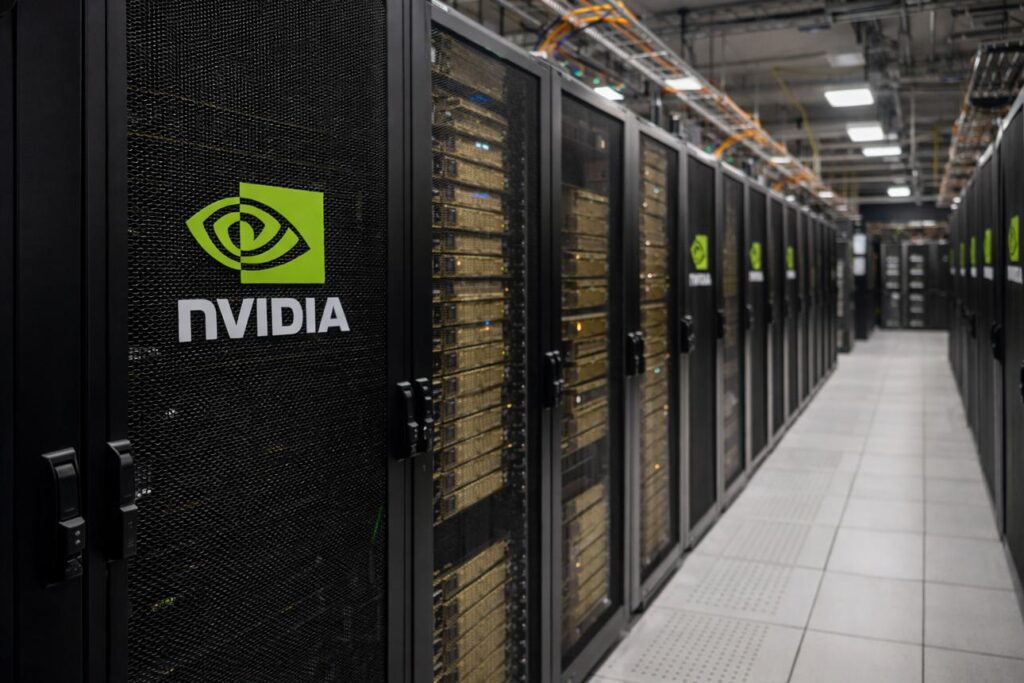
CHINA: China Nvidia AI chips access has come under renewed scrutiny after a new investigation examined how Chinese companies continued obtaining advanced American computing technology despite restrictions imposed by Washington. The findings highlight gaps in export-control enforcement, overseas data-centre arrangements and licensing policies that have allowed Chinese businesses to access powerful Nvidia processors.
The issue has become particularly important as the United States attempts to protect its technological advantage in artificial intelligence while limiting China’s access to advanced semiconductor technology.
According to The Indian Express, the United States has repeatedly revised its semiconductor export policies since 2022. However, changes in enforcement, authorised shipments and access to overseas computing infrastructure have created alternative routes through which Chinese companies can use advanced AI processors.
The developments do not establish that every Chinese company accessing Nvidia technology has violated US law. They instead demonstrate the difficulty of enforcing restrictions across an international technology supply chain.
1. US Export Restrictions Began In October 2022
The United States introduced sweeping restrictions on advanced semiconductor exports to China in October 2022.
The measures were designed to restrict Beijing’s access to powerful processors and semiconductor manufacturing technologies that could support advanced artificial intelligence development and military applications.
Washington subsequently tightened the rules in 2023, expanding the range of restricted products and addressing attempts by manufacturers to develop processors that fell just below the original performance thresholds.
The restrictions also covered certain overseas companies headquartered in China and expanded scrutiny of international semiconductor supply chains.
In January 2025, the Biden administration announced a broader global licensing framework for advanced AI chips. However, the Trump administration announced in May 2025 that it would not enforce the framework shortly before its planned implementation.
This policy change created uncertainty for international data-centre operators and semiconductor suppliers.
The changing regulatory environment became an important factor in the continuing debate over Nvidia chip export restrictions and their effectiveness.
2. Licensed Nvidia H200 Shipments Created Another Route
Another important development involved the H200, one of Nvidia’s advanced AI processors.
The Trump administration subsequently permitted Nvidia to seek approval for shipments of H200 processors to selected Chinese customers.
However, this was not an unrestricted authorisation to sell the chips to any Chinese buyer.
The US Commerce Department introduced a case-by-case licensing process under which eligible transactions required government approval.
Congressional data cited in the November 26 report indicated that nearly 900,000 advanced AI chips manufactured by Nvidia and AMD were approved for Chinese companies between December 2025 and May 2026.
The figure represents approved licences, not confirmation that all the processors were manufactured, shipped or delivered to their intended customers.
The distinction is important when assessing China Nvidia AI chips access because authorised transactions should not automatically be described as illegal exports.
The H200 is also not Nvidia’s most advanced processor, although its computing capabilities remain important for training and operating sophisticated AI models.
3. Overseas Data Centres Allowed Remote Access
One of the most significant challenges for American regulators involved overseas data centres.
Even when physical exports of certain processors to China were restricted, Chinese companies could potentially obtain access to computing power through infrastructure located in other countries.
Under this arrangement, data-centre operators purchase and install advanced Nvidia processors outside China. Chinese technology companies can then rent computing capacity remotely to train and operate AI models.
Singapore became an important example of this issue because of its growing data-centre industry and international cloud-computing connections.
This arrangement creates a distinction between physically transferring a restricted processor into China and allowing a Chinese company to use computing resources hosted elsewhere.
It also makes enforcement more complicated because authorities must examine not only the original buyer but also the ultimate customer and intended use of the computing infrastructure.
The growing importance of overseas computing arrangements was one of the reasons Washington moved to strengthen Nvidia chip export restrictions.
4. Megaspeed Investigation Raises Questions About Chip Diversion
The Singapore-based cloud company Megaspeed has become an important part of the wider semiconductor export-control debate.
US authorities have investigated the company since 2024 over suspected violations involving the possible diversion of advanced semiconductor technology.
The investigation attracted attention after the US Department of Commerce requested Nvidia sales records concerning direct or indirect transactions involving Megaspeed in May 2025.
Nvidia subsequently placed the company on its internal no-sale list in June 2025.
US investigators also conducted an on-site inspection involving Singaporean law enforcement officials.
However, authorities have not publicly established that Megaspeed committed an offence, and the investigation should not be presented as a proven case of illegal chip transfers.
The case illustrates the difficulties associated with monitoring advanced semiconductor products after they enter international supply chains.
For additional background, Reportiva previously examined the Megaspeed investigation, including the US government’s investigation timeline and Nvidia’s decision to stop sales to the company.
The investigation has increased scrutiny of companies operating between semiconductor manufacturers, overseas data centres and international customers.
5. Washington Introduces Tougher Rules For Overseas Data Centres
Washington has moved to address the limitations of earlier export-control policies.
On November 16, 2026, the US Commerce Department announced new measures targeting remote access to advanced American computing technology.
The changes seek to prevent Chinese companies from bypassing restrictions by renting computing capacity from data centres located in other countries.
The new framework also introduces additional licensing requirements involving five countries, including Singapore, Malaysia and Thailand.
These countries are significant because of their growing role in international semiconductor distribution, cloud computing and data-centre infrastructure.
The rules also increase scrutiny of overseas data centres supplying substantial computing capacity to Chinese-headquartered businesses.
The measures do not amount to a blanket prohibition on every semiconductor shipment to these countries. Instead, the licensing requirements depend on the products, transactions and customers involved.
The changes indicate that US authorities are increasingly focusing on access to computing infrastructure rather than examining only the physical movement of semiconductor products.
Why The China Nvidia AI Chips Dispute Matters
The dispute has implications beyond Nvidia and its Chinese customers.
Advanced AI processors are essential for developing large language models, training machine-learning systems and operating sophisticated artificial intelligence applications.
Companies with access to more powerful computing infrastructure can potentially develop and deploy advanced AI systems more efficiently.
This makes semiconductor access an important part of the technological competition between Washington and Beijing.
The United States wants to maintain its advantage in advanced computing while limiting access to technology that could support China’s military and strategic capabilities.
China, meanwhile, has been investing in domestic semiconductor development and attempting to reduce its dependence on American technology.
The wider US-China AI chip war has already generated diplomatic tensions, with Beijing criticising Washington’s restrictions and warning that it would protect its legitimate technological and commercial interests.
For Nvidia, the situation presents a difficult commercial and regulatory challenge. The company operates in a global market where demand for advanced processors remains high, but access to certain customers is subject to changing government restrictions.
The latest developments also raise questions about whether software-based location verification and stricter customer checks can help regulators monitor where advanced processors are ultimately being used.
What Happens Next?
The effectiveness of the latest American measures will depend on how successfully regulators monitor overseas data centres, intermediary companies and international semiconductor transactions.
The new licensing requirements could make it more difficult for Chinese companies to obtain computing capacity through overseas providers without the necessary approvals.
However, enforcement will require cooperation between governments, technology companies and international infrastructure operators.
China is also likely to continue investing in domestic processors and AI infrastructure as it seeks to reduce dependence on foreign semiconductor suppliers.
For now, the China Nvidia AI chips controversy demonstrates that restricting physical exports alone may not be sufficient when computing resources can be accessed remotely through international networks.
The continuing debate over Nvidia chip export restrictions will therefore remain central to the wider competition over artificial intelligence, semiconductor manufacturing and global technological leadership.




