EOS-5 Mission Puts ISRO Back on Launch Pad After Setbacks
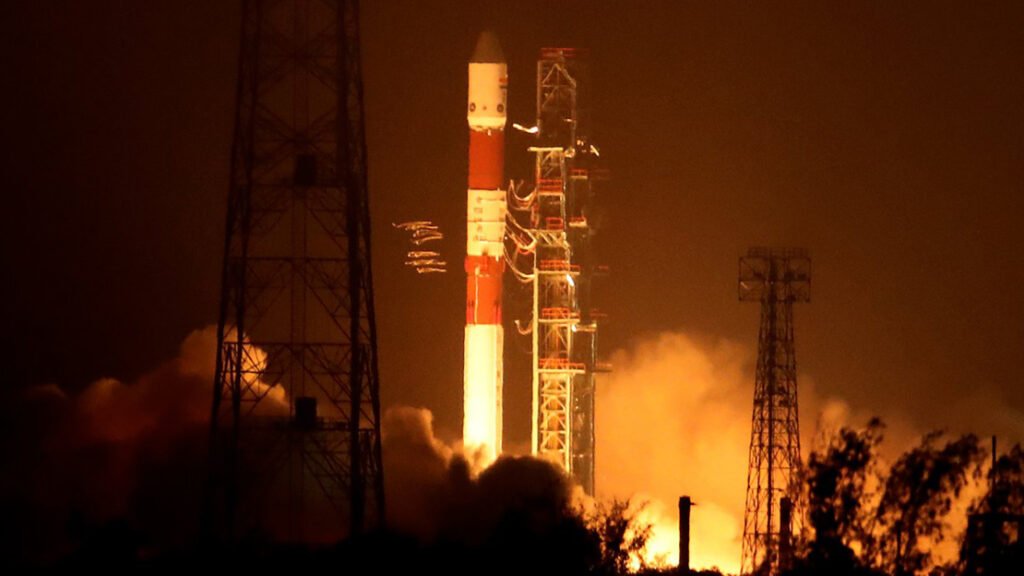
NEW DELHI: The Indian Space Research Organisation is preparing to return to the launch pad on September 4 with a GSLV mission carrying EOS-5, an Earth observation satellite intended to give India frequent views of its territory from geostationary orbit.
ISRO Chairman V. Narayanan told NDTV that the launch is planned for the early hours of September 4 aboard the GSLV-F17. The spacecraft, previously identified as GISAT-1A, is designed to provide repeated imaging of the Indian landmass from an altitude of nearly 36,000 kilometres.
The mission will be closely watched because it follows a difficult period for India’s launch programme. ISRO has been dealing with consecutive setbacks involving the Polar Satellite Launch Vehicle (PSLV), including the failure of the PSLV-C62/EOS-N1 mission in January 2026. ISRO’s own mission records list the January mission as unsuccessful.
The September flight, however, uses the GSLV Mk II rather than the PSLV. That distinction matters because the two launch vehicles use different propulsion configurations.
EOS-5 is the successor to the failed EOS-03 mission
EOS-5 has particular significance because it follows an earlier attempt to establish a similar geostationary Earth-observation capability.
On August 12, 2021, ISRO launched the GSLV-F10 carrying EOS-03, but the mission failed after the cryogenic upper stage did not ignite as intended. ISRO’s subsequent failure analysis found a deviation in the performance of the cryogenic upper stage and said the onboard computer aborted the mission 307 seconds after lift-off.
EOS-03 was intended to be an agile Earth observation satellite in geosynchronous transfer orbit. ISRO’s current Earth-observation records continue to list the 2021 mission as unsuccessful.
The new satellite is intended to provide a similar high-frequency observation capability. Its imagery is expected to support monitoring of rapidly developing events such as cyclones, floods, cloudbursts and forest fires, as well as applications involving agriculture, weather and disaster management, according to the details reported by NDTV.
Why the September mission matters for ISRO
The launch is not simply another entry on ISRO’s mission calendar. It comes after a period in which India’s orbital launch activity has faced setbacks and reviews.
The PSLV-C61/EOS-09 mission failed in May 2025, while the PSLV-C62/EOS-N1 mission encountered an anomaly during its January 2026 flight. ISRO’s official mission records identify both missions as unsuccessful.
At the same time, the agency’s other launch systems have continued to demonstrate capability. The GSLV-F16 successfully placed the NASA-ISRO NISAR satellite into orbit on July 30, 2025. ISRO describes NISAR as a joint Earth-observation mission carrying both NASA and ISRO radar payloads.
That history gives the GSLV-F17 mission a different context from the troubled PSLV flights. The upcoming rocket belongs to the GSLV family, which has also flown missions including NISAR, NVS-01 and INSAT-3DS. ISRO’s launch records show the GSLV-F16/NISAR mission as the most recent completed GSLV flight.
ISRO plans an active launch schedule
Narayanan also outlined an ambitious programme for the months ahead.
According to his comments to NDTV, ISRO is targeting seven launches between now and March 2027, including the first uncrewed flight associated with the Gaganyaan human spaceflight programme. The agency is also targeting the realisation of 12 satellites and eight launch-vehicle missions during the current financial year.
The programme covers communications, navigation, Earth observation and scientific missions, alongside preparations for future human spaceflight.
The September 4 mission therefore represents the beginning of a busier period rather than an isolated launch.
A test for India’s Earth observation ambitions
Earth observation has become one of ISRO’s most important operational capabilities. The agency says its remote-sensing satellites provide data used in areas including agriculture, water resources, urban planning, forestry, environmental monitoring and disaster management.
EOS-5 is designed around a different observation model from many low-Earth-orbit imaging satellites. Its planned geostationary positioning should allow repeated views of the Indian region, making rapid changes easier to monitor.
That can be particularly useful during weather emergencies, when agencies need fresh information rather than imagery collected only at longer intervals.
The immediate question, however, is whether GSLV-F17 will perform as planned. The September mission is still a scheduled launch, not a completed one, and the spacecraft will have to pass through the full launch and orbital-insertion sequence before its intended capability can be demonstrated.
For ISRO, September 4 will mark an important return to its own launch programme after a difficult start to 2026. The agency’s next major milestones will depend on how successfully it executes this mission and the launches that follow.