EU Social Media Ban: Ursula von der Leyen Proposes Restrictions for Children Under 13
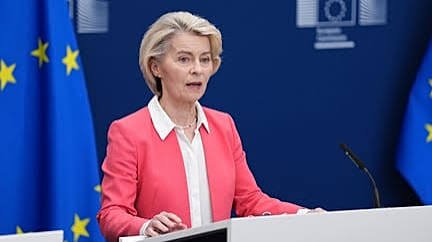
BRUSSELS: European Commission President Ursula von der Leyen has proposed an EU Social Media Ban preventing children under 13 from accessing social media, online games and chatbots, opening a new front in Europe’s push to strengthen protections for minors online.
The proposal was announced during von der Leyen’s State of the European Union speech in Strasbourg on Wednesday. It is not yet an enacted EU law and will require consideration by the European Union’s member states.
What the EU Social Media Ban would cover
Under the proposed EU Social Media Ban, children younger than 13 would be prevented from accessing social media platforms, online games and chatbots.
Ursula von der Leyen said the EU should not accept digital services built around addictive features or the exposure of children to increasingly extreme material. She also highlighted concerns about AI-generated sexualised images involving girls.
The proposal comes as governments increasingly scrutinise the relationship between children, social platforms and artificial intelligence.
What happens to children aged 13 to 15?
The proposed system would distinguish between younger children and teenagers. Ursula von der Leyen said children aged 13 to 15 would be able to use “mini accounts” supervised by parents or guardians.
Reuters reported that the broader proposal would prevent personal accounts for people under 15, although the precise rules were still being developed.
That means the EU Social Media Ban would not simply establish one identical restriction for everyone below 18. Instead, the proposal envisages different levels of access depending on age.
Why Ursula von der Leyen is proposing restrictions
Ursula von der Leyen has previously argued that children should be introduced to social media gradually and with stronger safeguards.
Her latest announcement follows months of European debate over children’s exposure to algorithm-driven platforms, online games and AI services. Earlier in 2026, von der Leyen backed the principle of age-appropriate restrictions after an expert group recommended stronger protections for younger users.
The proposal also reflects a wider international policy shift, with countries including Australia and New Zealand pursuing stronger restrictions on children’s social-media access.
EU proposal still needs approval
The EU Social Media Ban is therefore a proposed regulatory measure, not a restriction that immediately takes effect across all 27 EU member states.
The next stage will involve the EU legislative process, where the final provisions could change. Ursula von der Leyen has placed the protection of children from addictive platform features and harmful online content at the centre of the initiative.
The debate is now likely to focus on implementation, age verification, parental supervision, privacy and how technology companies would be required to demonstrate that their services are safe for children.