King Harald V Dies at 89: Norway’s Long-Reigning Monarch Dead
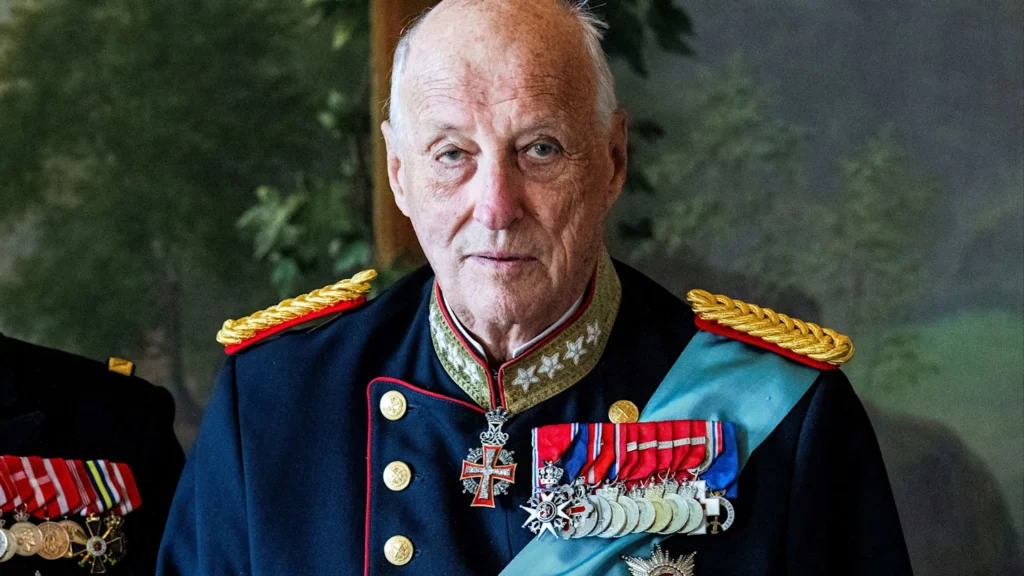
Norway’s King Harald V died peacefully at Oslo University Hospital on Friday morning at the age of 89, the Norwegian Royal Palace announced. His death ends a 35-year reign during which he became one of the country’s most familiar and popular public figures.
The palace said Harald died at 6:35 a.m. local time on August 28 at Rikshospitalet, where he had been receiving treatment. He had been hospitalized since August 17 and had recently been treated for a bacterial infection in his blood.
Harald was Norway’s ceremonial head of state from 1991 and, at the time of his death, was Europe’s oldest reigning monarch. The Norwegian government declared a period of national mourning following the announcement.
Haakon becomes Norway’s new king
The Norwegian throne passed immediately to Harald’s son, Crown Prince Haakon, who becomes King Haakon VIII. Haakon was 53 when he succeeded his father.
Under Norway’s constitutional system, the monarch does not need to wait for a coronation to assume the throne. The new king must formally inform the government of his father’s death at an extraordinary Council of State and later swear an oath before the Storting, Norway’s parliament.
Haakon’s 22-year-old daughter, Princess Ingrid Alexandra, becomes crown princess and next in line to the throne.
Norway does not hold a traditional coronation ceremony in which a crown is placed on the monarch’s head. A later consecration ceremony at Trondheim’s Nidaros Cathedral is possible, according to Reuters.
A king who modernized the monarchy
Harald became king in 1991 following the death of his father, King Olav V. He gradually brought a more informal and modern style to the Norwegian monarchy while maintaining its largely ceremonial role.
His marriage to Sonja Haraldsen, a commoner, in 1968 was itself a break with royal tradition. The couple had dated for nine years before marrying.
Harald was also an accomplished sailor. He competed for Norway at several Olympic Games and captained his boat to a world championship title. Away from official duties, he was known for his interest in sports, cars and nature.
His public role extended beyond ceremonies. Harald became particularly associated with speeches and appearances during national crises, including the aftermath of the July 2011 terrorist attacks in which 77 people were killed.
He also spoke openly about diversity and tolerance. In a 2016 speech, he described Norway as a country made up of people with different national backgrounds, religions and sexual orientations.
Health problems marked his final years
Harald’s health had deteriorated in recent years, although he repeatedly rejected the idea of abdicating.
He was hospitalized in Malaysia in 2024 after developing an infection while on holiday and received a temporary pacemaker before returning to Norway. A permanent pacemaker was later fitted. That year, he said he would reduce his official engagements but maintained that his oath as king was for life.
His latest hospitalization began on August 17. The palace initially said he was being treated for a bacterial infection in his blood. His condition subsequently became more serious, and Queen Sonja and Crown Prince Haakon canceled public engagements as they stayed close to him.
Norway mourns
News of Harald’s death brought mourners to the Royal Palace in Oslo, where people gathered to leave flowers.
Prime Minister Jonas Gahr Støre said the country had lost a monarch who had served Norway for more than three decades.
“A whole nation is in mourning,” Støre said, describing Harald as a king who had helped Norwegians see “the best in ourselves – and in one another.”
Tributes also came from European leaders and other monarchies.
Britain’s King Charles III described Harald as a much-loved relative and friend and praised his decades of service. Sweden’s King Carl XVI Gustaf called Harald a good friend to him, his family and Sweden, while Denmark’s King Frederik X and Queen Mary remembered him as a warm and unifying figure.
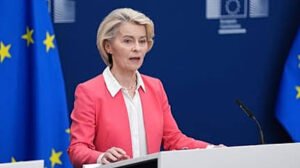
European Commission President Ursula von der Leyen said Harald had served Norway with warmth, humility and a strong sense of duty. NATO Secretary General Mark Rutte also paid tribute to his long association with the Norwegian military and NATO.
A succession during a difficult period for the royal family
Harald’s death comes as Norway’s royal family faces several controversies.
Crown Princess Mette-Marit, Haakon’s wife and now queen, has faced scrutiny over her past friendship with Jeffrey Epstein and has apologized for the relationship. Her son, Marius Borg Høiby, was convicted in June on rape and domestic-violence charges and sentenced to four years in prison; appeals have been filed. Mette-Marit also underwent a lung transplant earlier this year.
The controversies have affected public support for the monarchy. A Norstat poll published by Norwegian public broadcaster NRK put support for the monarchy at 60% in February, down from 70% the previous month, before it recovered somewhat to 64% in May. Harald himself remained highly regarded, receiving a 9.2 rating out of 10 in the February poll.
For now, the focus is on mourning and the formal transition to a new reign.
Norwegian authorities have begun the constitutional process following Harald’s death. An extraordinary Council of State will be held at the Royal Palace, followed by the new king’s oath before parliament. Funeral arrangements will also be carried out in the coming days.
King Harald’s death closes one of the longest modern chapters of Norway’s constitutional monarchy. His son now inherits the throne at a time when the institution he served is facing both a generational transition and renewed public scrutiny.