Moody’s Raises India GDP Growth Forecast to 7% for Fiscal 2027
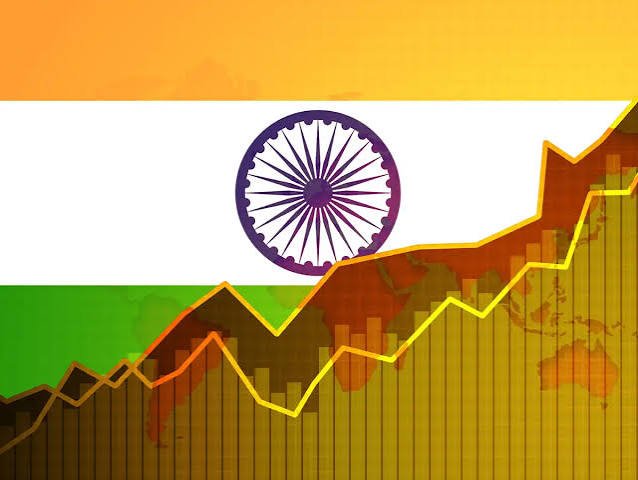
NEW DELHI: Moody’s Ratings has raised its real GDP growth forecast for India’s fiscal 2026-27 to 7% from 6%, citing stronger-than-expected domestic economic activity and resilience despite the ongoing Middle East conflict. The revision puts the latest Moody India GDP forecast above the agency’s previous projection and signals greater confidence in the Indian economy 2026 outlook.
Moody’s Upgrades India Growth Outlook
Moody’s said India is expected to continue growing faster than other G20 economies and similarly rated emerging-market sovereigns. The revised GDP growth fiscal 2027 projection reflects stronger private consumption, investment activity and continued momentum in services.
The agency’s latest assessment comes after India recorded real GDP growth of 7.8% in the April-June quarter. Strong investment and manufacturing activity helped offset weaker performance in mining and consumer-facing services.
The stronger domestic performance has also reinforced the broader Indian economy 2026 outlook, despite significant external pressures from geopolitical tensions and elevated energy costs.
Energy Prices And El Niño Remain Risks
Moody’s cautioned that the improved Moody India GDP forecast does not eliminate risks to the economy.
Higher global energy prices remain a major concern because prolonged increases could raise import costs, inflation and government subsidy requirements. Moody’s also warned that El Niño-related disruptions could increase food-price pressures and weaken private consumption.
The agency expects inflation to average 4.8% in fiscal 2026-27, according to its latest assessment. A prolonged Middle East conflict and sustained energy-price pressure could therefore make the GDP growth fiscal 2027 projection harder to maintain.
The ratings agency also noted that higher defence and infrastructure spending could make fiscal consolidation more difficult.
Domestic Demand Supports Indian Growth
Moody’s assessment points to several domestic factors supporting the upgraded forecast. India’s real GDP growth accelerated to 8.2% year-on-year during the first six months of calendar 2026, compared with 7.3% for the full year in 2025.
The agency attributed the momentum to stronger private consumption, robust gross fixed capital formation and sustained strength in services. Continued public infrastructure spending and a potential revival in private-sector investment were also identified as supporting factors.
These developments provide a stronger foundation for the Indian economy 2026 outlook, although the agency continues to highlight exposure to global energy and food-price shocks.
India’s Credit Profile Remains Unchanged
The growth upgrade does not represent a change in India’s sovereign credit rating. Moody’s retained India’s Baa3 long-term issuer rating and stable outlook.
The rating continues to reflect the country’s large and diversified economy and strong growth potential, while high government debt, weak debt affordability and low per-capita income remain constraints.
The revised Moody India GDP forecast therefore represents an improvement in the growth outlook rather than a broad removal of the structural challenges facing the economy.
What The 7% Forecast Means
The latest projection strengthens expectations that India will remain among the world’s fastest-growing major economies. It also places renewed attention on whether strong domestic demand can offset external risks during the current fiscal year.
The development follows earlier coverage of India’s economic position, including the country’s wider regional economic and infrastructure priorities.
For the GDP growth fiscal 2027 outlook, the key uncertainty remains the duration of geopolitical disruption and its effect on energy and food prices. Moody’s latest forecast is therefore an upward revision based on stronger economic resilience, not a guarantee that the 7% pace will be achieved.
For the Indian economy 2026, the coming quarters will determine whether domestic consumption, investment and services can continue to offset those external pressures.